Journal/Care Basics · 7 min read
How to Care for a Gardenia (Indoors and Out)
How to care for a gardenia indoors or outside: acidic soil, bright light, cool nights, and fixes for bud drop and yellow leaves.
Quick answer
A gardenia wants bright light with protection from hot afternoon sun, evenly moist acidic soil (pH 5.0–6.0), humidity above 50–60%, and cool nights around 16–18°C to set flower buds. Most gardenia problems — bud drop, yellow leaves — trace back to warm nights, dry air, or alkaline water.
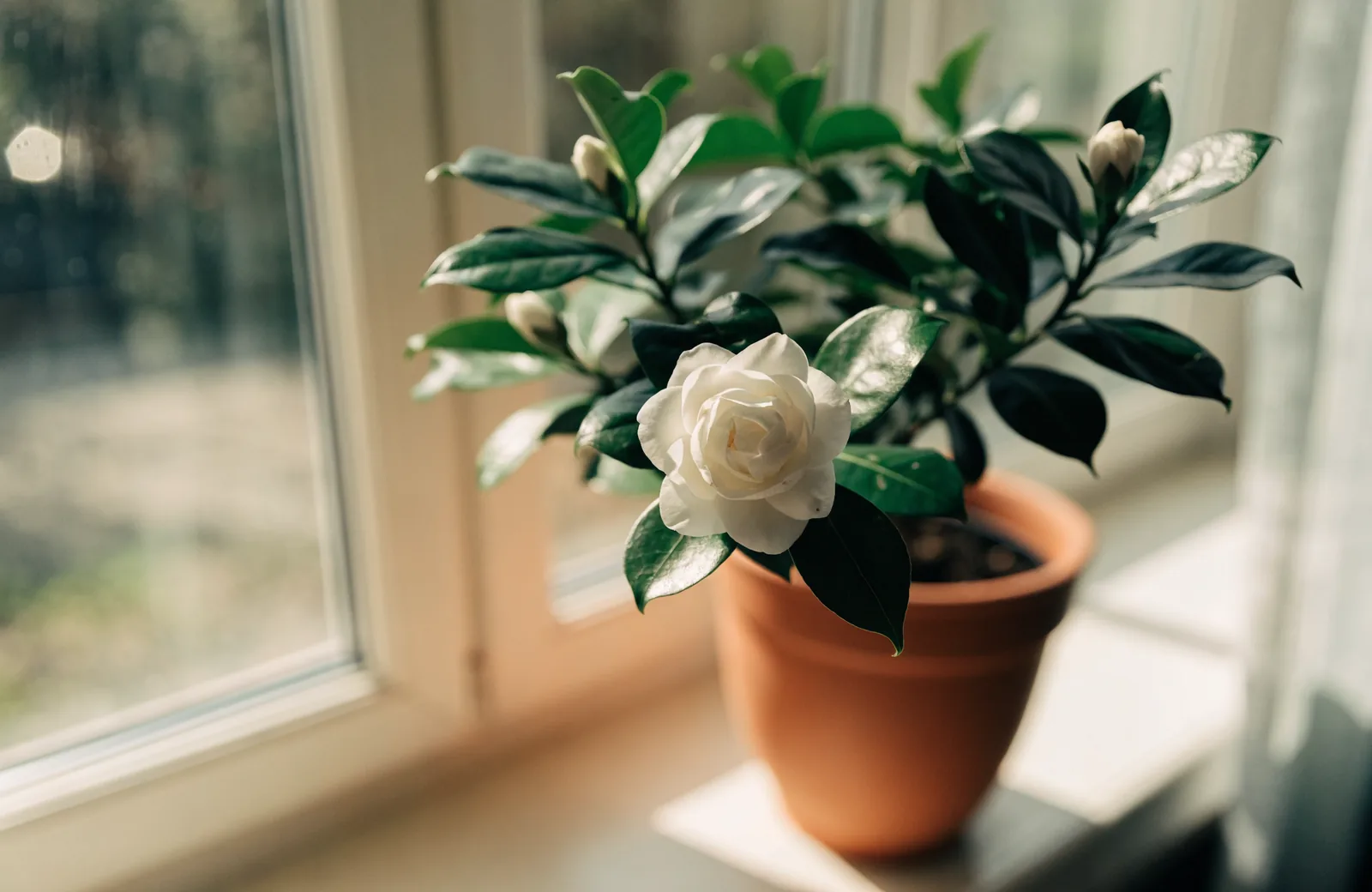
Few plants divide growers like the gardenia. The glossy foliage and impossibly fragrant white flowers make it one of the most-wanted plants in any garden centre — and one of the most frequently returned. The reputation for drama is deserved, but it isn't mystery: a gardenia has a short, specific list of demands, and once you meet them it flowers reliably for years.
This guide covers gardenias as houseplants and as outdoor shrubs, plus the two complaints that fill every plant forum: buds dropping before they open, and leaves turning yellow.
Light
Indoors, give a gardenia the brightest spot you have that avoids harsh midday and afternoon sun — right in an east-facing window is ideal, or a step back from a south- or west-facing one. Too little light and you'll get healthy leaves but no flowers. Rotate the pot every few weeks so the plant grows evenly. Outdoors, aim for morning sun with light afternoon shade; in cooler climates, full sun is fine.
Temperature — the secret to flower buds
This is the make-or-break rule most care labels skip. Gardenias form and hold their flower buds only when nights are distinctly cooler than days: roughly 16–18°C at night against 21–24°C by day. In a heated living room where the temperature never drops, buds either fail to form or drop off. A bright, cool room, an unheated conservatory in the growing season, or a summer outdoors on a shaded patio all give the plant the night-time dip it needs. Keep it away from radiators, and don't let it sit below about 10°C.
Watering
Keep the soil evenly moist — never soggy, never bone dry. Water when the top centimetre or two of soil has just dried, and always let the excess drain away. Two water-quality details matter more for gardenias than for almost any other houseplant: hard tap water slowly pushes the soil pH up, locking away iron and turning leaves yellow, so use rainwater, filtered or distilled water where you can; and cold water shocks the roots, so let it come to room temperature first.
Humidity
Gardenias sulk in dry air. Aim for 50–60% humidity or more: group plants together, stand the pot on a wet pebble tray, or run a small humidifier nearby. Dry air is also an open invitation to spider mites — if you see fine webbing and speckled leaves, raise the humidity and rinse the foliage.
Soil and feeding
Gardenias are acid-lovers, like camellias and rhododendrons. Pot them in an ericaceous (acid) compost with a pH around 5.0–6.0. In neutral or alkaline soil the plant cannot take up iron, and new leaves turn yellow between green veins. Feed with an ericaceous or acid-loving-plant fertiliser at half strength every two to four weeks from spring to early autumn, and stop over winter. If leaves have already yellowed from chlorosis, a dose of chelated (sequestered) iron greens them up while you fix the pH.
Pruning
Prune lightly just after the main flush of flowers fades — gardenias bloom on wood that matures over the following season, so late pruning removes next year's buds. Cut back to just above an outward-facing bud, remove spindly or crossing stems, and stop there; a gardenia doesn't need hard annual pruning.
Growing gardenias outdoors
In mild regions (roughly USDA zones 8–11), Gardenia jasminoides grows into a rounded evergreen shrub of one to two metres. Give it a sheltered spot with morning sun, acidic and humus-rich soil, and mulch to keep the roots cool and moist. Gardeners in colder areas can look for hardier cultivars such as 'Kleim's Hardy', which tolerates brief dips several degrees below freezing, or simply grow the plant in a pot and bring it into a cool, bright room for winter.
Common gardenia problems
- Buds drop before opening: night temperatures too warm, dry air, the plant was moved or turned during budding, or the soil swung between wet and dry.
- Leaves yellow with green veins (new growth first): iron chlorosis from alkaline soil or hard tap water — repot into ericaceous compost and switch to rainwater.
- Older leaves yellow evenly and drop a few at a time: normal ageing, or overwatering if it's many at once and the soil stays wet.
- Fine webbing and pale speckled leaves: spider mites — raise humidity, rinse the plant, treat with insecticidal soap.
- Sticky leaves with black sooty patches: aphids or scale insects excreting honeydew — wipe them off and treat the pests, and the sooty mould stops.
- Plenty of leaves, no flowers: not enough light, or nights too warm.
If your gardenia is signalling something and you can't tell which problem it is, photograph the worst-affected leaf in PlantMe — the app recognises 500+ plant diseases and deficiencies and tells you the fix in seconds.
Sources & further reading
Frequently asked questions
Why does my gardenia drop its buds before they open?
Bud drop is almost always environmental: nights above ~18°C, dry air, uneven watering, or simply moving or rotating the plant while it's in bud. Keep conditions steady and cool at night, and the next flush usually holds.
Why are my gardenia's leaves turning yellow?
If new leaves are yellow with green veins, it's iron chlorosis caused by soil that isn't acidic enough — often from hard tap water. Repot in ericaceous compost, water with rainwater, and use chelated iron for a quick fix. A few evenly yellow old leaves are just natural turnover.
Can I grow a gardenia indoors year-round?
Yes, if you can offer bright light, high humidity and — crucially — a cool room at night during bud formation. Many growers summer the plant outdoors in light shade and bring it in before frost.
Are gardenias toxic to cats and dogs?
Gardenias are mildly toxic to cats, dogs and horses; nibbled leaves or flowers can cause vomiting and stomach upset, so keep the plant out of reach of curious pets.
About the author

Houseplants & Indoor Styling
Wren has killed enough houseplants to know exactly why yours is struggling — and kept hundreds more thriving in a small, bright flat that doubles as her test lab. She writes about reading plants instead of following rules, and believes every windowsill deserves at least one leaf.
Try it yourself
Diagnose it instantly with PlantMe
Snap a photo of any plant or leaf. Get the species, the diagnosis, and a care plan in seconds.
Download on theApp Store