Journal/Vegetable Garden · 7 min read
How to Grow Carrots That Aren't Forked, Bitter, or Tiny
Growing carrots from seed: deep stone-free soil, direct sowing, ruthless thinning, carrot fly defences, and why roots fork, split, or stay stubbornly small.
Quick answer
Sow carrot seed directly where it will grow — carrots don't transplant — in deep, stone-free, freshly-manure-free soil, about 1 cm deep. Thin seedlings to 5–7 cm apart, keep moisture even, and protect against carrot fly with fine mesh. Most varieties are ready 12–16 weeks after sowing.
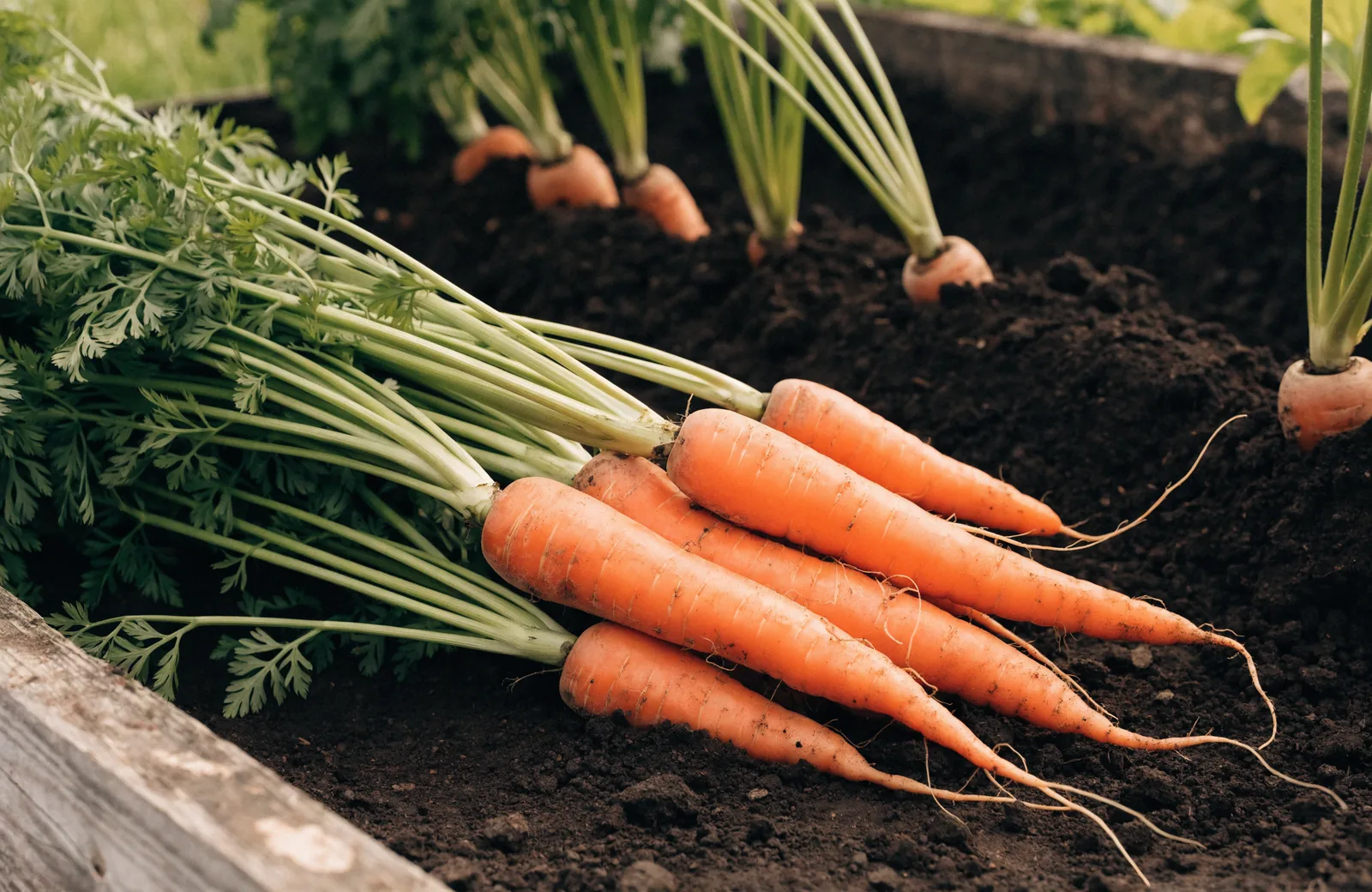
Carrots are cheap to buy and yet absolutely worth growing, because a carrot pulled, rinsed, and eaten within the hour is a different vegetable from anything in a bag. They are also the crop that teaches more gardeners about soil than any other: every stone, clod, and shortcut you leave in the bed gets faithfully recorded in the shape of the root.
Start with the soil — the root is the record
A carrot is a taproot diving downwards. Anything that interrupts the dive — a stone, a pan of compacted soil, a pocket of fresh manure — makes it fork, bend, or stall. Before sowing, loosen the bed deeply (30 cm for long varieties), remove stones, and rake to a fine, crumbly tilth. Light, sandy loam is carrot heaven; on heavy clay or stony ground, don't fight it — grow short, stump-rooted or ball types, or switch to containers.
Warning: never add fresh manure to a carrot bed. It causes lush tops, forked hairy roots, and off flavours. If the ground needs enriching, manure it for a previous crop the season before, and let carrots follow.
Choosing varieties
- Nantes types: sweet, cylindrical, blunt-tipped — the best all-rounder for home beds.
- Chantenay and Oxheart types: short and broad-shouldered, ideal for heavier soils.
- Amsterdam types: fast and slender — the classic early and container carrot.
- Imperator types: the long supermarket shape — only worth it in deep, perfect, stone-free soil.
- Round/ball types (e.g. 'Parisian' styles): shallow-rooted, happy in window boxes and shallow pots.
- Fly-resistant varieties such as 'Flyaway' or 'Resistafly': worth choosing wherever carrot fly is a known plague.
Sowing: direct, shallow, and thin
Carrots are sown directly where they'll grow — the taproot is ruined by transplanting, so ignore any temptation to start them in trays. Sow from early spring (once soil reaches about 7–10°C) through midsummer, in short repeat batches every 3–4 weeks for a continuous supply rather than one glut. Draw a drill about 1 cm deep, water the drill first if the soil is dry, and sow as thinly as you can manage — pinches, not pours. Cover, firm gently, and keep the surface moist.
Then: patience. Carrot seed is slow, taking anywhere from 10 days to 3 weeks to show. Mark the row (radish sown sparsely along it is the old trick — up in days, harvested before the carrots need the room) and never let the surface crust over during germination.
Thinning: the step everyone skips and regrets
However thinly you sow, seedlings come up in crowds, and crowded carrots stay as thin as bootlaces. Thin in two passes: first to about 2–3 cm apart when seedlings are 3–4 cm tall, then to a final 5–7 cm. Tip: thin on a still evening, nip off the tops rather than yanking (or firm the soil back afterwards), water the row, and take the thinnings away — the scent of bruised carrot foliage is exactly what draws carrot fly in for a look.
Watering
Even moisture grows even roots. Deep watering once or twice a week in dry spells beats daily sprinkles, which encourage shallow rooting. The classic mistake is a drought followed by a flood: the root hardens off, then swells too fast and splits. Splitting carrots are almost always a watering-rhythm problem, not a variety problem.
Carrot fly: the one serious enemy
The carrot fly lays eggs at the base of carrot plants; its larvae tunnel rusty-brown mines through the roots, ruining them. Once larvae are in the roots there is no cure, so everything is prevention:
- Cover the crop from sowing day with insect-proof mesh or fleece, edges pinned down — the single most effective defence.
- The fly hunts by scent: sow thinly to minimise thinning, thin in the evening, and remove thinnings immediately.
- Choose resistant varieties where the pest is entrenched.
- Rotate: never follow carrots with carrots, or larvae overwinter in the bed and greet the next sowing.
- Interplanting rows with strong-smelling companions like onions or leeks can help mask the scent — useful support, not a complete shield.
Containers
Carrots do surprisingly well in pots — and container crops usually dodge carrot fly entirely, since the fly flies low. Use a container at least 25–30 cm deep filled with fine, stone-free potting compost, sow thinly on the surface pattern rather than in rows, thin as usual, and water consistently — pots dry fast and splitting follows. Choose Amsterdam, Nantes, or ball types.
Harvesting and storing
Most maincrop varieties are ready 12–16 weeks after sowing; earlies and baby roots from 8–10 weeks. Pull when the shoulders reach the diameter you want — smaller means sweeter and more tender. Water the row an hour before harvesting in dry soil and the roots come up without snapping. Twist or cut the foliage off immediately (leaves keep drawing moisture and turn roots rubbery in a day), and store sound roots somewhere cold — they keep for months in boxes of barely-damp sand. If a root has pushed its shoulders above the surface and turned green, just trim the green top before cooking.
Troubleshooting
- Forked or twisted roots: stones, compaction, or fresh manure in the bed.
- Rusty tunnels in the root: carrot fly larvae — mesh next sowing, rotate beds.
- Split roots: irregular watering, usually heavy rain or a soak after drought.
- Lots of leaf, little root: soil too rich in nitrogen, or seedlings never thinned.
- Bitter or soapy flavour: heat stress and drought, or roots left too long.
- Seedlings never appeared: crusted or dried-out surface during the long germination, or seed sown too deep.
First season growing vegetables? PlantMe identifies over 35,000 plant classes with 93% top-3 accuracy, so you can tell carrot seedlings from the weeds that germinate alongside them — and diagnose anything that goes wrong with the row before it spreads.
Sources & further reading
Frequently asked questions
How long do carrots take to grow?
Baby and early varieties are ready from 8–10 weeks after sowing; most maincrop varieties take 12–16 weeks. Pull a test root once the shoulders look the right width.
Why are my carrots forked?
The taproot hit something — stones, compacted soil, or a pocket of fresh manure — and split around it. Deeply loosened, stone-free, manure-free soil is the fix; on rough ground grow short or ball varieties.
Can I transplant carrot seedlings?
No — disturbing the taproot leads to forked, stunted roots. Always sow direct, then thin. If you want an early start, sow direct under fleece or a cloche instead.
Do carrots need full sun?
Ideally yes — 6 or more hours. They tolerate light part-shade at the cost of slower, smaller roots.
How do I stop carrot fly organically?
Physical exclusion beats everything: fine insect mesh over the crop from sowing day, edges sealed. Add resistant varieties, evening thinning, prompt removal of thinnings, and crop rotation.
Try it yourself
Diagnose it instantly with PlantMe
Snap a photo of any plant or leaf. Get the species, the diagnosis, and a care plan in seconds.
Download on theApp Store