Journal/Vegetable Garden · 8 min read
How to Grow Tomatoes: From Seed to Harvest
Grow tomatoes from seed to harvest: sowing times, germination, transplanting, spacing, feeding, pruning and support — plus fixes for common problems.
Quick answer
Sow tomato seeds indoors 6–8 weeks before your last frost at 21–27°C; they germinate in 7–14 days. Plant out after all frost risk, burying the stem deep, in full sun with 45–60 cm spacing. Water consistently, feed with a high-potash fertiliser once flowering starts, and harvest 60–100 days after transplanting.
No supermarket tomato comes close to one picked warm from your own plant — and few crops repay a beginner faster. Tomatoes ask for three things: warmth, sun and consistency. Get those right and everything else is detail. This guide takes you from a packet of seeds to a summer of harvests.
Step 1: Choose the right type
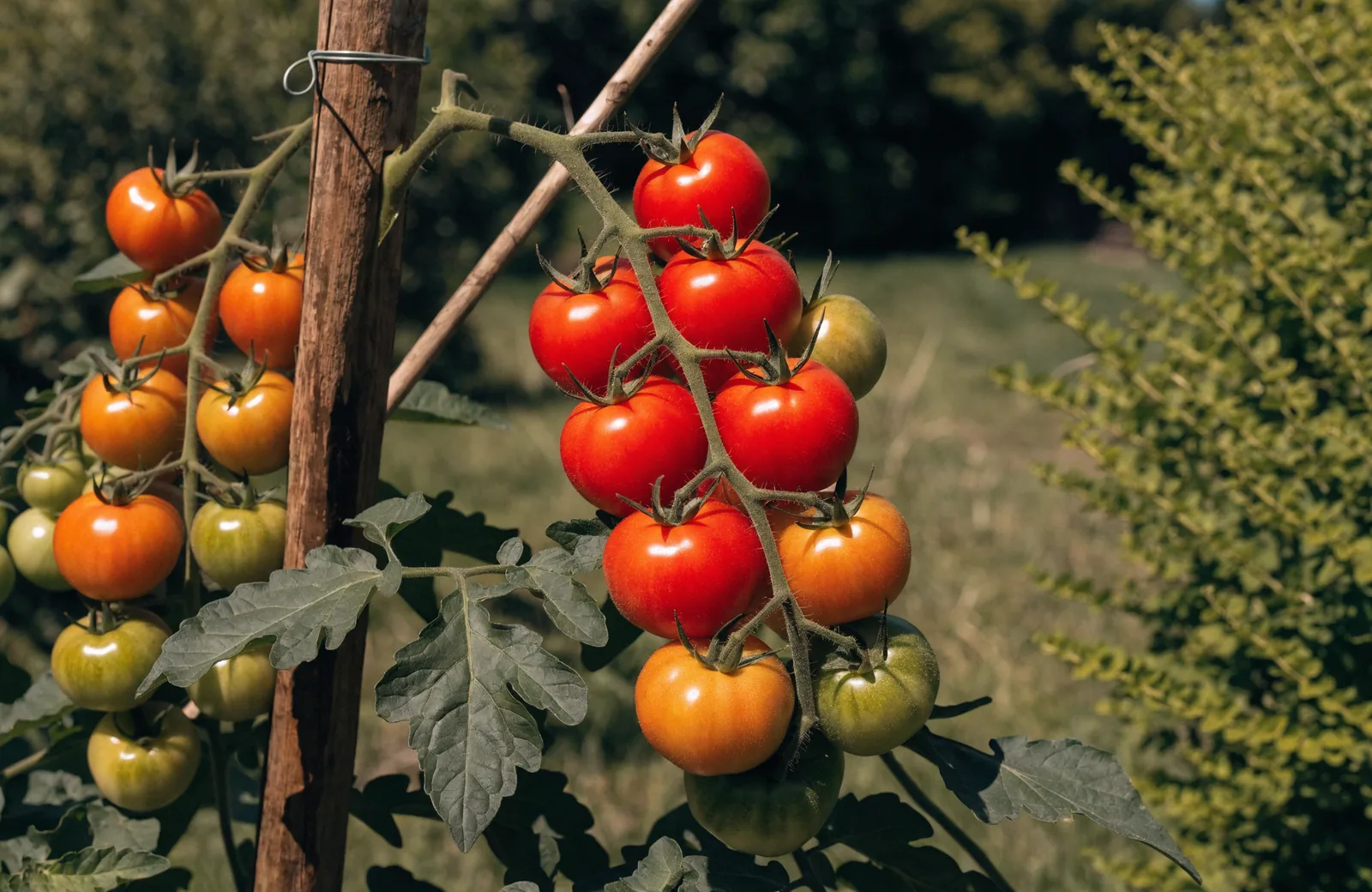
Tomatoes come in two growth habits, and the difference decides how you'll grow them. Determinate (bush) varieties stop at a set height, ripen much of their crop at once, and suit pots and small spaces with little pruning. Indeterminate (cordon or vining) varieties keep growing and fruiting until cold stops them — they need a tall stake and regular pruning, but reward you with a long, steady harvest. Cherry varieties are the most forgiving for beginners; beefsteaks demand the most warmth and patience.
Step 2: Sow indoors, 6–8 weeks before the last frost
Tomatoes are tender plants — frost kills them — so in cool climates the season starts on a windowsill. Sow seeds 1 cm deep in moist seed compost. Kept at 21–27°C, they germinate in 7–14 days. After germination, seedlings need strong light: a very bright window works, but 14–16 hours under a grow light prevents the leggy, leaning seedlings a dim sill produces.
Step 3: Pot up and harden off
When seedlings have two or three sets of true leaves, move each into its own 8–10 cm pot, burying the stem up to the first leaves — tomatoes grow roots from any buried stem, and a deeper start means a sturdier plant. A week or two before planting out, harden them off: stand them outside in a sheltered spot for a few hours a day, gradually extending the time, so the move outdoors isn't a shock.
Step 4: Plant out after the last frost
Transplant once all frost risk has passed and nights stay above about 10°C. Choose the sunniest spot you have — tomatoes want at least 6–8 hours of direct sun — with rich, free-draining soil improved with compost, ideally at pH 6.0–6.8. Space bush varieties 45–60 cm apart and cordons 60 cm apart, and again plant deep, burying a third to a half of the stem. Put stakes or cages in at planting time; pushing them in later damages roots.
Step 5: Water and feed with consistency
Irregular watering is behind most tomato heartbreak — split fruit and blossom end rot both trace back to it. Aim for deep, even moisture: roughly 2.5–4 cm of water a week, more in hot spells or pots, delivered at the base of the plant rather than over the leaves. Mulch to hold moisture. Once the first flowers appear, feed weekly or fortnightly with a high-potash tomato fertiliser.
Step 6: Prune and support (cordons only)
On indeterminate varieties, pinch out the side-shoots ("suckers") that sprout in the joint between a leaf and the main stem while they're small, and tie the main stem to its support as it climbs. Late in the season, pinch out the growing tip so the plant ripens what it has instead of making fruit that won't beat the cold. Bush varieties need none of this — just a little support when heavy with fruit.
Step 7: Harvest
Depending on variety, fruit ripens 60–100 days after transplanting. Pick when fully coloured and slightly yielding, or from the "breaker" stage (first blush) onwards — fruit ripens perfectly on a warm counter, and off the vine it's safe from splitting and pests. At season's end, ripen remaining green fruit indoors.
Troubleshooting quick guide
- Blossom end rot (black, sunken fruit bases): calcium shortfall caused by uneven watering — fix the watering, not usually the soil.
- Splitting fruit: a sudden soak after a dry spell; water evenly and pick ripe fruit before heavy rain.
- Yellowing leaves: often nitrogen hunger or overwatering on lower leaves — see our dedicated guide.
- Late blight: brown, fast-spreading lesions in warm, wet weather; remove affected tissue fast and improve airflow.
Not sure what's attacking your plant? Photograph the leaf or fruit in PlantMe and the app's diagnosis model will match it against 500+ diseases and give you a treatment plan.
Sources & further reading
Frequently asked questions
How long do tomatoes take from seed to harvest?
Roughly 100–140 days in total: 6–8 weeks from sowing to transplant, then 60–100 days from transplant to ripe fruit depending on variety.
Do I need to prune my tomato plants?
Only indeterminate (cordon/vining) types need regular side-shoot removal. Bush varieties can be left almost entirely alone.
Why are my tomato flowers dropping without fruiting?
Usually temperature stress — flowers abort in cold nights or heatwaves — or poor pollination. Tap the flower trusses gently on warm mornings to help pollen release.
Can I grow tomatoes in pots?
Yes — choose a bush or dwarf variety, use at least a 30–40 L container, water daily in summer and feed regularly; pots dry out far faster than beds.
About the author

Vegetable Garden & Seasons
Arthur has worked the same allotment for thirty years and measures the calendar in sowings, not months. He writes practical, no-nonsense guides to growing food and keeping a garden honest through the seasons — and has little patience for folklore that doesn't survive contact with a real plot.
Try it yourself
Diagnose it instantly with PlantMe
Snap a photo of any plant or leaf. Get the species, the diagnosis, and a care plan in seconds.
Download on theApp Store