Journal/Vegetable Garden · 6 min read
How to Make Compost: A No-Folklore Guide to Starting a Heap This Autumn
Composting is simpler than the internet makes it look. How to build a heap this autumn, the greens-and-browns balance that actually matters, and how to tell when it's done.
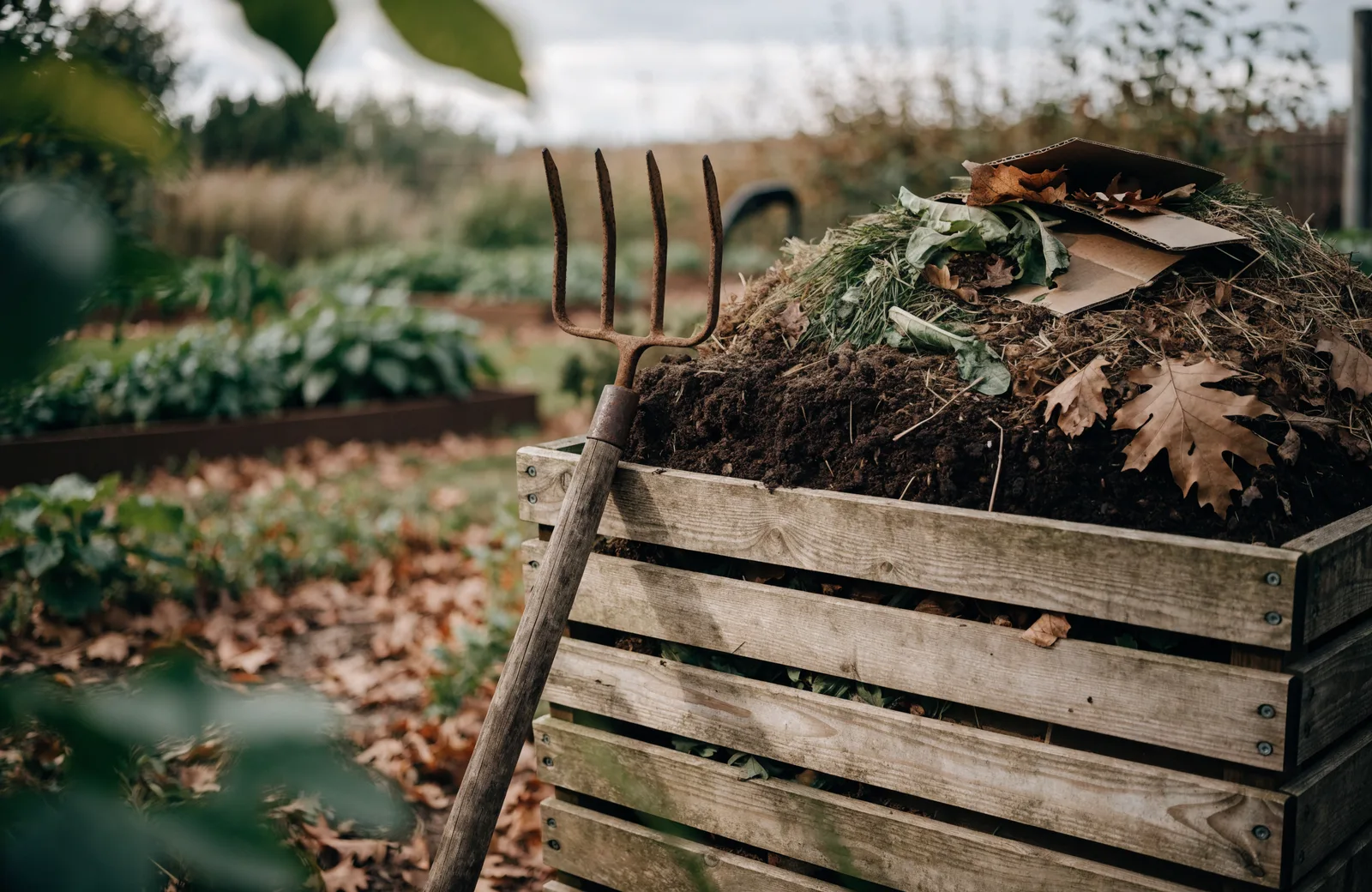
The internet has made composting sound like a laboratory discipline, complete with ratios to memorise and accelerators to buy. It is not. You pile up dead plant material, keep it roughly balanced and slightly damp, and rot does the work — gardeners managed this for a few thousand years without a single instructional video. What a little method buys you is speed, and a heap that smells of woodland instead of drains.
If you have been meaning to start, late September is the moment. The garden is currently throwing free material at you, and a heap built now will be feeding your beds by next season.
Why start a heap now
Autumn solves composting's only real logistics problem: supply. The end-of-season clear-out hands you spent crops and bolted salads — your finished tomato plants alone will get a heap off to a decent start — while the trees begin dropping the brown, carbon-rich material that the rest of the year is short of. Rake leaves in quantity and you can even run a separate, slower pile alongside; that one is called leaf mould and it is a different product. The compost heap gets a mix. The leaf pile gets only leaves. Keep them apart and both work better.
Greens and browns, without the folklore
Every composting guide reaches for the greens-and-browns framing, and for once the folklore is sound — it is just chemistry wearing a cardigan. Greens are soft, sappy, nitrogen-rich materials that feed the microbes; browns are dry, woody, carbon-rich materials that give the heap structure and airflow. The RHS suggests 25–50 per cent of the heap should be soft green material, with the remaining half to three-quarters chopped-up brown material. You do not need scales. Eyeball it, and when in doubt add more browns.
What goes in
| Greens (nitrogen-rich) | Browns (carbon-rich) |
|---|---|
| Vegetable and fruit peelings | Dry autumn leaves |
| Grass clippings, in thin layers | Torn cardboard and paper |
| Spent annuals and crop waste | Straw and dead stems |
| Coffee grounds | Shredded woody prunings |
Two notes on that table. Grass clippings are excellent fuel but a menace in bulk — on their own they collapse into a slimy, airless mat, so mix them through browns rather than tipping the mower box in whole. And used coffee grounds count as a green despite the colour; the greens-and-browns labels describe chemistry, not appearance.
Build it in an afternoon
- 1. Pick the spot. Sheltered, in partial or full shade, and on bare earth if you can manage it, so worms and soil organisms can move in from below. A slab base works, just slower to colonise.
- 2. Size matters more than design. Aim for at least a cubic metre — roughly 3ft in each direction. Smaller heaps never build enough mass to heat up; university extension guidance puts the workable range at about 3 to 5 feet a side.
- 3. Start with a coarse brown layer. Twiggy prunings or scrunched cardboard at the base keep air moving under the heap.
- 4. Alternate as you fill. A few inches of greens, a few inches of browns, repeated. Perfection is not required; segregation is what fails.
- 5. Check the moisture. The heap should feel like a wrung-out sponge — moist, never soggy. Water a dry heap; cap a wet one with browns.
- 6. Finish with browns on top. A dry cap keeps flies off the kitchen scraps and sheds the worst of the rain.
Hot heap or lazy heap: choose your speed
Here is the honest trade. A managed heap — turned once or twice a month so air reaches the middle — heats to somewhere between 54 and 71°C (130–160°F) at its core and can produce finished compost in two to four months of warm weather. An untended heap gets there too, it just takes a year or more. The RHS puts the full range at six months to two years, with a few turns a year speeding things along.
Neither answer is wrong. Turn it if you want compost for spring; ignore it if you want compost eventually. The one thing to know before winter: decomposition slows right down in the cold and picks up again in spring. Keep adding material through the dark months, and do not conclude in January that the heap has failed. It is resting, as we all are.
What stays out
A short exclusion list saves a long list of regrets. Keep these out of an open garden heap:
- Meat, bones, grease and dairy — slow to break down and an open invitation to rats.
- Cat and dog waste.
- Obviously diseased plant material — a cold heap will not reliably kill the pathogens.
- Perennial weed roots and anything carrying seed. A lazy heap never gets hot enough to cook them, and you will be re-sowing your weeds across the garden in spring.
If you have cleared more green material than one heap can take, do not force it — sowing a green manure over empty beds puts the surplus fertility problem to work in place.
How you know it is done
Finished compost is dark brown and crumbly, smells like damp woodland, and has shrunk to roughly half the height of what you piled in. You should no longer be able to identify last September's cabbage leaves. When it passes that inspection, spread it an inch or two deep over beds and let the worms do the incorporation. Then start the next heap, because by then it will be autumn again.
Sources & further reading
Frequently asked questions
Do I need a compost accelerator or activator?
No. A heap with a reasonable mix of greens and browns feeds its own microbes, and they arrive uninvited. Nitrogen-rich greens like grass clippings do the same job as a bought activator for free.
Can I keep composting through winter?
Yes — keep adding material as normal. Decomposition slows dramatically in the cold and resumes in spring, so a heap that looks dormant in January is doing fine.
Why does my compost heap smell bad?
A sour or drain-like smell almost always means too many greens, too little air, or too much water — usually all three at once. Fork in a generous load of browns, turn the heap to get air into the middle, and the smell goes within days.
About the author

Vegetable Garden & Seasons
Arthur has worked the same allotment for thirty years and measures the calendar in sowings, not months. He writes practical, no-nonsense guides to growing food and keeping a garden honest through the seasons — and has little patience for folklore that doesn't survive contact with a real plot.
Try it yourself
Diagnose it instantly with PlantMe
Snap a photo of any plant or leaf. Get the species, the diagnosis, and a care plan in seconds.
Download on theApp Store