Journal/Troubleshooting · 7 min read
Root Rot: How to Save an Overwatered Plant
Root rot is reversible if you catch it early. A step-by-step rescue: how to spot it, trim the dead roots, and repot so your plant recovers.
Quick answer
To treat root rot, unpot the plant and rinse the roots clean, then cut away every soft, brown or black mushy root with sterilised scissors, keeping only the firm pale ones. Repot into fresh, free-draining mix in a clean pot with drainage holes, water lightly, and let the soil dry out more between waterings. Caught before the whole root ball is affected, most plants recover.
Root rot is the quiet killer of houseplants. By the time the leaves yellow, wilt and drop, the damage is happening out of sight, below the soil. The good news is that it is often reversible — if you act quickly and are willing to get your hands dirty. This guide walks through exactly how to rescue a plant with root rot, from diagnosis to aftercare.
What root rot actually is
Root rot is not one disease but a consequence. When soil stays waterlogged, the air pockets that roots need to breathe fill with water, and the roots suffocate. Those stressed, dying roots are then colonised by opportunistic fungi and water-moulds — commonly Pythium, Phytophthora, Fusarium or Rhizoctonia — which spread the decay. So overwatering rarely rots a plant on its own; it creates the airless, soggy conditions in which rot-causing organisms thrive.
How to tell it is root rot
The symptoms above the soil are frustratingly generic — yellowing leaves, wilting despite wet soil, stunted growth, a general droop. The tell-tale sign that separates root rot from simple underwatering is the mismatch: a plant that is limp and sad while its soil is still damp. Other clues include a sour, swampy smell from the pot, a soft or mushy stem base, and soil that stays wet for many days after watering.
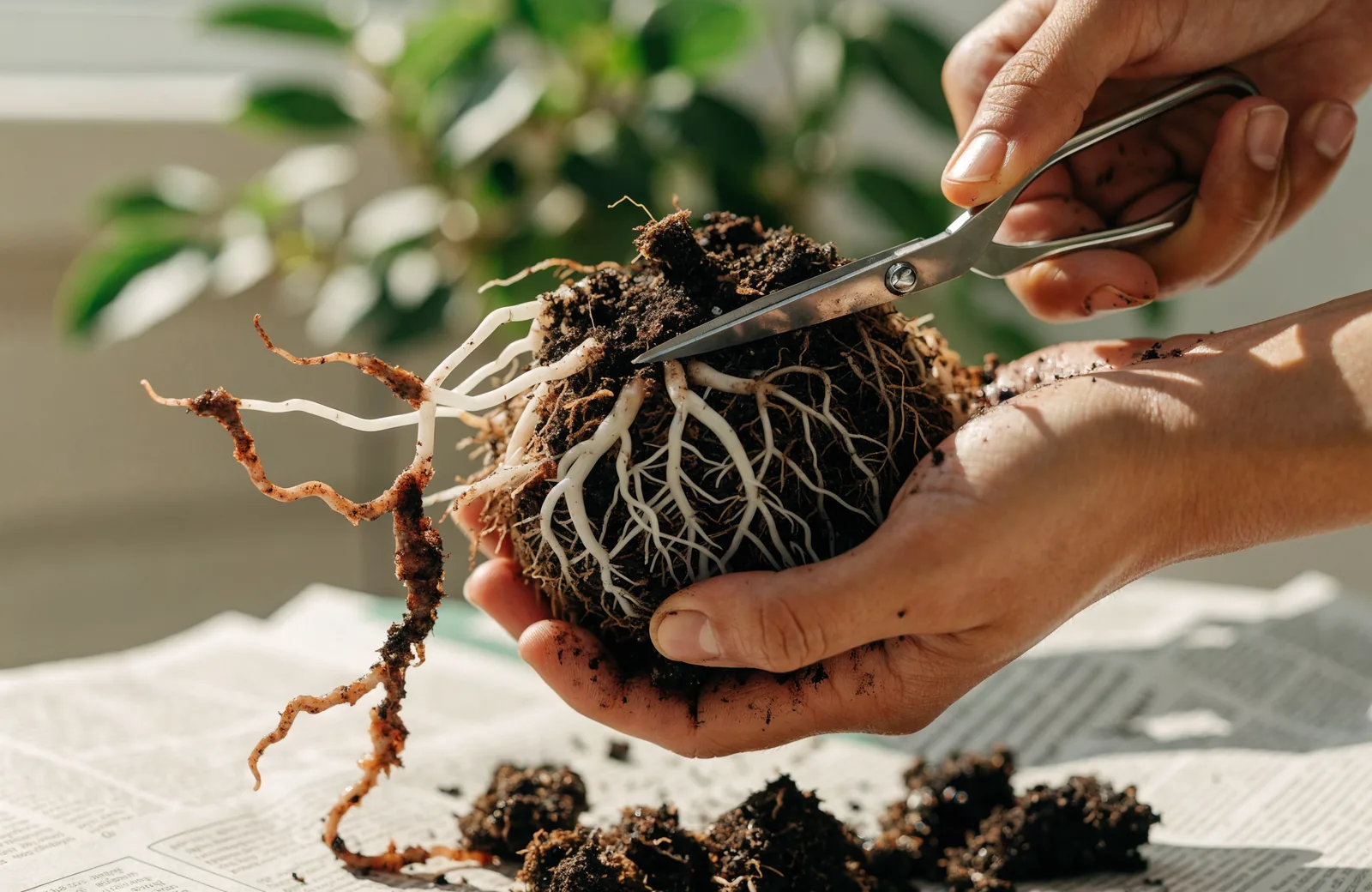
The only way to confirm it is to look. Healthy roots are firm and pale — white, cream or tan — and they hold their shape. Rotten roots are brown or black, soft, and slimy; they often slough their outer layer off between your fingers, leaving a thin thread behind.
The rescue, step by step
- Unpot the plant and gently loosen the root ball. Work over newspaper or a sink — this is messy.
- Rinse the roots under a slow stream of lukewarm water to wash away the old, contaminated soil so you can see what you are dealing with.
- Sterilise a pair of scissors or snips with rubbing alcohol, then cut away every root that is brown, black, soft or mushy. Keep only firm, pale, healthy roots. Be ruthless — leaving rotten tissue behind restarts the problem.
- If you removed a lot of roots, prune back a matching amount of top growth. A reduced root system cannot support a full canopy, and lighter foliage lets the plant focus on regrowing roots.
- Repot into fresh, free-draining mix in a clean pot with drainage holes. Never reuse the old soil, and wash the original pot in hot soapy water first if you want to use it again.
- Water lightly to settle the mix, then place the plant somewhere warm with bright, indirect light — not blazing sun, which stresses a plant that can barely drink yet.
Should you use hydrogen peroxide or fungicide?
A dilute 3% household hydrogen peroxide solution — roughly one part peroxide to three parts water — is sometimes used to rinse trimmed roots, because it releases oxygen and can knock back some pathogens on the surface. Treat it as an optional extra, not a cure: it will not rebuild rotten roots, and strong concentrations can burn healthy tissue. The single most important step remains cutting away the dead roots and fixing the drainage. A houseplant fungicide drench can help in stubborn or recurring cases, but for most plants clean roots plus dry-out discipline is enough.
Warning: Do not fertilise a plant recovering from root rot. Damaged roots cannot process the extra salts, and feeding a stressed plant can scorch what roots remain. Wait until you see healthy new growth — usually a few weeks — before feeding again at half strength.
Stopping it coming back
Root rot is a watering-and-drainage problem, so the prevention is simple to say and easy to forget. Only water when the top few centimetres of soil are dry — push a finger in and check rather than watering on a fixed calendar. Always use a pot with drainage holes and tip away any water that collects in the saucer or cover pot. Choose an airy, chunky mix for plants that dislike wet feet, and resize pots sensibly: a plant in a pot that is far too big sits in a large reservoir of slow-drying soil, which is exactly the condition rot loves.
If you are not certain whether you are looking at root rot, overwatering or something else, photograph the plant and the affected leaves in PlantMe. The app checks the symptoms against a database of over 500 plant diseases and disorders and returns a likely diagnosis and treatment plan in seconds — useful for deciding whether a plant needs a full unpotting or just a change of watering habit.
Sources & further reading
About the author

Plant Rescue & Troubleshooting
Camille spent years behind the counter of a plant shop where every customer arrived with the same question: what's wrong with it? She writes the Journal's rescue guides — calm, diagnosis-first, no guilt — because most 'dying' plants are one correct decision away from recovery.
Try it yourself
Diagnose it instantly with PlantMe
Snap a photo of any plant or leaf. Get the species, the diagnosis, and a care plan in seconds.
Download on theApp Store