Journal/Troubleshooting · 5 min read
Curling Leaves: What Your Plant Is Trying to Tell You
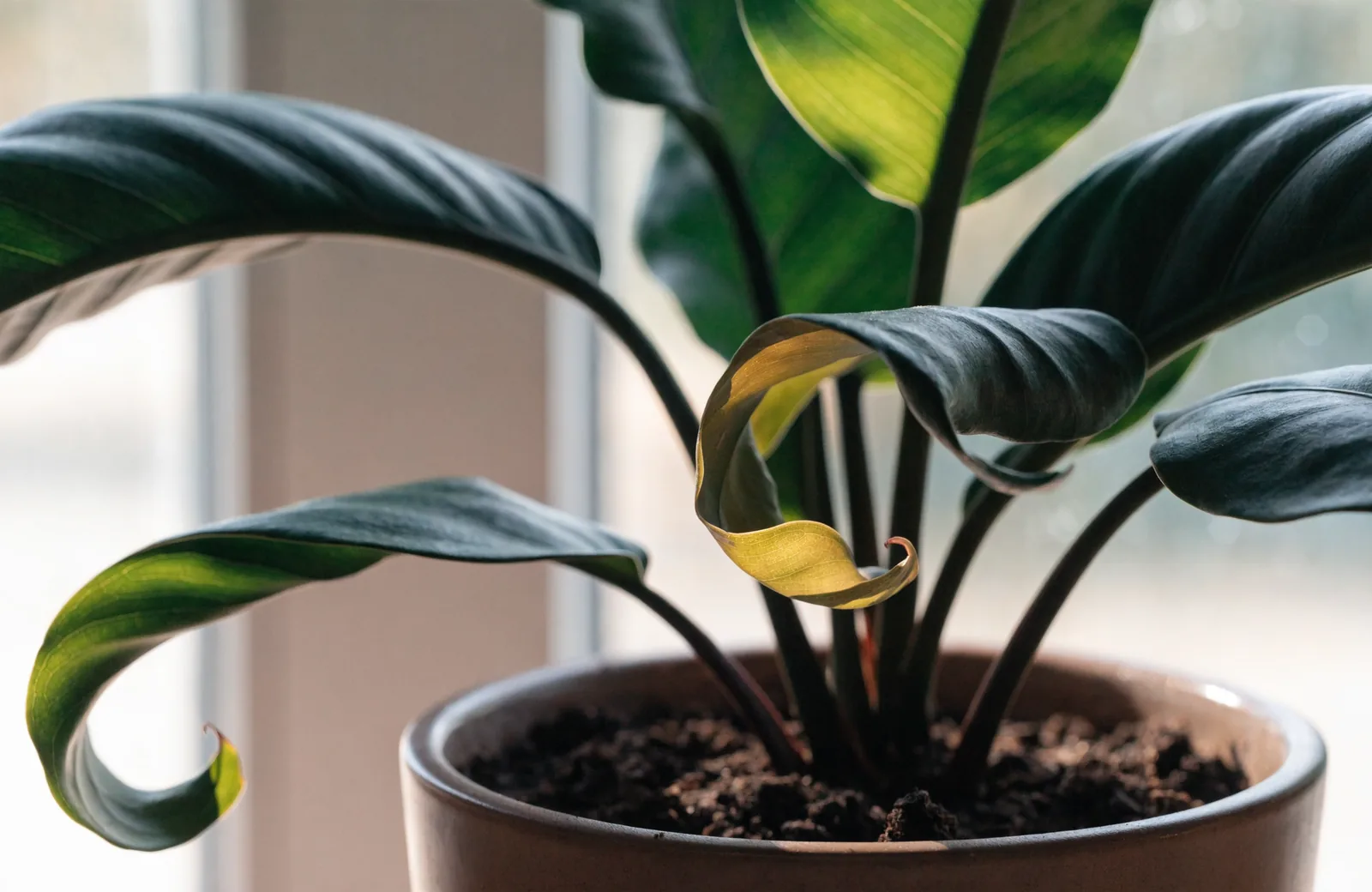
Curling leaves are one of the most common houseplant SOS signals — and one of the most decodable. Here's what each curl direction means.
Quick answer
Leaves curling downward and inward usually mean underwatering or heat stress. Leaves curling upward like a taco usually mean too much direct light or aphids on the underside. Deformed, wrinkled new leaves usually mean thrips or spider mites.
The direction of the curl and the age of the leaf tell you almost everything. Diagnose in this order.
Downward curl on old leaves
Classic underwatering or heat stress. The plant is reducing surface area to slow evaporation. Check the soil — if it's dry more than 3 cm down, water deeply. Move away from radiators and hot windows.
Upward, taco-shaped curl
Too much light or, in outdoor conditions, too much heat. Move the plant back from the window 1 metre and see if it flattens within a week. Also check for aphids on the underside — they cause the same shape by sucking sap.
New leaves emerge crinkled or ripped
Almost always thrips or spider mite damage during the leaf's development inside the sheath. Inspect with a magnifying glass; treat with insecticidal soap or neem for 3 weeks.
Leaves cup and pale, veins stay green
Nutrient deficiency — usually calcium or iron. Feed with a balanced fertiliser containing micronutrients.
Random curling on a Calathea or prayer plant
These plants naturally curl at night ("prayer plant" is descriptive), unfurl in the morning. If they don't unfurl, it's low humidity — get above 60%.
Sudden severe curling of all leaves
Chemical damage from over-fertilising, insecticide burn, or tap-water fluoride/chlorine. Flush the soil with three pot-volumes of distilled water and pause feeding for a month.
The 5-minute diagnostic
- Look at direction of curl (up vs down).
- Look at whether new or old leaves are affected.
- Push finger in soil to check moisture.
- Flip leaves and inspect undersides for pests.
- Check the room — new radiator? Recent move to a sunny spot?
Snap a curled leaf in PlantMe and it'll cross-check the pattern against a database of species-specific curl causes.
Frequently asked questions
Will curled leaves flatten again?
If the cause was environmental (dry soil, too much sun), yes — usually within 3–7 days of fixing it. Physically damaged leaves (from pests inside the sheath) stay deformed but new leaves will grow normally.
Should I cut off curled leaves?
Only if they're brown, dead, or heavily damaged. A slightly curled but green leaf is still photosynthesising — leave it.
Why do my Calathea leaves curl at night?
Calatheas and marantas raise and curl their leaves in a daily cycle called nyctinasty. Perfectly normal; it's how they got the name 'prayer plants'.
About the author
Plant Rescue & Troubleshooting
Camille spent years behind the counter of a plant shop where every customer arrived with the same question: what's wrong with it? She writes the Journal's rescue guides — calm, diagnosis-first, no guilt — because most 'dying' plants are one correct decision away from recovery.
Try it yourself
Diagnose it instantly with PlantMe
Snap a photo of any plant or leaf. Get the species, the diagnosis, and a care plan in seconds.
Download on theApp StoreKeep reading
See also