Journal/Seasonal · 7 min read
Gardens at Sea: The Secret World of Plants on Superyachts
From Azzam to the Maltese Falcon and Black Pearl — the biggest yachts in the world carry living plants at sea. Here's what they grow, why, and how their crews keep it alive against salt, wind and UV.
Quick answer
Yes, plants live on the world's biggest yachts — from living walls to full onboard greenhouses. Keeping them alive at sea means fighting salt spray, wind, UV and strict water budgets, which is why yacht crews favor sansevierias, succulents, olives and preserved-moss walls.
Every summer, in the anchorages off Saint-Tropez, Porto Cervo and Mykonos, a small and slightly absurd horticultural experiment plays out. On decks worth more than most villages, crews are watering plants — real ones, in soil — that have no business being 40 miles out to sea. Gardens on yachts are having a moment. Here's how they actually work.
Why would anyone garden in the middle of the ocean?
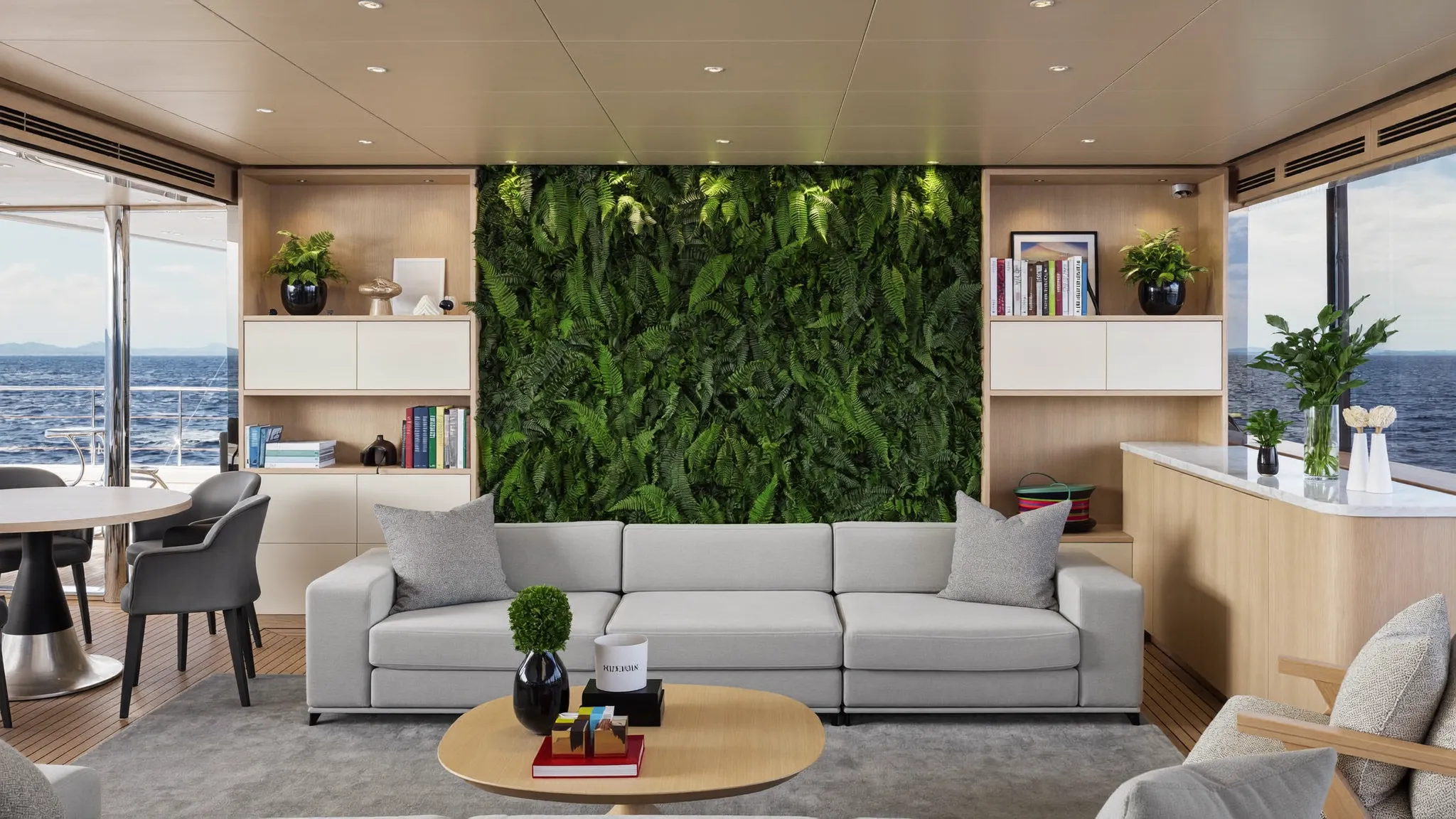
Because when the entire visible world is teak, chrome and salt, a single living leaf becomes the loudest thing in the room. Interior designers working on the top tier of the charter market — 80m and up — describe plants as the ultimate flex: fresh flowers last a week, but a five-metre living wall of ferns that has crossed the Atlantic is proof of a full-time gardener, a reverse-osmosis water plan, and a captain willing to indulge both.
There's a practical reason too. On a long charter, guests spend hours a day on deck. Greenery softens the acoustics of a hard-surfaced saloon, cools sun-baked lounging areas, and — crew report — noticeably lowers guest stress on rough passages.
The giants
The megayacht world is smaller than you'd think. A handful of hulls dominate every list of the largest private vessels afloat.
- Azzam — at roughly 180m, the world's longest private motor yacht, delivered by Lürssen in 2013 for the UAE royal family.
- Eclipse — Roman Abramovich's 162.5m Blohm+Voss build, launched in 2010 and still one of the most identifiable silhouettes in the Mediterranean.
- Dilbar — the 156m Lürssen delivered in 2016, notable for the largest interior volume ever built into a yacht.
- Sailing Yacht A — Andrey Melnichenko's 143m Philippe Starck design, the largest sail-assisted yacht ever built, with three carbon-fibre masts taller than the Statue of Liberty.
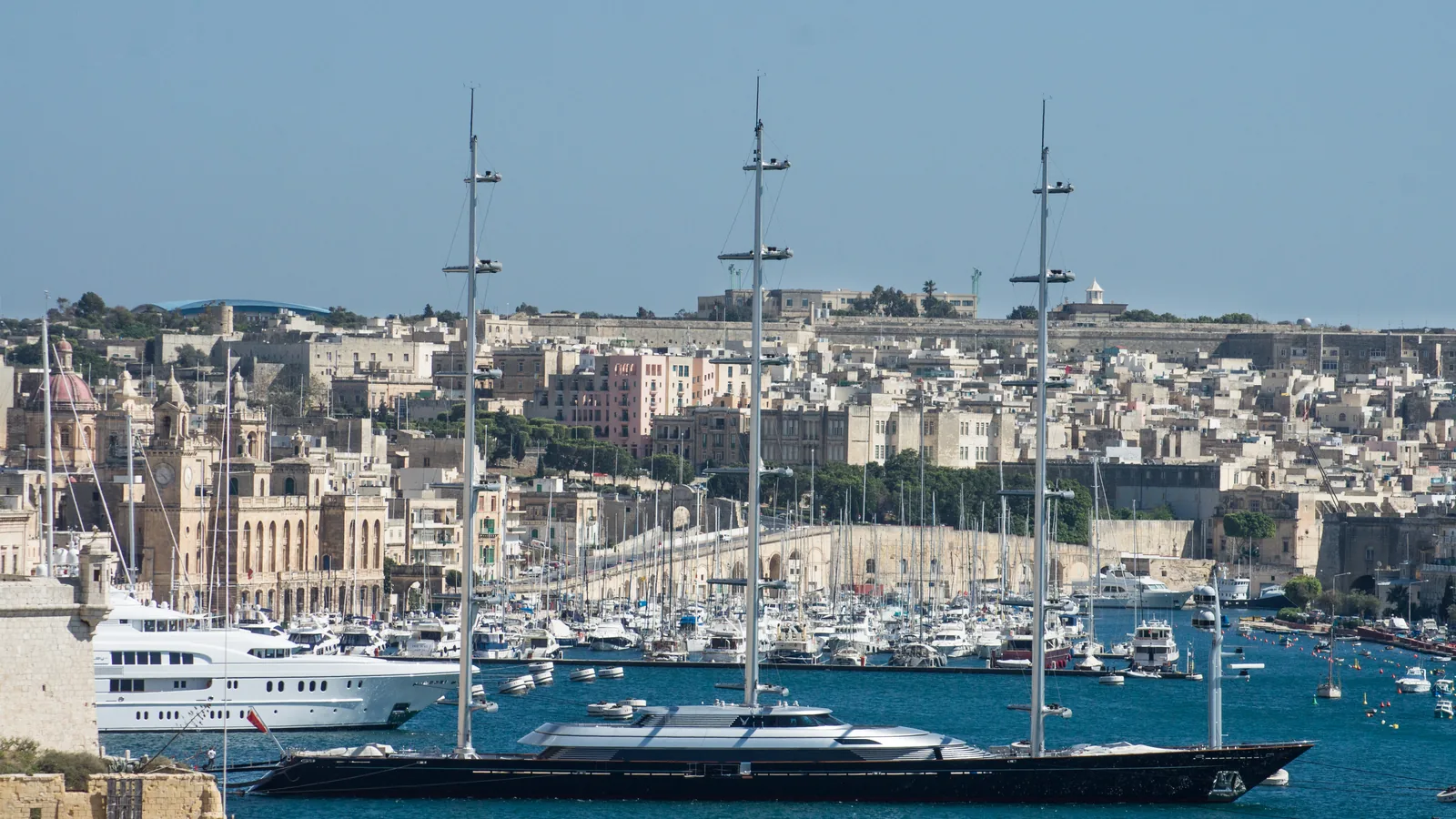
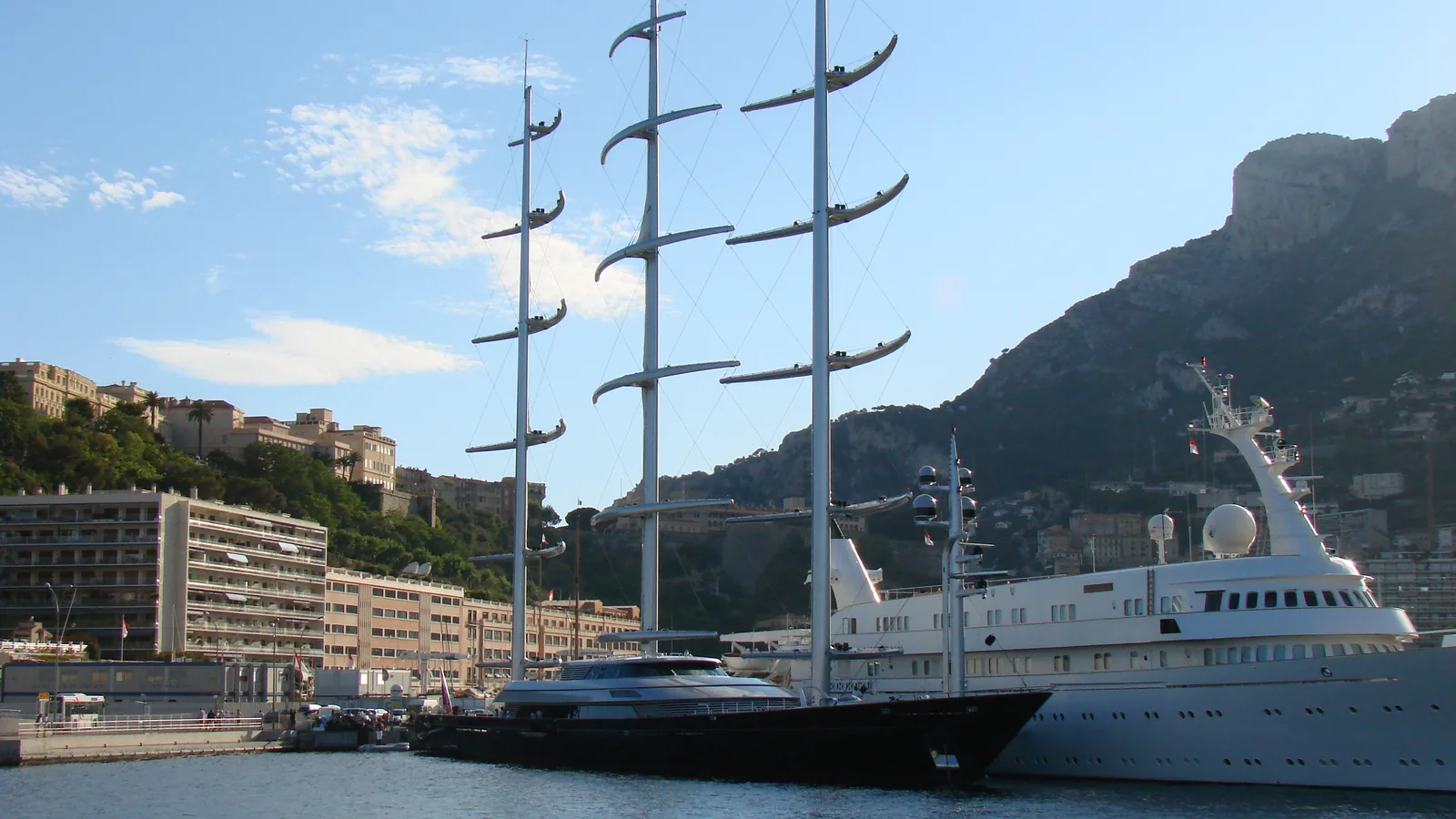
- Maltese Falcon — 88m, three unstayed DynaRig masts, 15 automated square sails, still the reference for modern sailing superyachts.
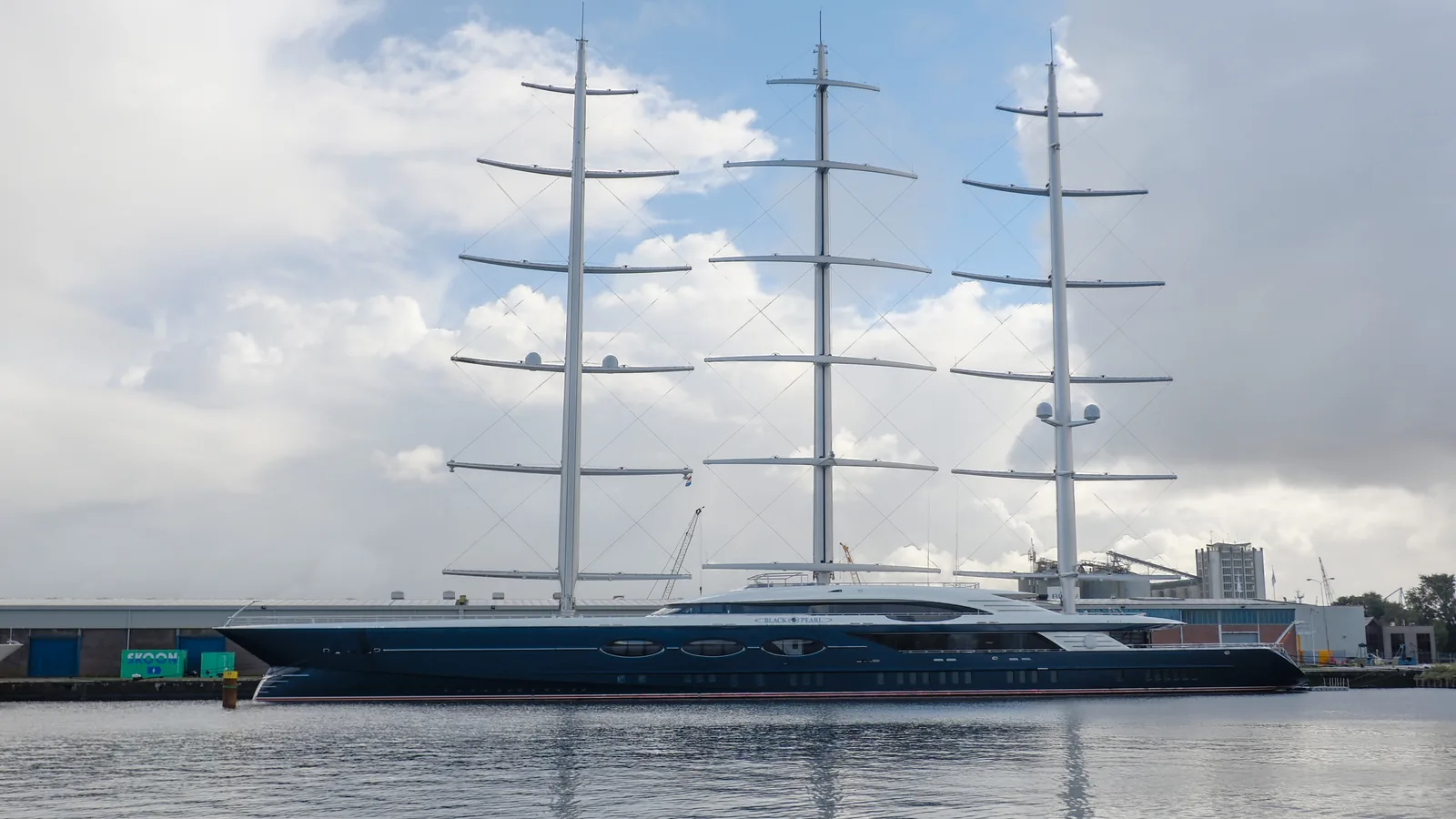
- Black Pearl — Oceanco's 106.7m DynaRig sailing yacht, one of the largest and most sustainable sailing vessels in the world.
- Orient Express Corinthian — Accor's new 220m sail-assisted passenger ship, launching a fresh generation of luxury sailing that leans hard into onboard gardens and biophilic design.
What salt, wind and sun do to a leaf
The open sea is a hostile environment for most plants, and for a very specific reason: salt. Fine aerosolised sea-spray settles on foliage and pulls water out of the leaf by osmosis, leaving crisp brown margins within hours on sensitive species. Even yachts anchored a few hundred metres off a beach get measurable salt deposition on every windward surface.
Then there's apparent wind. A yacht cruising at 15 knots into a 10-knot breeze creates a constant 25-knot flow across the deck — enough to strip humidity from a large-leaved tropical plant faster than it can replace water through its roots. Above deck, UV intensity is 20–30% higher than on land at the same latitude, reflected off water. And on charter, freshwater is rationed: reverse-osmosis watermakers produce a fixed number of litres a day, and every one poured on a fern is one not available for guests.
Finally, the boat itself moves. A 3° heel is enough to slosh water out of shallow pots; anything more than 10° will tip an unsecured planter across a saloon. Serious yacht designers now specify gimbaled or magnetically clamped planters for anything over 5kg.
The plants that survive the high seas
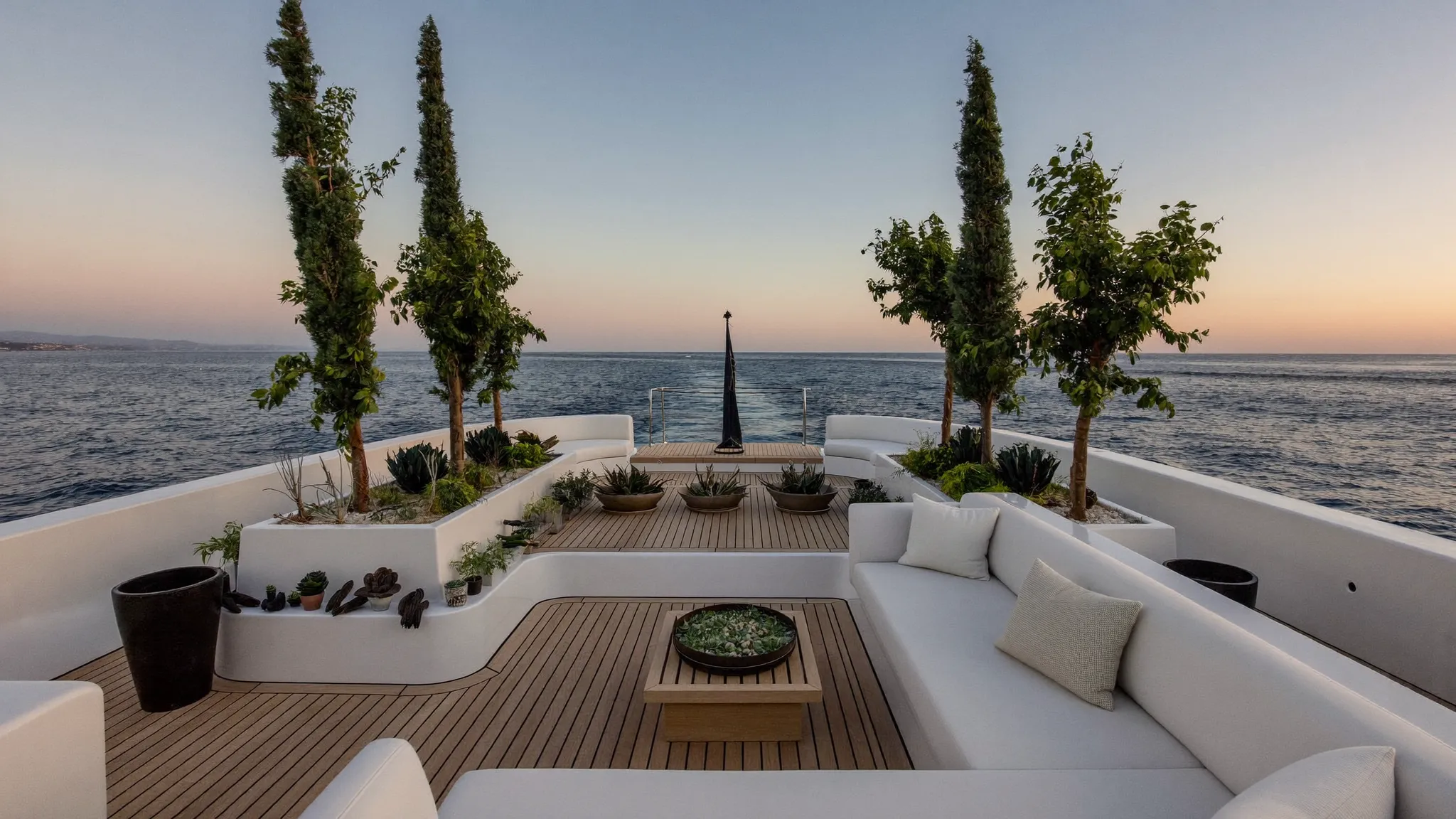
Yacht gardeners converge on a surprisingly narrow palette. The winners are plants that either evolved for arid, exposed coasts or store their own water; the losers are anything with big, thin, tropical leaves — one Atlantic crossing and a beloved calathea is confetti.
What actually survives on a superyacht deck
| Plant | Why it works at sea |
|---|---|
| Sansevieria (snake plant) | CAM photosynthesis, waxy cuticle, tolerates salt aerosol and neglect; the go-to for interior corridors. |
| Echeveria & other succulents | Store water in leaves, love UV, unbothered by wind; used in mass plantings on sundecks. |
| Potted olive trees | Native to salty Mediterranean cliffs; genuinely happy in gimbaled deck planters if drained sharply. |
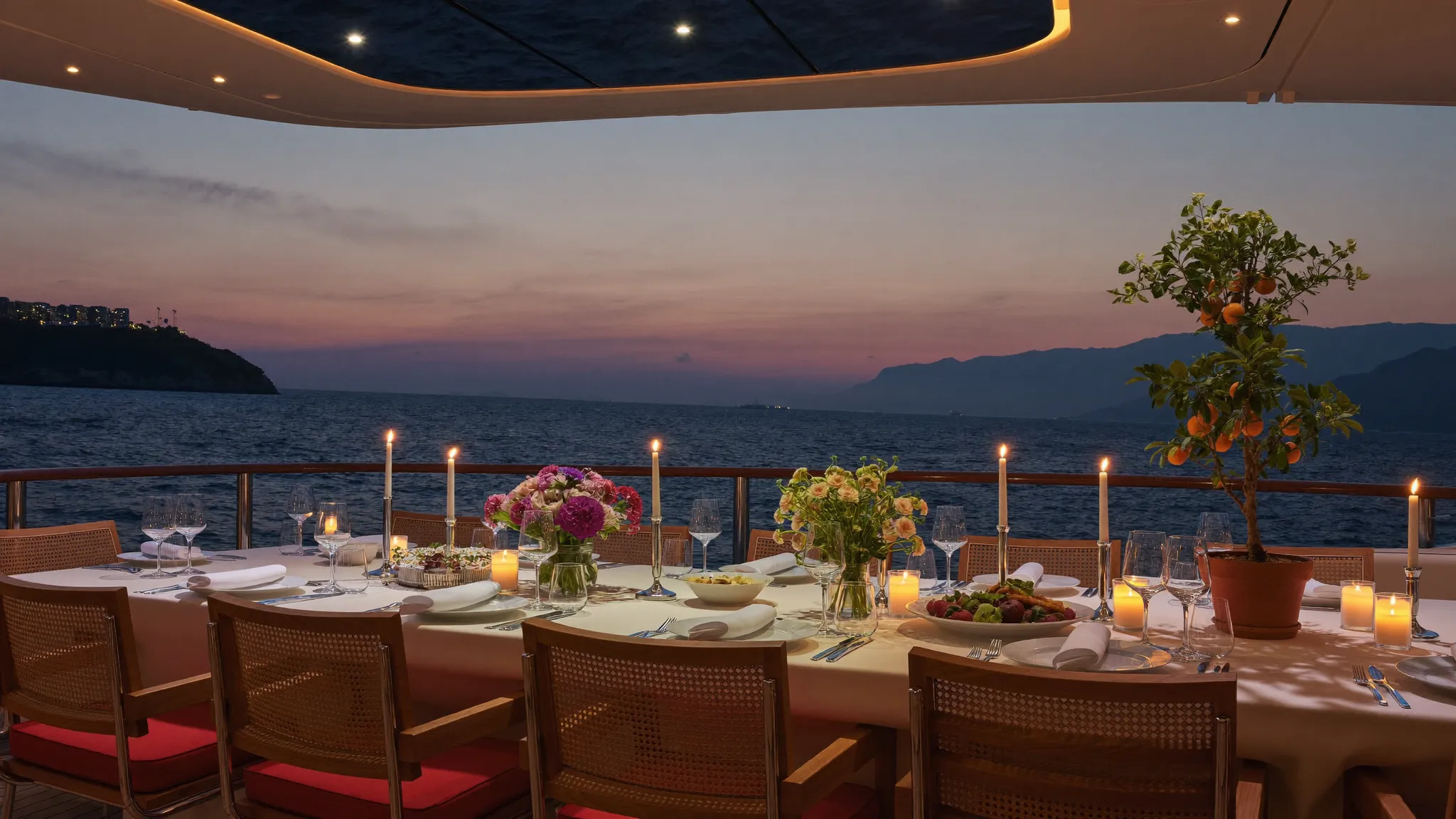
| Dwarf citrus (calamondin, kumquat) | Handle salt spray with a daily fresh-water rinse; scent the aft deck at dinner service. |
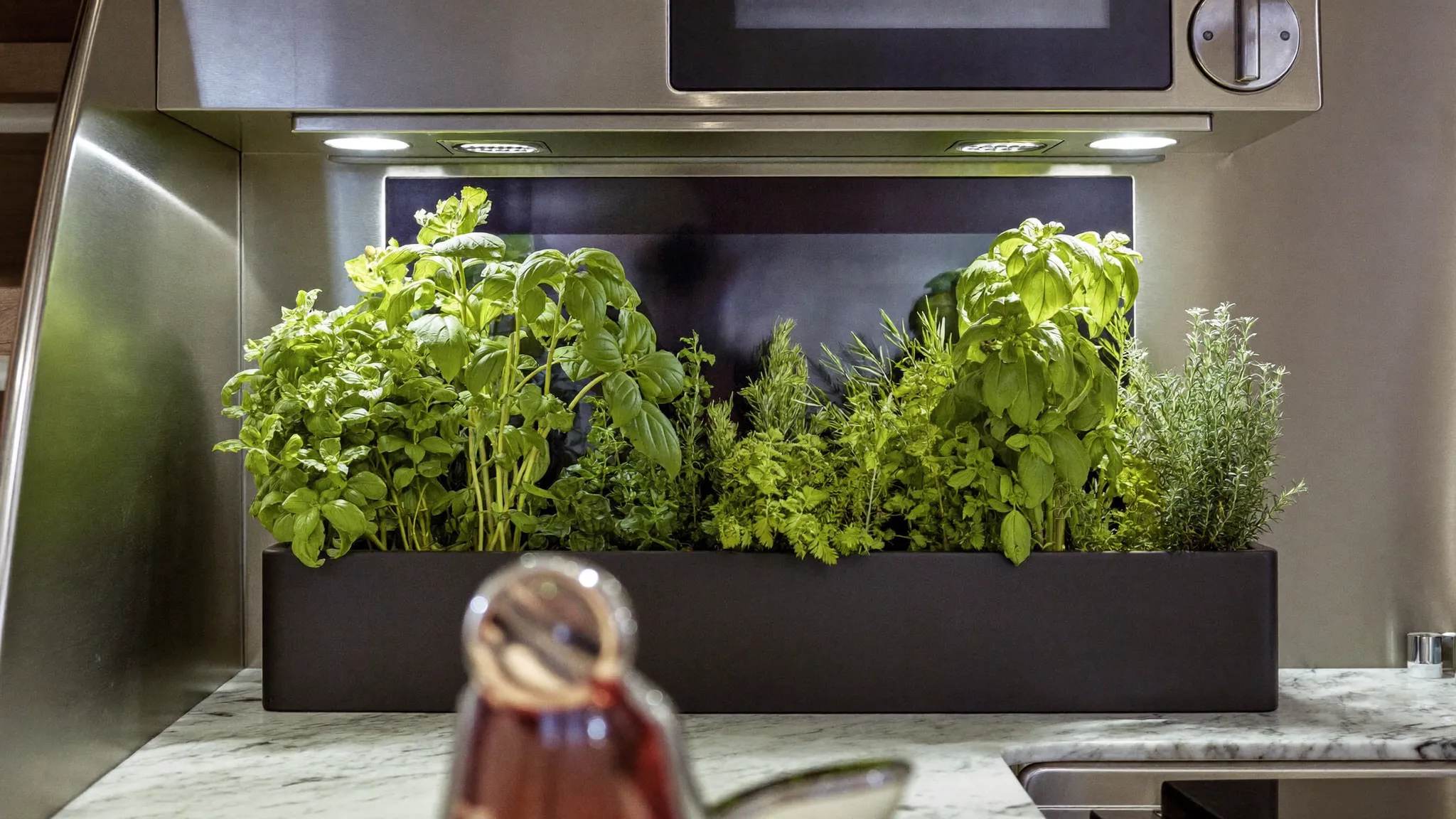
| Rosemary, thyme, bay | Mediterranean herbs that thrive on wind and sun; live in the galley garden and feed the guest menu. |
| Kentia palm (Howea forsteriana) | Originally from windswept Lord Howe Island; the classic interior yacht palm. |
| Preserved moss walls | Not alive, but no water, no light, no drop — often the honest choice for a crossing. |
| Living moss & fern walls | Only viable with automated misting, dedicated grow-lights and a full-time gardener onboard. |
The crew member you didn't know existed
On yachts over 100 metres, the crew list increasingly includes a role most people have never heard of: the onboard gardener, sometimes titled 'florist' or 'horticulturist'. Their job is a mix of botany and choreography. Every morning at sea, they rinse the salt off deck plants with fresh water from a hand-pumped canister — never the pressure wash, which blasts leaves. Before a crossing, they rotate outdoor pots into the sheltered garage or a designated interior 'green room' with grow-lights and humidifiers. They plan their entire planting scheme around the yacht's cruising itinerary: heat-tolerant species for a Red Sea passage in July, cold-hardy stock for a Norwegian fjord run in September.
On the biggest boats they also run a proper cutting garden — dahlias, sweet peas, roses — so the interior florals guests see at dinner every night have grown, quite literally, on the boat that morning.
A quiet trend
Fifteen years ago, plants on a yacht meant an orchid in the master cabin and a bowl of lemons in the galley. Today, new sail-assisted passenger ships and 120m-plus explorer yachts are launching with green walls, hydroponic herb rooms and even small greenhouses tucked behind the wheelhouse. It's not just aesthetics; it's part of a broader luxury-sector reckoning with how sterile carbon-fibre and lacquered wood can feel after two weeks at sea. The most expensive object in the anchorage, it turns out, needs the same thing every studio flat in the city needs: something alive to look at.
Frequently asked questions
Can plants survive on a yacht?
Yes, if the species is chosen for salt, wind and UV tolerance. Sansevierias, succulents, olives, citrus and Mediterranean herbs do well; large-leaved tropicals like calatheas and fiddle-leaf figs generally do not survive open crossings without a protected interior environment.
What plants are best for boats?
Snake plants (sansevieria), echeveria and other succulents, potted olive trees, dwarf citrus, rosemary, thyme, bay and kentia palms. For deck use, choose plants with waxy or fleshy leaves and always secure the pots for heel and wave motion.
Do superyachts have gardeners?
The largest ones do. Yachts above roughly 100 metres often carry a full-time onboard gardener or florist responsible for rinsing salt off deck plants, running the interior living walls, and cutting the fresh flowers used at dinner service each night.
About the author

Vegetable Garden & Seasons
Arthur has worked the same allotment for thirty years and measures the calendar in sowings, not months. He writes practical, no-nonsense guides to growing food and keeping a garden honest through the seasons — and has little patience for folklore that doesn't survive contact with a real plot.
Try it yourself
Diagnose it instantly with PlantMe
Snap a photo of any plant or leaf. Get the species, the diagnosis, and a care plan in seconds.
Download on theApp Store