Journal/Care Basics · 6 min read
How to Care for a Pothos
A complete pothos care guide: how much light and water a pothos needs, why the leaves go yellow or leggy, and how to keep the variegation bright.
Quick answer
A pothos wants bright, indirect light and watering only when the top 3–4 cm of soil is dry — usually every 1–2 weeks. It tolerates low light and the odd missed watering, which makes it one of the easiest houseplants to keep alive. Give it a free-draining pot with drainage holes and normal room temperatures of 18–30°C and it will trail for metres.
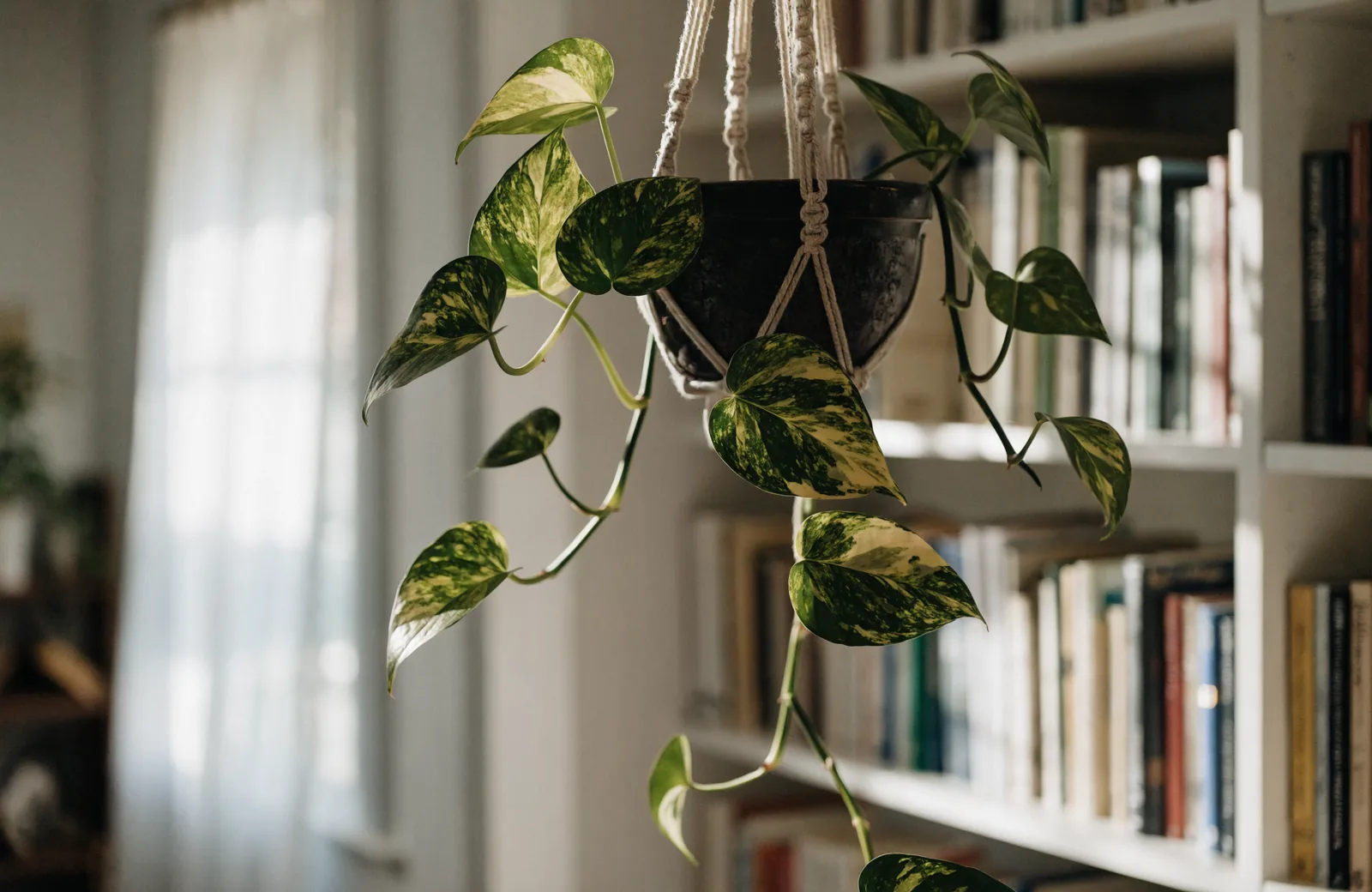
If you want one plant that survives almost anything and still looks lush, the pothos (Epipremnum aureum, sometimes sold as devil's ivy) is hard to beat. It trails happily from a shelf, climbs a pole if you let it, and forgives the kind of neglect that would finish off a fussier plant. This guide covers everything a pothos actually needs, plus the handful of problems that do crop up.
Light
Pothos grow best in bright, indirect light — a spot near an east-facing window, or a little back from a brighter south or west one. They are famous for coping with low light, and they will, but there is a trade-off: in dim corners the growth slows, the gaps between leaves stretch out, and variegated types lose their splashes of cream or gold and drift back to plain green. Direct midday sun is the other extreme to avoid, as it bleaches and scorches the leaves. If your golden or marble-queen pothos is fading to solid green, more light is almost always the answer.
Watering
Water when the top 3–4 cm of the soil is dry to the touch. In practice that is roughly once a week in a warm, bright room and every couple of weeks in cooler or lower-light spots. Water thoroughly until it runs from the drainage holes, then tip away whatever collects in the saucer or cover pot. Pothos would far rather be a shade too dry than too wet — soggy soil is the single most common way people kill them. A useful tell: a thirsty pothos droops slightly and perks back up within hours of a drink, while an overwatered one yellows and goes limp without recovering.
Soil, pots and feeding
Any decent houseplant compost works, ideally lightened with a handful of perlite or orchid bark so it drains freely. The one non-negotiable is a pot with drainage holes. Feed with a balanced liquid houseplant fertiliser at half strength every four to six weeks through spring and summer, and ease off in autumn and winter when growth naturally slows. Repot every year or two, one size up, when roots start circling the bottom or poking through the holes.
Temperature and humidity
Normal room temperatures of 18–30°C suit a pothos fine. Keep it away from cold draughts and above 10°C, as it dislikes the cold. It is not fussy about humidity and does perfectly well in average household air, though it will reward a more humid spot — a bright bathroom or kitchen — with slightly bigger, glossier leaves.
Training, pruning and propagating
Left alone, a pothos trails downward. Given a moss pole or trellis, it will climb, and the leaves grow noticeably larger as it does. Prune whenever it gets straggly by snipping just after a leaf node; this encourages bushier growth from lower down. Better still, those cuttings root almost effortlessly. Put a cutting with one or two nodes in a glass of water, keep it warm and bright, and roots appear within a couple of weeks — summer is the fastest season for it. Once the roots are a few centimetres long, pot the cutting up in soil.
Common problems
- Yellow leaves: usually overwatering. Let the soil dry out more between drinks and check the pot drains freely.
- Brown, crispy leaf tips or edges: typically underwatering or very dry air, sometimes a build-up of tap-water salts.
- Long, bare vines with leaves far apart (leggy growth): not enough light. Move it brighter and prune to encourage bushiness.
- Variegation fading to plain green: too little light for the pale, less efficient tissue to earn its keep.
- Black stems and mushy base: root rot from waterlogged soil — unpot, trim the rot, and repot into fresh, drier mix.
Warning: pothos is toxic if eaten. The leaves contain insoluble calcium oxalate crystals, which cause mouth irritation, drooling and vomiting in cats, dogs and children. Keep trailing vines up out of reach of curious pets and toddlers.
Not sure whether your pothos is thirsty, overwatered or dealing with a pest? Snap a photo in PlantMe and the app will identify the plant and cross-check the symptoms against a database of over 500 diseases and disorders, returning a likely cause and a treatment plan in seconds.
Sources & further reading
Frequently asked questions
How often should I water a pothos?
Roughly every 1–2 weeks — whenever the top 3–4 cm of soil has dried out. Err on the dry side; pothos cope with underwatering far better than with soggy roots.
Can a pothos live in low light?
Yes, it tolerates low light better than most houseplants, but growth slows and variegated types fade to green. For full, colourful growth, give it bright, indirect light.
Why is my pothos losing its variegation?
Almost always too little light. The pale patches have less chlorophyll, so in dim spots the plant favours all-green leaves. Move it somewhere brighter (but out of harsh direct sun).
About the author

Houseplants & Indoor Styling
Wren has killed enough houseplants to know exactly why yours is struggling — and kept hundreds more thriving in a small, bright flat that doubles as her test lab. She writes about reading plants instead of following rules, and believes every windowsill deserves at least one leaf.
Try it yourself
Diagnose it instantly with PlantMe
Snap a photo of any plant or leaf. Get the species, the diagnosis, and a care plan in seconds.
Download on theApp Store