Journal/Plant Science & Curiosities · 6 min read
The Complete Pet-Safe Plant Guide
The definitive list of common houseplants that are toxic to cats and dogs — plus 15 genuinely safe alternatives.
Quick answer
Common toxic houseplants for cats and dogs include lilies (especially toxic to cats), pothos, philodendron, monstera, dieffenbachia, dracaena, sago palm, and ZZ plant. Genuinely safe options include spider plant, Boston fern, calathea, parlour palm, African violet, and most true palms.
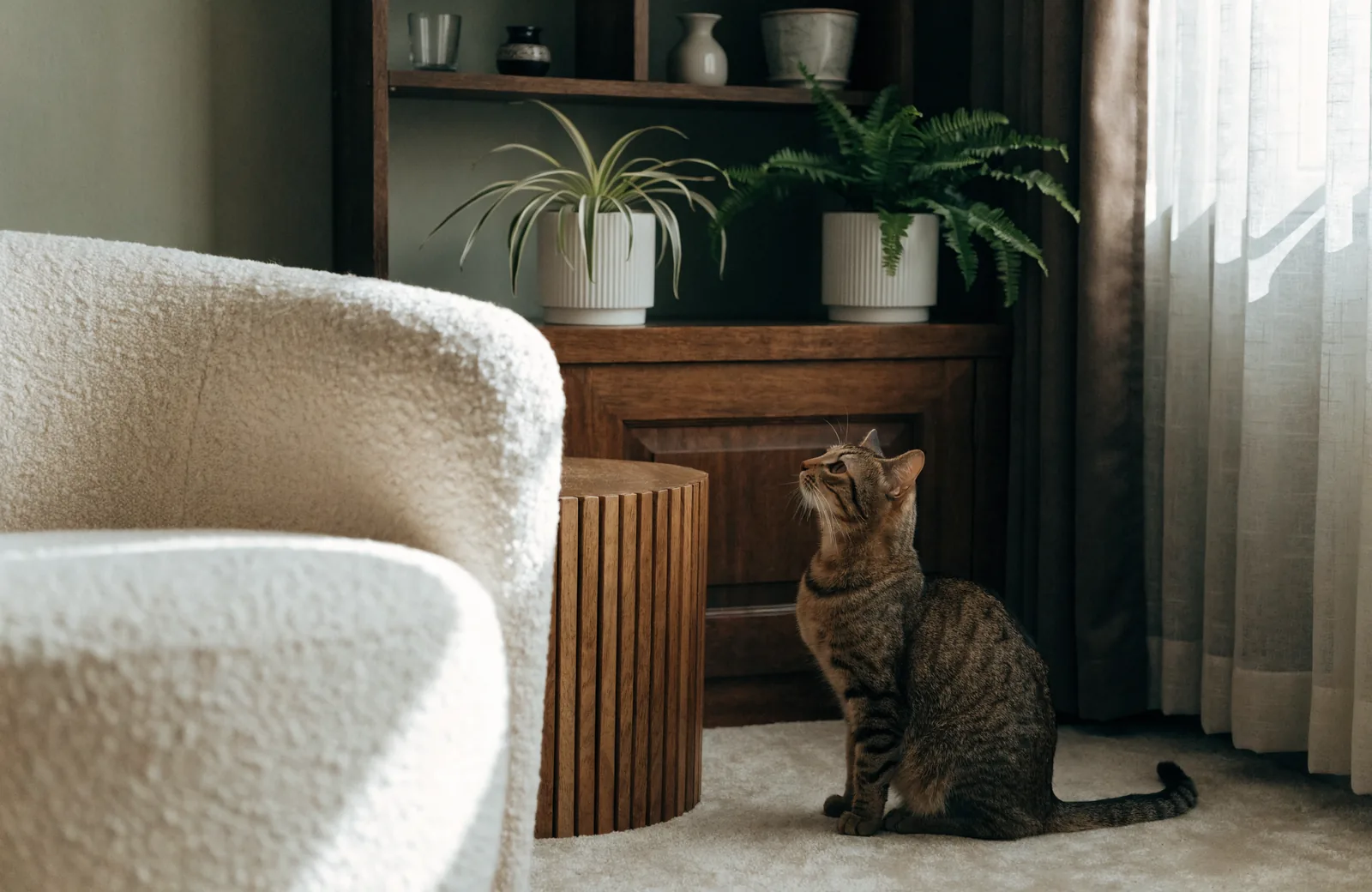
About 70% of the most popular houseplants are mildly to seriously toxic if a pet chews them. Most cause mouth irritation and vomiting rather than lasting harm — but a handful can be lethal, and it's worth knowing which is which — checking the Latin name on the label is the reliable way to tell.
Seriously toxic (keep out of reach or don't buy)
Highly toxic plants for cats and dogs
| Plant | Toxin | Symptoms |
|---|---|---|
| Lily (Lilium, Hemerocallis) | Unknown, kidney-toxic | Kidney failure in cats — often fatal |
| Sago palm (Cycas revoluta) | Cycasin | Liver failure — usually fatal if untreated |
| Oleander | Cardiac glycosides | Heart arrhythmia, death |
| Dieffenbachia | Calcium oxalates + protease | Severe mouth swelling, drooling |
| Peace lily | Calcium oxalates | Mouth pain, vomiting |
Mildly toxic (mouth irritation, vomiting)
- Pothos (Epipremnum aureum)
- Philodendron (all species)
- Monstera deliciosa
- ZZ plant (Zamioculcas zamiifolia)
- Dracaena (all species)
- Rubber plant (Ficus elastica)
- Snake plant (Dracaena trifasciata)
- Aloe vera (mildly toxic if eaten in quantity)
Genuinely safe alternatives
- Spider plant (Chlorophytum comosum) — cats love to chew the leaves; harmless.
- Boston fern (Nephrolepis exaltata)
- Calathea (all species) and prayer plants
- African violet (Saintpaulia)
- Parlour palm (Chamaedorea elegans) and most true palms
- Christmas cactus (Schlumbergera)
- Peperomia (all species)
- Fittonia
- Air plants (Tillandsia)
- Areca palm (Dypsis lutescens)
- Ponytail palm (Beaucarnea)
- Money tree (Pachira aquatica)
- Baby's tears (Soleirolia soleirolii)
- Cast iron plant (Aspidistra elatior)
- Most true herbs — basil, thyme, rosemary, sage
What to do if your pet eats a plant
- Identify the plant precisely — use PlantMe if unsure.
- Remove any remaining plant matter from your pet's mouth.
- Call your vet or the ASPCA Animal Poison Control (24/7).
- Do not induce vomiting unless told to.
- Take a leaf sample or photo to the vet.
Practical tips
- Hang toxic vines from ceiling hooks — cats jump, but young kittens usually can't reach.
- Grow cat grass (barley or wheatgrass) as a safe alternative that satisfies chewing.
- Bitter apple spray on trailing leaves discourages chewing.
- New puppies chew everything for 6–12 months; move toxic plants to closed rooms until they outgrow the phase.
PlantMe flags pet toxicity on every plant identification and detail page — useful when you are choosing plants for a dim, pet-shared room.
Sources & further reading
Frequently asked questions
Are all lilies toxic to cats?
True lilies (Lilium and Hemerocallis) are extremely toxic — even pollen on the fur is dangerous. 'Peace lily' and 'calla lily' aren't true lilies but are still mildly toxic. Keep all of them away from cats.
Why do cats eat houseplants?
Boredom, curiosity, digestive aid, and sometimes nutritional interest. Providing cat grass usually satisfies the urge and keeps them off your houseplants.
Are succulents pet-safe?
Mixed. Haworthia and echeveria are non-toxic; jade (Crassula ovata) and aloe are mildly toxic; euphorbias (like pencil cactus) are seriously toxic. Check each species.
About the author

Plant Science & Curiosities
Lena is a botanist who thinks the strangest thing about plants is how rarely we ask why they do what they do. She covers the science side of the Journal — photosynthesis, plant communication, disease biology — translating research into things you can actually use at the potting bench.
Try it yourself
Diagnose it instantly with PlantMe
Snap a photo of any plant or leaf. Get the species, the diagnosis, and a care plan in seconds.
Download on theApp Store