Journal/Seasonal · 7 min read
When to Plant Spring Bulbs (Tulips, Daffodils & Crocuses)
Plant tulips, daffodils and crocuses once soil cools below about 15°C — September to November for most gardens. Timing, depth and chilling explained.
Quick answer
Plant spring-flowering bulbs in autumn, once the soil has cooled below about 15°C (60°F) — mid-September to November in most temperate gardens — and at least six weeks before the ground freezes. Plant each bulb two to three times as deep as it is tall, pointed end up. Buy in late summer for the best selection, but keep bulbs cool and dry until the soil is ready.
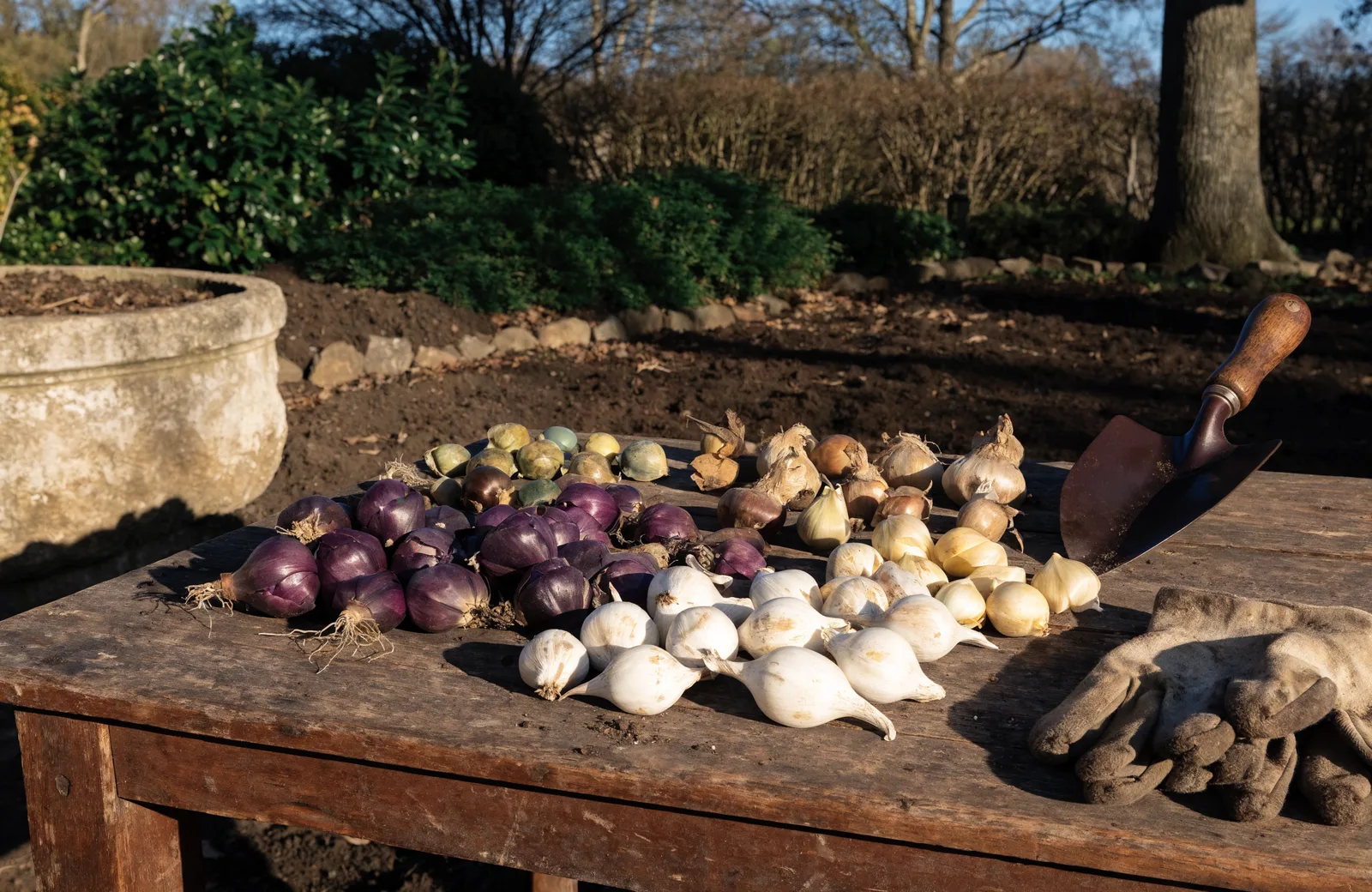
Every spectacular spring garden was planted in autumn. Tulips, daffodils, crocuses, hyacinths and alliums all work on a delay: the bulb goes into cold soil this year and pays out next March and April. The catalogues and garden-centre displays appear in late summer precisely because the best varieties sell out early — but buying time and planting time are not the same thing, and getting the gap right is most of the skill. Here is the timing, region by region, plus the depth rule and the cold-climate maths that make bulbs almost foolproof.
The rule: cool soil, not a calendar date
Bulbs root in autumn, sleep in winter, and flower in spring. The trigger for planting is soil temperature: below about 15°C (60°F) at planting depth, bulbs root steadily without the fungal problems and premature top growth that warm soil causes. In practice that means mid-September to October in cooler temperate regions, October to November in milder ones — roughly when night temperatures settle in single digits (below about 50°F), or a few weeks after the first light frost. The second half of the rule: bulbs need about six weeks in unfrozen ground to root, so aim to have everything planted at least six weeks before the ground usually freezes solid. Between those two markers, earlier is not better — bulbs sitting in warm soil are simply targets for rot and rodents.
Rough windows by climate
- Cold climates (hard, freezing winters): mid-September to mid-October.
- Cool temperate (most of the UK, central Europe, US Midwest/Northeast): October into early November — and tulips specifically are happiest planted last, in November, when soil is properly cold.
- Mild temperate (maritime and warm-temperate gardens): November into early December.
- Warm-winter regions (little or no frost): buy pre-chilled bulbs or chill them yourself — see below — and plant in late autumn or early winter.
Why bulbs must go in before winter
Spring bulbs are not being tortured by the cold — they require it. Tulips, daffodils, hyacinths and crocuses need roughly 12 to 16 weeks below about 7°C (45°F) to complete the internal chemistry that builds the flower. Skip the chill — by planting in spring, or in a climate with no real winter — and you get leaves but no bloom, or a flower that opens stunted on a stub of a stem. This is why bulbs planted in spring from a forgotten autumn bag almost never work, and why warm-climate gardeners treat the refrigerator as a substitute winter.
How deep, which way up
- Depth: two to three times the height of the bulb. Big tulip and daffodil bulbs go about 15–20 cm deep; small crocuses, snowdrops and grape hyacinths about 8–10 cm.
- Orientation: pointed end up, flat rooting plate down. If you truly cannot tell, plant it on its side — the shoot will find its own way up.
- Spacing: two to three bulb-widths apart, and always in groups. A dozen tulips in a tight cluster beats fifty in a thin line.
- Aftercare: water once, well, to settle the soil and start rooting — then leave them. Autumn rain does the rest, and soggy beds rot bulbs.
Tip: plant in generous, informal drifts rather than rows — toss a handful of bulbs gently onto the bed and plant each where it lands. And plant more than feels reasonable: the commonest bulb regret in April is not planting enough in October.
Buy early, plant late
Buy bulbs in late summer or early autumn while the good varieties are still in stock, then store them somewhere cool, dry and ventilated — a paper bag in a shed or cellar, never a sealed plastic bag — until the soil cools. Choose bulbs that are plump and heavy for their size, with no soft spots or blue-grey mould. A wrinkle of dry papery skin is harmless; a squishy base is a reject.
The warm-climate workaround
No cold winter? Give bulbs their chill in the refrigerator: 12 to 16 weeks in a paper bag in the crisper drawer, then plant into your coolest months and treat the display as a one-season show. Keep chilling bulbs away from ripening fruit — apples and bananas give off ethylene gas, which quietly kills the flower forming inside the bulb.
Squirrels, mice and other bulb thieves
Freshly planted tulip and crocus beds read as buried treasure to squirrels, mice and voles. Lay a piece of chicken wire or wire mesh flat over the planting area, pinned down and covered with a little soil or mulch — shoots grow through the gaps in spring, but nothing can dig from above. Firming the soil well and clearing away the papery bulb tunics also helps hide the evidence. Daffodils, snowdrops and alliums are largely left alone: their bulbs are unpalatable to rodents, which is one more reason daffodils are the beginner's bulb.
Warning: after flowering next spring, resist the urge to tidy. Deadhead the spent flower, but leave all foliage to yellow and die back naturally — about six weeks — because those leaves are photosynthesising next year's flower into the bulb. Cutting, mowing or braiding bulb leaves in May is the single biggest reason displays fade away after a year or two. Daffodils and crocuses treated kindly come back for decades; most large hybrid tulips decline after their first year regardless, so treat those as annuals or choose species tulips for repeat shows.
Come spring, when unexpected shoots and mystery flowers appear — the previous owner's bulbs, or the ones you forgot you planted — point PlantMe at them. The app identifies plants across 35,000+ species with 93% top-3 accuracy, so you'll know your species tulips from your hybrids before you decide what stays.
Sources & further reading
Frequently asked questions
Is it too late to plant bulbs in December or January?
If the ground isn't frozen solid, it's worth planting. Bulbs left in the bag are certain losses; bulbs planted late usually still flower, just a little later and shorter in their first spring. Get them in whenever the soil is workable.
Can I plant spring bulbs in spring instead?
Not usefully. Tulips, daffodils and crocuses need 12–16 weeks of cold to form flowers, so spring-planted bulbs give leaves at best. The exceptions are summer bulbs — dahlias, gladioli, lilies — which are meant for spring planting.
Which end of the bulb goes up?
The pointed end. The flat, often rough plate at the other end is where roots emerge and faces down. If a bulb is too knobbly to read, plant it on its side and the shoot will right itself.
Do tulips come back every year like daffodils?
Mostly no. Daffodils, crocuses and snowdrops reliably perennialize and multiply for decades. Large hybrid tulips flower magnificently once and decline, so many gardeners replant them each autumn — or switch to species (botanical) tulips, which do return year after year.
Why didn't my bulbs flower?
The usual suspects: not enough winter chill, foliage cut down too early the previous spring, planting too shallow, waterlogged soil rotting the bulb, or rodents eating it entirely. Blind daffodil clumps are often just overcrowded — lift and divide them in early summer.
About the author

Vegetable Garden & Seasons
Arthur has worked the same allotment for thirty years and measures the calendar in sowings, not months. He writes practical, no-nonsense guides to growing food and keeping a garden honest through the seasons — and has little patience for folklore that doesn't survive contact with a real plot.
Try it yourself
Diagnose it instantly with PlantMe
Snap a photo of any plant or leaf. Get the species, the diagnosis, and a care plan in seconds.
Download on theApp Store