Journal/Care Basics · 6 min read
Air Plant (Tillandsia) Care: How to Keep Them Alive
Air plants don't live on air alone. Soak them 20–30 minutes every 1–2 weeks, dry upside down, give bright indirect light — the full Tillandsia guide.
Quick answer
Air plants (Tillandsia) need more than air: soak them in room-temperature water for 20–30 minutes every one to two weeks, shake them off, and dry them upside down within a few hours to prevent rot. Give bright, indirect light, good airflow, and temperatures of roughly 10–30 °C. Each plant blooms once, then produces pups you can grow on.
Air plants look like they were designed to be unkillable: no soil, no pot, no mess — just a sculptural rosette sitting in a bowl or perched on a shelf. Then, a few months in, the mysterious deaths begin. The truth is that 'air plant' is a marketing name, not a care instruction. Tillandsias absolutely need water and light; they just collect them in an unusual way. Get watering right and they are among the easiest plants you can own.
What an air plant actually is
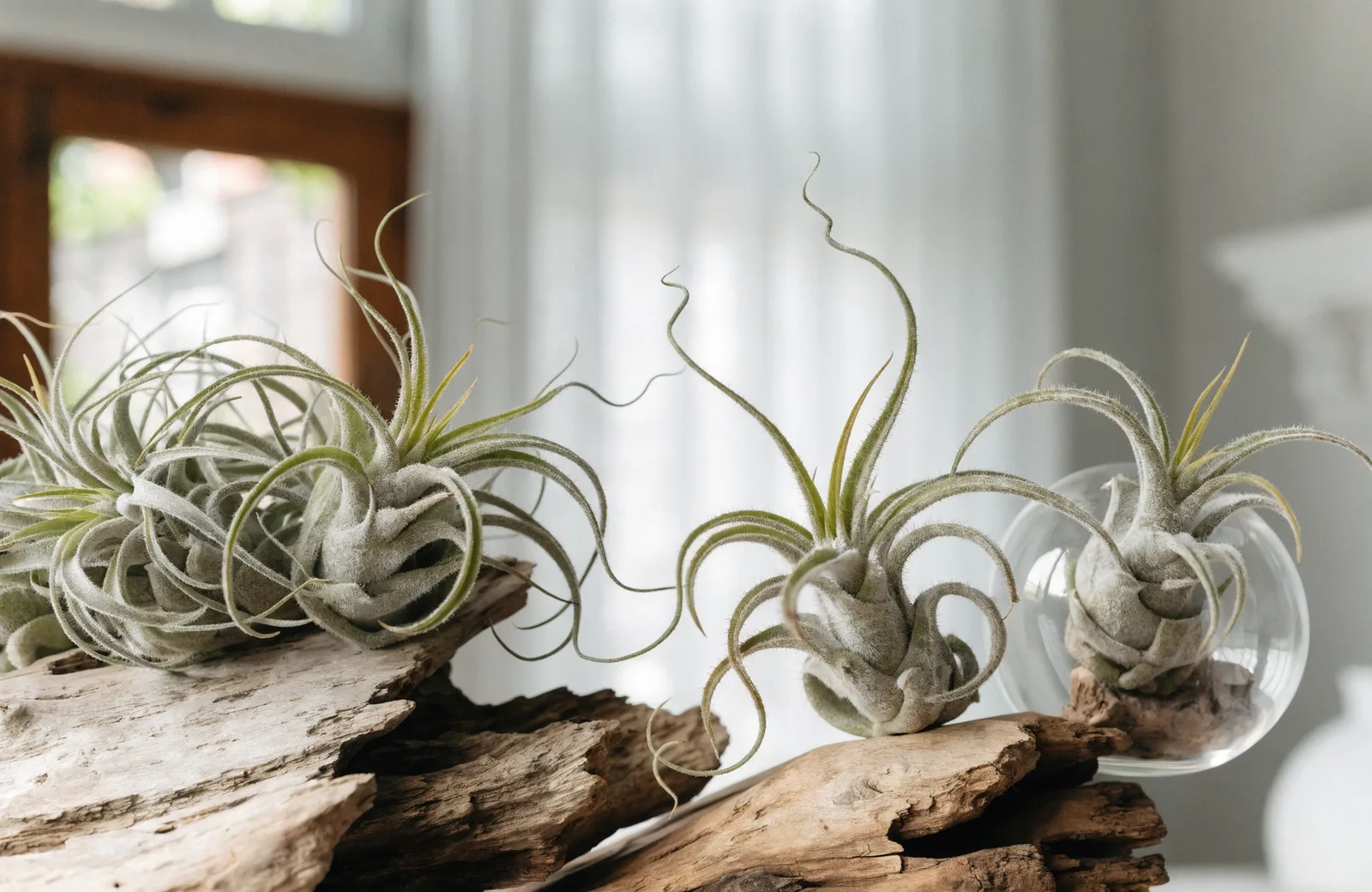
Tillandsias are epiphytes in the bromeliad family — over 600 species that grow in the wild anchored to tree branches, cliffs, and even cacti across Central and South America, Mexico, and the southern United States. Their roots exist only to grip. All feeding happens through the leaves, which are covered in microscopic silvery scales called trichomes that absorb water and dissolved nutrients straight from rain, mist, and dew. Those trichomes are what give many air plants their fuzzy, frosted look.
Light
Give air plants bright, indirect light — near an east- or west-facing window is ideal. The silvery, fuzzy species tolerate more sun; thin, smooth, deep-green ones scorch faster and want gentler light. A few hours of mild morning sun is fine, but hot midday sun behind glass cooks them. They also thrive under decent artificial light, which makes them perfect desk plants.
How to water an air plant
Forget misting as the main method — for most homes it is not enough. The gold standard is the soak: fill a bowl with room-temperature water, submerge your air plants face-down, and leave them for 20–30 minutes. Do this every week in warm, dry conditions, and every two weeks in cooler or more humid ones. Rainwater or filtered water is ideal; softened water is not, as the salts damage the trichomes. In between soaks, a light misting once or twice a week keeps them fresh in dry rooms.
A shrivelled, curled, unusually light plant is thirsty and can take a longer soak of a few hours to rehydrate. Wrinkled or rolled leaves mean you waited too long; crispy brown tips often mean dry air or underwatering.
The drying step everyone skips
Warning: more air plants die from trapped water than from thirst. After every soak, shake each plant firmly and set it upside down on a towel with good airflow until it is completely dry — no more than about four hours. Water left pooled in the base of the rosette causes rot: the centre turns brown or black, and the plant falls apart at a gentle tug. Never leave a freshly watered air plant sitting in an enclosed terrarium.
Temperature, airflow, and feeding
Air plants are comfortable in the same range you are — roughly 10–30 °C, with 18–25 °C ideal — and must never freeze. Airflow matters more than for any potted plant: they want to dry quickly and breathe, so open rooms beat sealed glass globes. For extra vigour, add a pinch of bromeliad or tillandsia fertiliser to the soaking water once a month in spring and summer. It is optional, but it noticeably boosts growth and blooming.
Blooms, pups, and the tillandsia life cycle
Every tillandsia flowers exactly once. Many species blush red or pink first, then push out a vivid bloom spike that can last weeks. After flowering, the mother plant slowly redirects its energy into pups — baby offsets that appear at the base. Leave the pups attached until they reach about a third of the mother's size, then twist them off gently or leave the whole thing to grow into a clump. The mother declines over the following months; that is the natural cycle, not a care failure.
Mesic vs xeric: match the plant to the spot
The two broad types of air plant
| Type | Look | Origin | Wants |
|---|---|---|---|
| Mesic | Smooth, glossy, greener leaves | Humid forests | More frequent soaks, gentler light |
| Xeric | Fuzzy, silvery, stiff leaves | Deserts and dry scrub | More light, less frequent watering |
Common mistakes
- Relying on misting alone — most indoor air plants slowly dehydrate this way.
- Not drying plants upside down after soaking — the leading cause of rot.
- Sealed terrariums with no airflow.
- Softened water — the salts clog the trichomes that feed the plant.
- Gluing plants to displays — glue blocks trichomes and makes soaking impossible; use wire (never copper, which is toxic to tillandsias) or simply rest them in place.
If your air plant is browning and you can't tell rot from sunburn from thirst, snap a photo in PlantMe — the app identifies the species and the likeliest problem, and tells you exactly what to change.
Sources & further reading
Frequently asked questions
How often should I water an air plant?
Soak it in room-temperature water for 20–30 minutes every 1–2 weeks — weekly in warm, dry homes. Always shake it out and dry it upside down afterwards.
Do air plants really live on air?
No. They absorb water and nutrients through leaf scales called trichomes, but they still need regular soaking, bright indirect light, and airflow to survive indoors.
Why is my air plant falling apart from the centre?
That is rot from water trapped in the rosette. It is usually fatal, but you can save healthy pups. Next time, dry plants upside down after watering.
Will my air plant flower again after blooming?
No — each tillandsia blooms once in its life. Afterwards it produces pups at its base, which grow into new plants that will eventually bloom themselves.
About the author

Houseplants & Indoor Styling
Wren has killed enough houseplants to know exactly why yours is struggling — and kept hundreds more thriving in a small, bright flat that doubles as her test lab. She writes about reading plants instead of following rules, and believes every windowsill deserves at least one leaf.
Try it yourself
Diagnose it instantly with PlantMe
Snap a photo of any plant or leaf. Get the species, the diagnosis, and a care plan in seconds.
Download on theApp Store