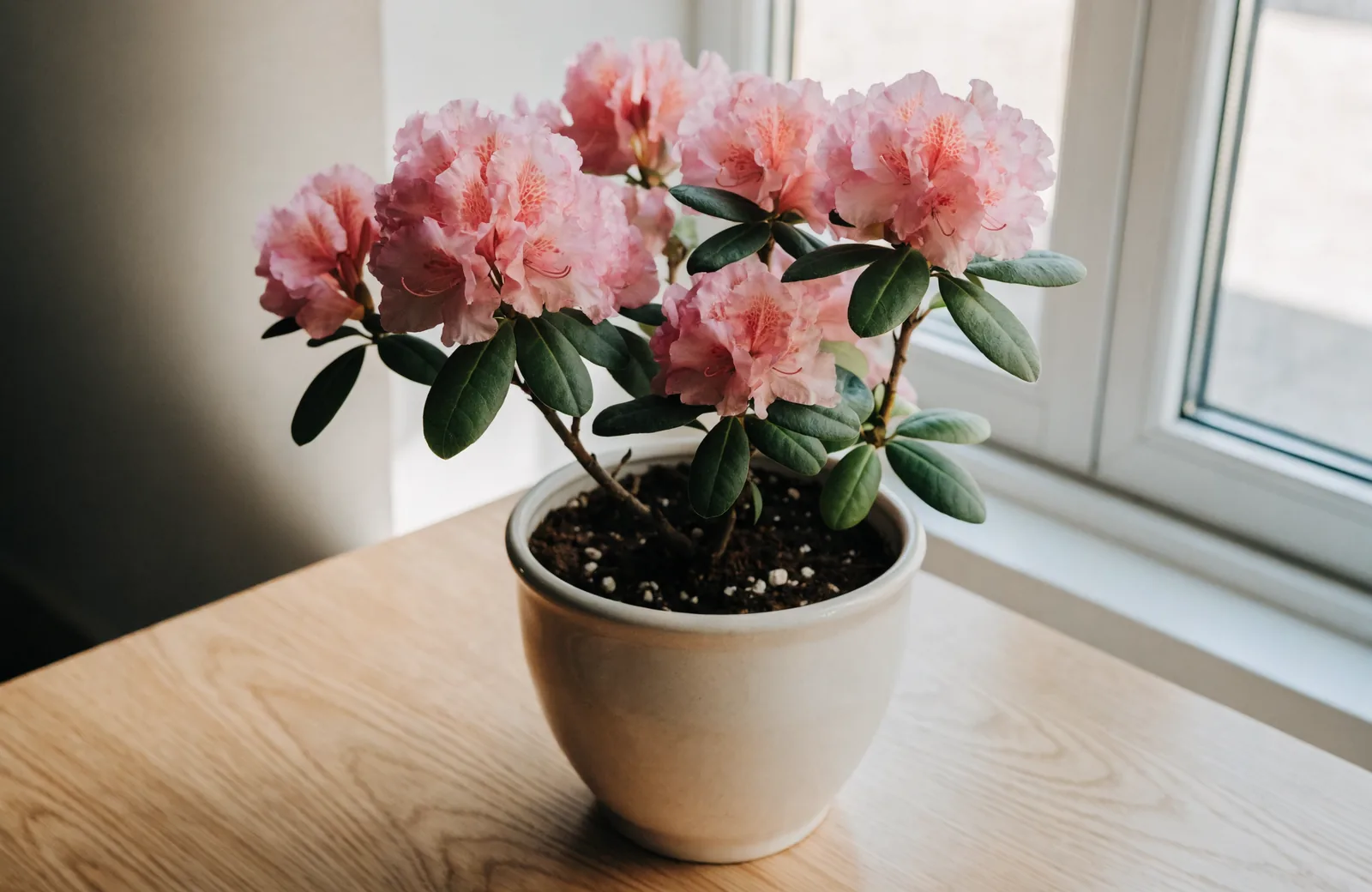
Journal/Care Basics · 7 min read
How to Care for Azaleas (Indoors & Out)
How to care for azaleas in the garden and indoors: acidic soil, dappled shade, rainwater, pruning after flowering, and fixes for yellow leaves and bud drop.
Quick answer
Azaleas want acidic soil (pH 4.5–6.0), dappled shade, and consistently moist — never waterlogged — soil, ideally watered with rainwater. Plant them shallow, mulch the surface, and prune only in the weeks right after flowering. Indoor florist azaleas add one demand: a cool, bright room around 10–16°C.
Few shrubs earn their keep like an azalea. For most of the year it is a tidy mound of small leaves, and then for a few weeks in spring it disappears entirely under flowers. Azaleas belong to the genus Rhododendron, and once you know the three things the whole family insists on — acid soil, shallow roots, steady moisture — they are far easier than their reputation suggests.
This guide covers both garden azaleas and the potted 'florist azaleas' sold in flower for windowsills, because the two are cared for differently and mixing up the advice is the main reason indoor azaleas die within a month.
Know which azalea you have
- Evergreen (Japanese) azaleas: compact, small-leaved shrubs that keep their foliage all year. Usually hardy, ideal for pots and low hedges.
- Deciduous azaleas: taller and airier, often scented, with fiery autumn leaf colour before the leaves drop. Very cold-hardy.
- Indoor florist azaleas (Rhododendron simsii): tender greenhouse-raised plants sold in bud from autumn to spring. They are not frost-hardy and live on cool windowsills, not in the garden.
Light: dappled shade, not deep shade
In the garden, azaleas are woodland-edge plants. They flower best in dappled or partial shade — the filtered light under high trees is perfect. Deep shade gives you a healthy but nearly flowerless plant; harsh all-day sun scorches the leaves, dries the shallow roots, and invites lace bugs. Morning sun with afternoon shade is a reliable compromise in most gardens.
Soil: acidic or nothing
This is the non-negotiable. Azaleas need acidic soil with a pH between roughly 4.5 and 6.0. In alkaline or chalky ground they cannot take up iron, and the leaves turn yellow between green veins (chlorosis) while the plant slowly starves. If your soil is neutral to alkaline, grow azaleas in containers of ericaceous (lime-free) compost instead — fighting your soil's chemistry rarely works long-term.
Drainage matters just as much. Azalea roots are fine, fibrous, and shallow, and they rot quickly in waterlogged ground. Work in plenty of organic matter such as leaf mould or composted bark before planting.
Planting: keep it shallow
Plant azaleas with the top of the root ball level with — or a whisker above — the surrounding soil. Buried stems and deeply planted root balls suffocate the roots. After planting, mulch with a 5–7 cm layer of pine bark, pine needles, or leaf mould, kept a hand's width clear of the stems. The mulch keeps the shallow roots cool and moist and gently feeds the acidity the plant wants.
Watering: steady moisture, ideally rainwater
Because the roots sit in the top few centimetres of soil, azaleas feel drought before most shrubs do. Keep the soil consistently moist through the growing season, watering deeply rather than little and often. One detail repays attention: hard tap water slowly raises the soil pH with every watering. If you live in a hard-water area, water with collected rainwater whenever you can, and save tap water for emergencies.
Tip: a summer drought while next year's flower buds are forming is the hidden cause of many 'my azalea didn't bloom this year' mysteries. Never let the root zone bake dry in July and August.
Feeding
Azaleas are light feeders. An ericaceous fertiliser applied once after flowering, and perhaps again in early summer, is plenty. Overfeeding scorches the fine roots and produces soft leafy growth at the expense of flowers. If leaves yellow between the veins despite acidic soil, a dose of chelated (sequestered) iron greens them up while you correct the water or pH.
Pruning: only right after flowering
Azaleas set next spring's flower buds in mid-to-late summer. That gives you one safe pruning window: the few weeks immediately after this year's flowers fade. Light trimming is all they normally need — remove spent flower trusses, wayward shoots, and dead wood. Warning: prune in autumn or winter and you will cut off every bud, guaranteeing a flowerless spring. If you must renovate an old, leggy plant, do it straight after flowering and accept a lean year or two.
Indoor florist azaleas
The potted azaleas sold in full bud are Rhododendron simsii, and their enemy is central heating. Give them the brightest, coolest room you have — around 10–16°C is ideal — out of direct sun and away from radiators. Keep the root ball evenly moist with rainwater or soft water; many growers dunk the pot in a basin for a few minutes weekly, then drain. In a cool room the display lasts well over a month. In a warm dry one, the buds shrivel and drop within days. After flowering, keep it cool and bright, and move it to a shaded spot outdoors for the summer once frosts pass.
Common problems
- Yellow leaves with green veins: iron chlorosis from alkaline soil or hard water. Acidify, switch to rainwater, apply chelated iron.
- Buds formed but never opened, turning brown or silvery: bud blast or frost damage; in warm rooms, heat and dry air.
- No flowers at all: pruned too late, too much shade, or drought the previous summer.
- Mottled, bleached leaves with dark specks beneath: lace bugs — usually on azaleas planted in too much sun.
- Flowers collapsing to mush overnight in warm wet weather: petal blight. Remove and bin affected flowers, never compost them.
- Wilting despite moist soil: root rot from poor drainage.
Warning: azaleas, like all rhododendrons, contain grayanotoxins and are toxic to dogs, cats, and horses if chewed. Site them, and dispose of prunings, accordingly.
Not sure whether you're looking at chlorosis, lace bug damage, or something else entirely? Photograph the worst leaf with PlantMe — the app recognises 500+ plant diseases and disorders and returns a diagnosis with a treatment plan in seconds.
Sources & further reading
Frequently asked questions
Why is my azalea not flowering?
The three usual causes are pruning after midsummer (which removes the flower buds), too much shade, and drought stress the previous summer while buds were forming. Check the pruning calendar first — it is the most common mistake.
Are coffee grounds good for azaleas?
Only marginally. Used coffee grounds are close to pH-neutral and won't meaningfully acidify soil. A mulch of pine bark or pine needles plus ericaceous fertiliser is far more reliable.
Why are my azalea's leaves turning yellow?
Yellow leaves with green veins mean iron chlorosis — the soil or your tap water is too alkaline. Uniform yellowing of older inner leaves in autumn is normal leaf turnover, even on evergreen types.
Can I plant my indoor azalea in the garden?
Usually not. Florist azaleas (Rhododendron simsii) tolerate only light frost at best. In mild regions they can go out in a sheltered shady spot; elsewhere keep them as cool-room pot plants and summer them outdoors.
Are azaleas poisonous to pets?
Yes. All parts contain grayanotoxins, which are toxic to dogs, cats, and horses. Keep plants and prunings out of reach and contact a vet if you suspect your pet has chewed one.
About the author

Houseplants & Indoor Styling
Wren has killed enough houseplants to know exactly why yours is struggling — and kept hundreds more thriving in a small, bright flat that doubles as her test lab. She writes about reading plants instead of following rules, and believes every windowsill deserves at least one leaf.
Try it yourself
Diagnose it instantly with PlantMe
Snap a photo of any plant or leaf. Get the species, the diagnosis, and a care plan in seconds.
Download on theApp Store