Journal/Care Basics · 7 min read
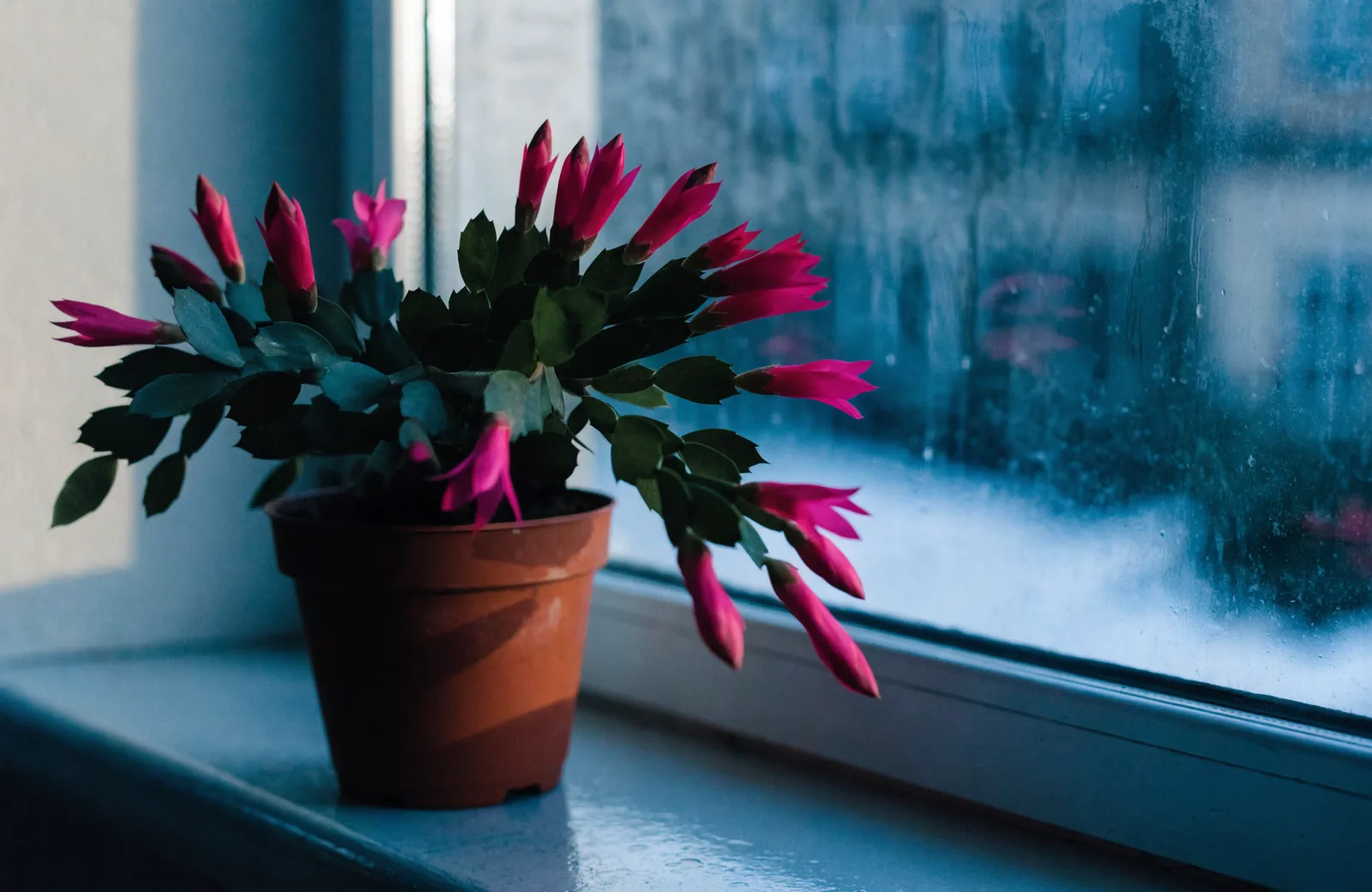
Christmas Cactus Care: The Complete Guide
Christmas cactus care made simple: light, watering, soil, and the short-day trick that gets Schlumbergera blooming on schedule — plus fixes for bud drop.
Quick answer
A Christmas cactus (Schlumbergera) is a Brazilian rainforest plant, not a desert one: give it bright indirect light, water when the top 2–3 cm of compost is dry, and decent humidity. To flower on time, give it six weeks of cool nights (10–15°C) and 12–14 hours of darkness from late September — then don't move it once buds appear.
Almost everything the word "cactus" makes you do is wrong for a Christmas cactus. Schlumbergera doesn't come from a desert; it grows on tree branches in the cool, misty coastal mountains of south-eastern Brazil, wedged into pockets of leaf litter in dappled shade. Care for it like a rainforest plant with a cactus's dislike of soggy feet and it will live for decades — these are the plants that get passed down through families, flowering every winter on a windowsill for fifty years.
Which holiday cactus do you actually have?
The three holiday cacti at a glance
| Segment edges | Typical bloom time | |
|---|---|---|
| Thanksgiving cactus (S. truncata) | Pointed, claw-like teeth | Late autumn |
| Christmas cactus (S. × buckleyi) | Rounded, scalloped | Early to mid winter |
| Easter cactus (now Rhipsalidopsis) | Very rounded, with bristles | Spring |
Most plants sold as "Christmas cactus" are actually Thanksgiving cacti, which is why yours may bloom weeks earlier than the label promised. Care is identical for the first two; the Easter cactus follows the same rules but sets buds in response to winter cool followed by lengthening spring days.
Light
Bright but indirect: an east-facing windowsill is perfect, as is a spot just back from a brighter window. Full midday sun scorches the segments and turns them red-tinged and shrivelled; deep shade means lush green growth and no flowers. Outdoors in summer, a shaded porch or the dappled light under a tree suits it beautifully — just bring it in before nights drop below about 10°C, as with most tender plants in autumn.
Watering
This is where the rainforest half matters. Unlike a desert cactus, a Schlumbergera never wants to bake bone-dry for weeks. Water when the top 2–3 cm of compost feels dry — roughly weekly in a warm room in summer, every 10–14 days in winter — until it runs from the drainage holes, then empty the saucer. The flip side: it's still an epiphyte with fine roots, and constantly wet compost rots them quickly. Limp, wrinkled segments with wet soil mean rot; the same symptoms with dry soil mean thirst.
Humidity, soil and feeding
Aim for 50% humidity or better — a pebble tray or a spot in a bright kitchen or bathroom works. Pot it in a free-draining mix: two parts houseplant compost to one part perlite or fine bark mimics the leaf-litter pockets it grows in naturally. Feed monthly at half strength from spring to late summer, then stop while buds are forming. Repot only every three to four years; Schlumbergera genuinely flowers better slightly pot-bound.
How to make it flower — start in late September
Schlumbergera is a short-day plant: buds are triggered by long nights and cool temperatures, which in its Brazilian home arrive together in autumn. From late September or early October, give it about six weeks of: nights of 12–14 hours of genuine, uninterrupted darkness (a spare room, or anywhere lamps and TVs don't reach after sunset); cool temperatures, ideally 10–15°C at night; and slightly reduced watering. A cool bedroom windowsill does all three at once with zero effort. Around 13°C or below, buds will form almost regardless of day length — which is why an unheated porch produces the best-flowering plants in the neighbourhood.
Tip: an autumn holiday outdoors does the trick naturally. Leave the plant outside in shade until nights approach 10°C and it will usually come back in already budding.
The golden rule once buds appear
Warning: once you can see buds, stop moving the plant. Schlumbergera is notorious for dropping buds in response to sudden change — a new position, a blast of hot radiator air, a cold draught, drought, or waterlogging. Pick its flowering spot before buds form, keep watering steady, and turn the pot no more than slightly. A plant in bloom can flower for six weeks or more if it's simply left alone.
After flowering
Let the plant rest for a couple of months: slightly less water, no feed, same bright spot. In spring, prune lightly by twisting off one or two segments at the joints where stems are getting long — it keeps the plant bushy and triggers branching, which means more flowering tips next winter.
Propagation: the easiest gift plant there is
- In spring or early summer, twist off (don't cut) sections of two to four segments.
- Let the ends callus for a day or two.
- Push the bottom segment a centimetre deep into barely moist, gritty compost, several cuttings to a pot.
- Keep warm, bright and only just moist; roots form in three to four weeks. Cuttings often flower in their first winter.
Common problems
- Buds dropping before opening: sudden change — moved pot, temperature swing, or watering extremes. Stabilise everything and let it recover.
- Limp, wrinkled segments: check the compost — wet means root rot (repot into fresh dry mix after trimming brown roots), dry means thirst.
- Red or purple-tinged segments: too much direct sun, or the plant is cold and hungry. Usually cosmetic.
- No flowers at all: warm rooms and evening lamplight are the usual culprits — the plant never experiences a long, cool night. Repeat the September–October routine above.
- Corky, tan patches on old segments: harmless age-related scarring (edema-like), not disease.
Good news for pet households: unlike many festive plants, holiday cacti are non-toxic to cats and dogs. And if you're not sure whether yours is a Thanksgiving, Christmas or Easter type — or whether that limpness is rot or thirst — photograph it with PlantMe and the app will identify the plant and diagnose the problem in seconds.
Sources & further reading
Frequently asked questions
How often should I water a Christmas cactus?
When the top 2–3 cm of compost is dry — about weekly in summer, every 10–14 days in winter. Water thoroughly and let it drain. It wants more moisture than a desert cactus but rots just as fast in a waterlogged pot.
Why is my Christmas cactus dropping its buds?
Bud drop is almost always a reaction to sudden change: being moved once buds had formed, hot radiator air, cold draughts, or a big swing in watering. Keep the plant in one stable, bright spot from bud formation until flowering ends.
When should I start the dark treatment for Christmas flowering?
Late September to early October. Six weeks of 12–14 hour nights and cool temperatures (10–15°C) sets buds for December flowering. A cool, rarely lit spare room does the job automatically.
Is a Christmas cactus poisonous to cats or dogs?
No — Schlumbergera is considered non-toxic to cats and dogs. A pet that chews a lot of segments may get a mildly upset stomach, but it's one of the safer flowering houseplants for pet homes.
Try it yourself
Diagnose it instantly with PlantMe
Snap a photo of any plant or leaf. Get the species, the diagnosis, and a care plan in seconds.
Download on theApp Store