Journal/Troubleshooting · 5 min
Cyclamen Leaves Turning Yellow: Read the Leaf Before You Reach for the Watering Can
Camille Fournier on yellowing cyclamen leaves — how to tell normal dormancy from an overheated room, watering at either extreme, low light, and the one pest that ends the story.
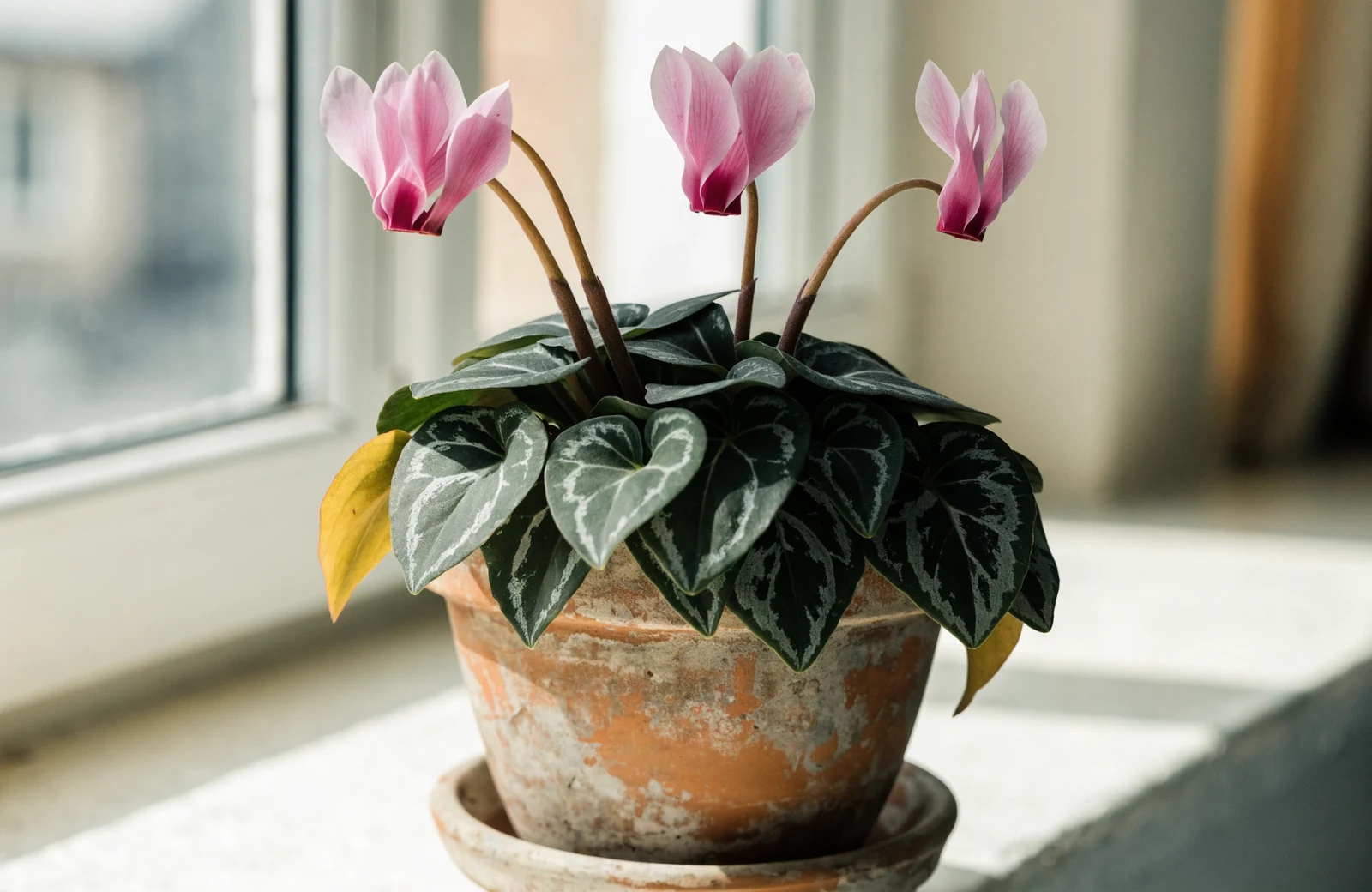
Cyclamen arrive in homes by the thousands in November, and by late November the first worried questions follow: the outer leaves are going yellow, one by one. Before you change anything, look at which leaves are yellowing, how fast, and what the rest of the plant is doing. A florist's cyclamen (Cyclamen persicum) is a Mediterranean tuber on a strict internal calendar, and a yellow leaf can mean five different things — only some of them problems. Work through the causes in order; the first two cost nothing to rule out.
First, decide whether anything is wrong at all
A cyclamen shedding one or two of its oldest, outermost leaves while the centre of the mound stays firm and keeps producing buds is doing routine maintenance, not failing. And there is a second innocent explanation with a calendar attached: in its native cycle the plant grows through autumn, flowers in winter, and goes dormant for the summer. When dormancy arrives — normally late spring, after flowering — the leaves yellow and drop wholesale as the tuber pulls the energy back in, and University of Wisconsin–Madison Extension notes the rest period runs two to three months. A plant doing this in May is on schedule. A plant doing it in November, three weeks after you bought it, is not dormant; something in the room is wrong, so keep reading.
The most common culprit: a room that is simply too warm
A cyclamen is not a tropical houseplant, and the single most frequent cause of a November yellow-out is treating it like one. Clemson University's Home & Garden Information Center puts the ideal range at 15–18 °C (60–65 °F) by day and around 10 °C (50 °F) at night, and warns that above about 21 °C (70 °F) flower buds fail to develop. A centrally heated living room sits above that ceiling all winter. The leaves respond first: they yellow progressively, flowering stalls, and the plant slides toward an early, forced dormancy. The fix is a cooler position — an unheated hallway, a bright porch, the coolest windowsill in the house — and distance from every radiator and heat vent, which dry the pot as fast as they warm it.
Watering: both extremes end in the same colour
Yellow leaves are the shared symptom of too much water and too little, so check the pot before you act. Wisconsin's horticulture extension gives the useful field test: cyclamen foliage should be firm and upright, and leaves that have gone soft usually mean the plant needs water, while a plant kept constantly wet yellows as the roots sit airless. The stakes are higher on the wet side, because water pooled in the crown or against the tuber rots it — which is why both Clemson and Wisconsin say to water from the edge of the pot or from below, standing the pot in water for about fifteen minutes, then letting the surface approach dryness before the next round. If you suspect the wet version, the broader rescue steps in overwatering vs underwatering apply to cyclamen too.
Light: enough to work with, never full scorch
Yellowing with weak, stretched leaf stems points at light rather than water. Cyclamen want bright, indirect light — an east window is the classic spot, and in midwinter a brighter exposure is usually safe. A plant in a dim corner yellows slowly and evenly; a plant pressed against hot glass in direct sun bleaches in patches instead. If the whole collection is struggling as the days shorten, the general triage in why are my plant leaves turning yellow helps separate light problems from feeding ones.
Feeding and the one pest that ends the story
Underfed plants in old compost run pale and yellow-green; Wisconsin's guidance is a low-nitrogen flowering-plant feed every two weeks while in active growth, and no more — overfeeding produces lush soft growth that invites disease. Pests, mercifully, are rare: aphids, spider mites and thrips occasionally turn up and respond to insecticidal soap. The exception is the cyclamen mite, invisible to the eye, which distorts and stunts new growth at the centre of the plant. Both extension services give the same verdict, and it is worth taking seriously: a cyclamen-mite infestation is effectively untreatable at home, and the plant should be discarded before the mites move to its neighbours.
The five-minute diagnosis
- 1. One or two old outer leaves, plant otherwise firm and budding → normal shedding; remove them at the base and do nothing else.
- 2. Wholesale yellowing in late spring after flowering → dormancy on schedule; reduce watering and let it rest.
- 3. Yellowing now, in a heated room → check the thermometer first; move the plant somewhere cooler than 18 °C (65 °F) by day.
- 4. Soil wet, crown soft or leaves collapsing → overwatering; switch to bottom-watering and let the pot dry out before the next drink.
- 5. Soil bone dry, leaves soft but intact → underwatering; a fifteen-minute soak from below usually firms it up within a day.
- 6. New centre growth twisted and stunted → suspect cyclamen mite; isolate immediately and discard the plant.
A cyclamen that gets the cool room, the edge-of-pot watering and the bright window usually repays it with weeks of bloom — the full routine, including what to do after flowering, is in the cyclamen care guide. And if yours sails through winter and then yellows in May, congratulations: that is not a dying plant, it is a dormant one keeping Mediterranean time.
Sources & further reading
Frequently asked questions
Should I cut off the yellow leaves?
Yes. Once a leaf has yellowed it will not green up again. Remove it at the base with a clean twist-and-pull or snips, which tidies the mound and removes soft tissue that grey mould could colonise. If new leaves keep yellowing afterwards, the cause is still active — go back through the checklist.
My cyclamen lost all its leaves. Is it dead?
Probably not. Feel the tuber at the soil surface: if it is firm, the plant has gone dormant and the tuber is alive. Keep it barely moist in a shaded spot over the rest period, and resume normal watering when new leaves emerge. A mushy, soft tuber, by contrast, has rotted and cannot be saved.
About the author

Plant Rescue & Troubleshooting
Camille spent years behind the counter of a plant shop where every customer arrived with the same question: what's wrong with it? She writes the Journal's rescue guides — calm, diagnosis-first, no guilt — because most 'dying' plants are one correct decision away from recovery.
Try it yourself
Diagnose it instantly with PlantMe
Snap a photo of any plant or leaf. Get the species, the diagnosis, and a care plan in seconds.
Download on theApp Store