Journal/Troubleshooting · 5 min read
Fungus Gnats: How to Actually Get Rid of Them
The complete four-step plan to eliminate fungus gnats — dry the soil, break the cycle, trap the adults, and stop re-infestation.
Quick answer
Get rid of fungus gnats by letting the top 3 cm of soil dry fully between waterings, topping every pot with 1 cm of coarse sand or grit to block egg-laying, hanging yellow sticky traps, and drenching the soil with Bacillus thuringiensis israelensis (BTi) mosquito bits. Complete kill takes 3–4 weeks.
Fungus gnats are annoying, but they're not really the enemy — their larvae are. Adults live a week and lay 200 eggs each in wet soil. The larvae feed on the fungus in damp compost and fine roots for 10 days, then hatch as the next generation of adults. Break that cycle and the problem is over.
Step 1 — Dry the soil surface
Larvae need moist soil in the top 2 cm to survive. Switch to bottom watering only and let the top layer bake dry between waterings. For plants that tolerate it, skip a watering entirely.
Step 2 — Physically block egg-laying
Top every affected pot with 1 cm of horticultural sand, decorative grit, or perlite. Adults can't lay eggs through it and they lose the moisture cue. Cheap and effective.
Step 3 — Trap the adults
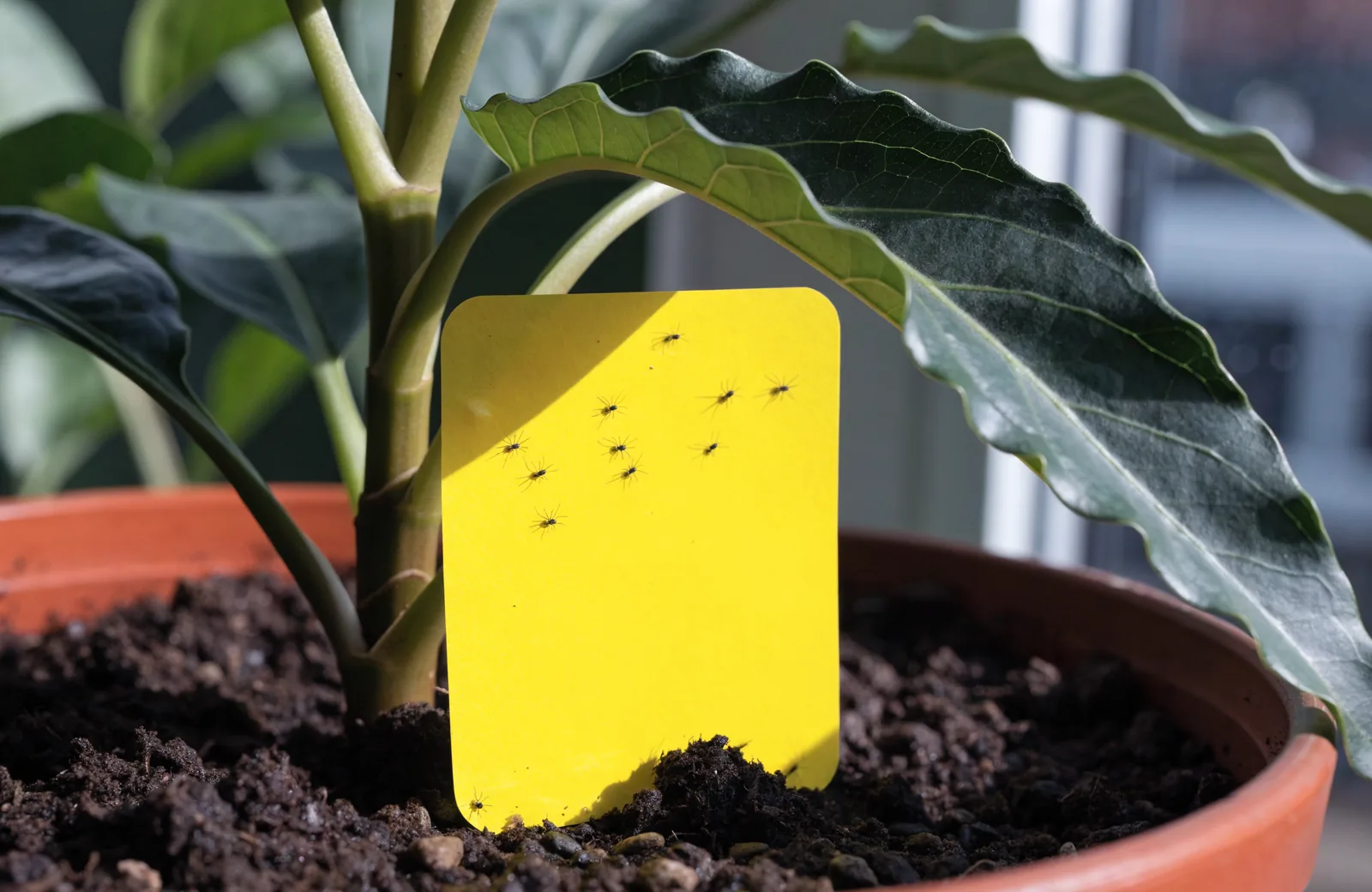
Yellow sticky traps placed horizontally at soil level catch adults as they emerge. They're not decorative but they're a strong indicator — when the traps stop filling, you're winning.
Step 4 — Kill the larvae directly
Bacillus thuringiensis israelensis (BTi) — sold as Mosquito Bits — is a soil-dwelling bacteria that kills gnat larvae specifically and is harmless to plants, pets, and humans. Sprinkle a tablespoon on the soil or soak overnight in your watering can and drench. Repeat every 5 days for three weeks.
What doesn't work
- Cinnamon on the soil — mildly antifungal, doesn't touch the larvae.
- Apple cider vinegar traps — catch a few adults but leave the eggs untouched.
- Repotting into fresh soil — larvae are already in the roots; you'll just move them.
- Ignoring it — populations double every 10 days.
Preventing re-infestation
Fungus gnats mostly arrive in bagged potting soil. Store bags sealed, and when opening one for the first time, spread it in a tray for a few days in a hot room to dry-kill any eggs. Water less overall — most cases start with chronic overwatering.
PlantMe flags the watering pattern that leads to fungus gnats and adjusts your reminders to drier intervals.
Sources & further reading
Frequently asked questions
Do fungus gnats damage plants?
Adults are harmless, but larvae eat fine root hairs and can stunt young seedlings and rooted cuttings. Established houseplants usually just look infested; growth slows only in severe cases.
How long until they're gone?
Three to four weeks with the four-step plan above. Any shortcut and you get a resurgence from the next hatch.
Are hydrogen peroxide soil drenches safe?
A 1:4 dilution of 3% hydrogen peroxide with water kills larvae on contact and is safe for most plants. But it also kills beneficial soil life. BTi is more targeted.
About the author

Plant Rescue & Troubleshooting
Camille spent years behind the counter of a plant shop where every customer arrived with the same question: what's wrong with it? She writes the Journal's rescue guides — calm, diagnosis-first, no guilt — because most 'dying' plants are one correct decision away from recovery.
Try it yourself
Diagnose it instantly with PlantMe
Snap a photo of any plant or leaf. Get the species, the diagnosis, and a care plan in seconds.
Download on theApp Store