Journal/Troubleshooting · 4 min read
White Mold on Soil: Harmless or Dangerous?
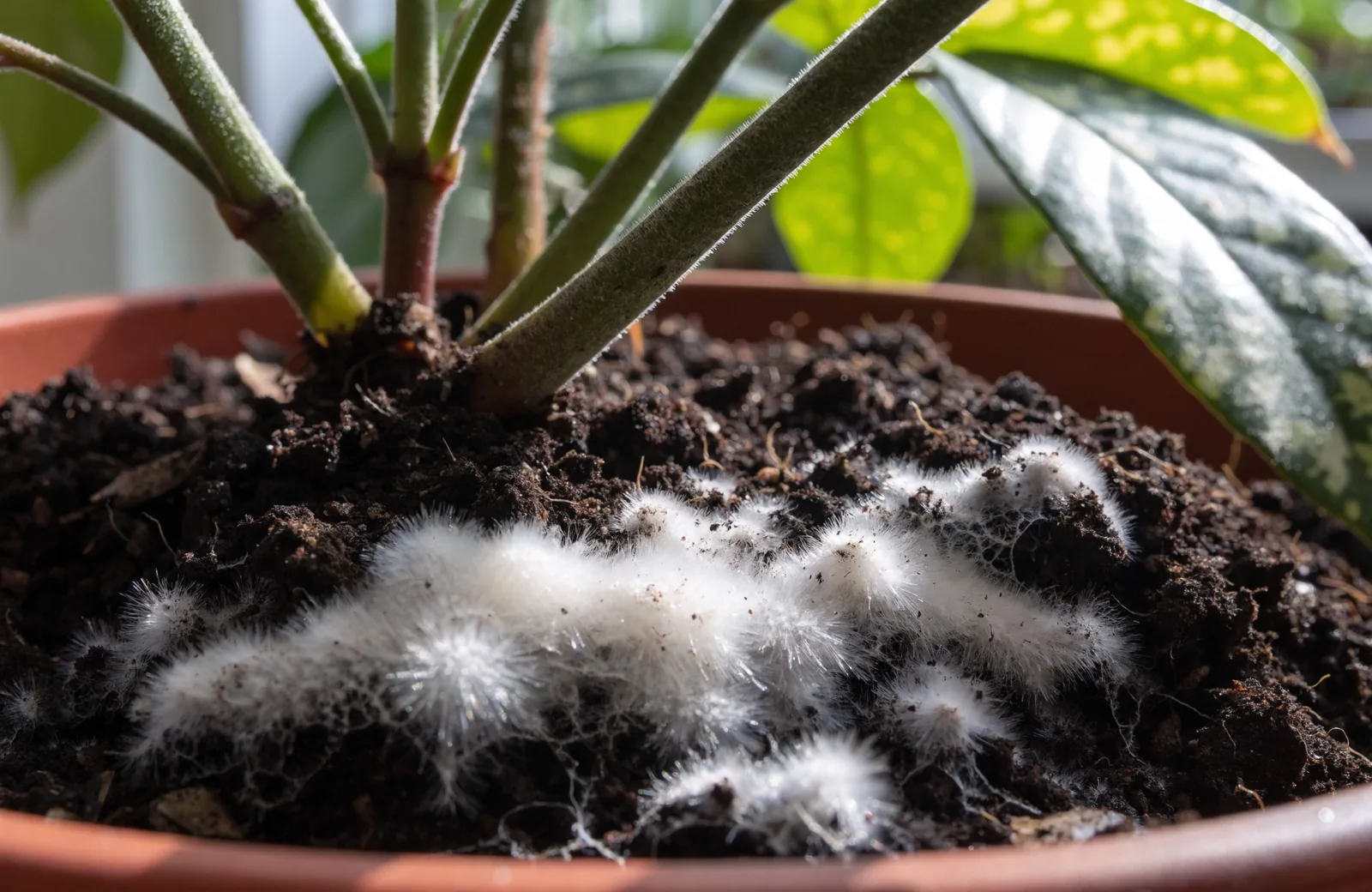
White fuzzy mould on your plant's soil is usually saprophytic fungus — mostly harmless, always a signal. Here's how to get rid of it.
Quick answer
White fuzzy mould on houseplant soil is almost always harmless saprophytic fungus feeding on organic matter. It doesn't attack the plant, but it does tell you the soil is too wet, too dark, or too airless. Scrape it off, let the soil dry, and improve airflow.
That fluffy white patch on top of your potting soil isn't the horror it looks. Nine times out of ten it's a saprophytic mould — a fungus that eats dead organic matter (peat, bark, worm castings) and completely ignores the plant.
What it means
Saprophytic fungus needs three things: moisture, organic material, and darkness. If it's colonising your pot, at least two of those are excessive. The plant is fine; the environment isn't.
How to get rid of it
- Scrape the top 1–2 cm off with a spoon and bin it (not compost).
- Let the top layer of soil dry completely before the next watering.
- Top-dress with 1 cm of coarse sand, grit, or perlite to keep the surface dry.
- Move the pot to a spot with better airflow and more light.
- If it comes back within a week, bottom-water only for a month.
When it isn't harmless
If you see fuzzy growth on the stem, leaves, or roots — that's a different problem. Grey mould (Botrytis) on stems, black mould at the crown, or slimy roots point to real disease. Check our leaf spot and root rot guides for those.
Why some soils are more mould-prone
Peat-heavy potting mixes with lots of fine organic matter hold moisture at the surface and mould easily. Chunkier mixes with bark and perlite dry faster and mould less. If your soil moulds repeatedly, upgrade the mix.
Is it dangerous to me?
For most people, no — the spore load from one small mouldy pot is negligible. If you're immunocompromised or asthmatic, wear a mask when scraping and consider moving the plant out of the bedroom.
PlantMe's diagnosis model tells you at a glance whether that fuzz is harmless soil mould or something you need to treat.
Frequently asked questions
Can I use cinnamon to kill soil mould?
Yes — cinnamon has mild antifungal properties. Sprinkle a thin layer on the affected soil after scraping. It's not a substitute for fixing the moisture, though.
Will hydrogen peroxide harm the plant?
A weak dilution (1 part 3% peroxide to 4 parts water) kills surface mould safely and oxygenates the soil. Don't use it more than every 2 weeks.
Should I repot if there's mould?
Not unless the whole root ball smells sour. Surface mould is a top-layer problem — scrape and dry usually fixes it.
About the author

Plant Rescue & Troubleshooting
Camille spent years behind the counter of a plant shop where every customer arrived with the same question: what's wrong with it? She writes the Journal's rescue guides — calm, diagnosis-first, no guilt — because most 'dying' plants are one correct decision away from recovery.
Try it yourself
Diagnose it instantly with PlantMe
Snap a photo of any plant or leaf. Get the species, the diagnosis, and a care plan in seconds.
Download on theApp StoreKeep reading
See also