Journal/Vegetable Garden · 6 min read
How to Grow Rhubarb: Plant It Once, Pick It for Twenty Years
Rhubarb is a plant-once crop, and autumn is the time to start it. How to plant a crown, the first-year rule worth obeying, dividing tired old clumps, and when to stop pulling.
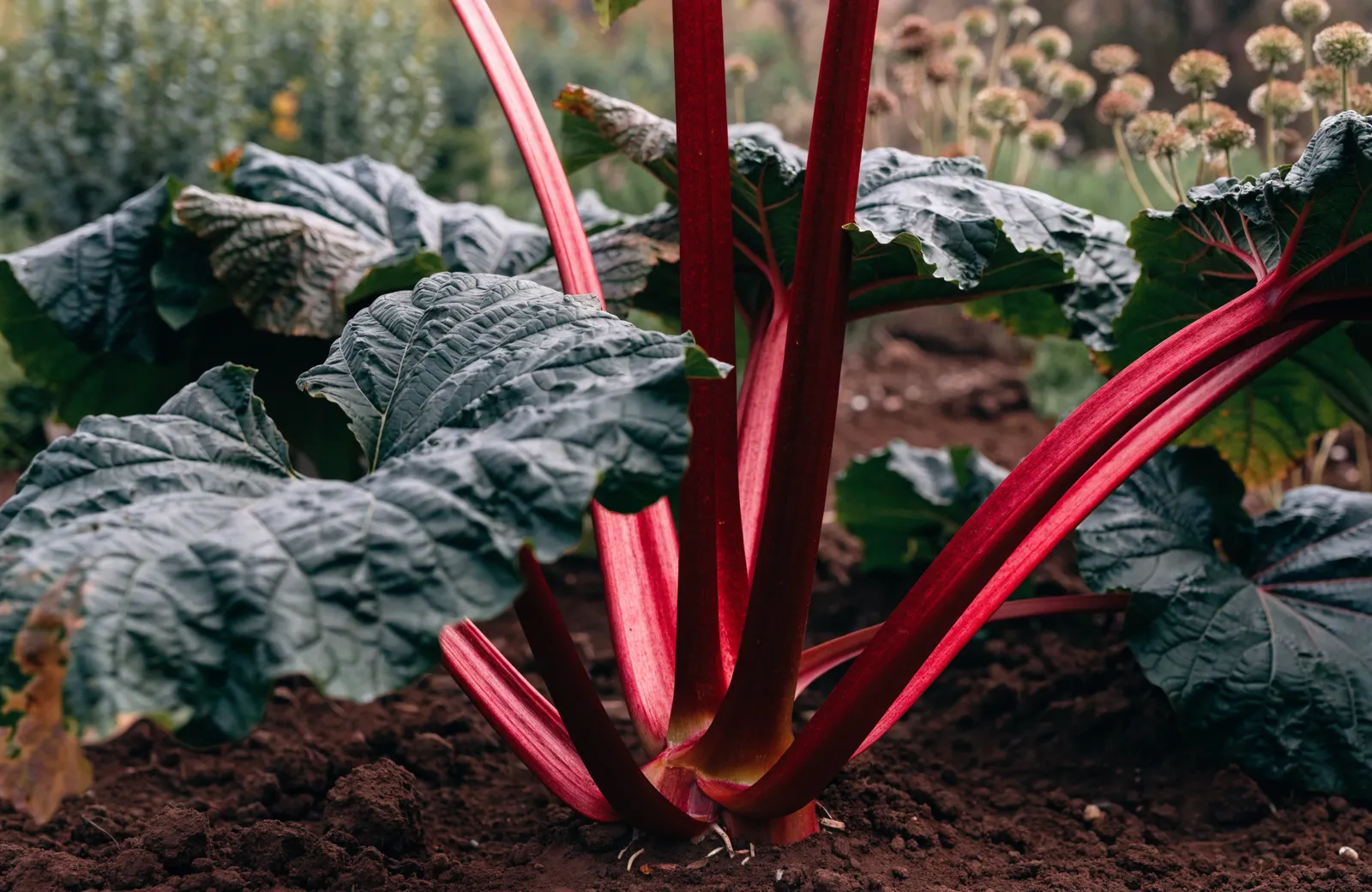
Rhubarb occupies an odd position in the vegetable garden: technically a vegetable, eaten as a fruit, and planted like neither. There is no seed tray, no succession sowing, no spring panic. You plant a dormant crown once, ideally in the colder half of the year, and the same plant then produces for fifteen or twenty years with less attention than almost anything else on the plot. The catch is entirely front-loaded — the decisions you make in the first month, and the restraint you show in the first year, decide the next two decades.
The calendar matters here, which is why this is a September article and not a May one. Garden centres stock dormant crowns from autumn onwards, and the RHS puts the ideal planting window in November and December, with the door open until the beginning of March. That gives you October to do the one job that actually rewards effort: preparing the ground. If you're already drawing up the October jobs list, add this to it.
The right spot, chosen once
Rhubarb is a permanent resident, so choose its address the way you'd choose a tree's. Full sun is the ideal — the plant will tolerate a little light shade, but stalks come thinner and slower there. Any reasonably fertile garden soil will do provided it drains; a crown sitting in winter-wet ground is the one reliable way to lose a rhubarb plant, since the thick roots rot. Cold, incidentally, is not a concern. This is a plant hardy enough for a Minnesota winter — the University of Minnesota Extension grows it happily in USDA zone 4 and suggests it's worth attempting in zone 3 — and it actually needs a proper winter chill to perform.
Before planting, dig in one to two bucketfuls of well-rotted organic matter per square metre. Rhubarb is a greedy plant with a long lease, and this is the only chance you'll ever get to improve the soil underneath it. If you started a compost heap this autumn, this is precisely the sort of thing its output is for — though for planting this year, you'll want manure or compost that's already mature.
Planting a crown, step by step
A crown is an unglamorous object — a fist of thick root with one or more buds on top. Ignore its appearance and handle it as follows:
- Dig a hole wide enough to take the roots without folding them, in the prepared ground.
- Set the crown so the buds sit at, or just below, the soil surface. Buried deep, the buds can rot; perched high, they dry out. At-or-just-below is the whole trick.
- Firm the soil around the roots and water it in, even in autumn.
- If you're planting more than one, leave a metre between crowns — a mature plant is bigger than you think.
- Then leave it alone. No feed, no fuss, no checking on it weekly. It's dormant; it's supposed to look dead.
The patience year
Here is the rule that separates rhubarb growers from people who used to have a rhubarb plant: do not harvest in the first season. Not a little, not just the one crumble. Every stalk you pull removes leaf area, and in year one the plant is spending everything it has on building the root system that will fund the next twenty years. Both the RHS and the Minnesota extension service are unambiguous on this. In the second season, take a light harvest — a few stalks and stop. From the third year, pull freely within the season.
The same logic covers flower stalks. If your plant sends up a thick, hollow stem with a bud like a fist on top, cut it out at the base as soon as you see it. Seed production is expensive, and you want that energy in the crown, not in flowers.
Dividing an old clump
If you already have rhubarb — or a neighbour does — autumn is also the season to renew it. After about five years, crowns get crowded and stalks come thin. The fix is the same one used for any tired perennial: dig up the crown between autumn and early spring (November is the traditional moment) and split it with a spade into sections, each with a decent piece of root and at least one bud. The outer sections are the young, vigorous material; the woody centre of an old crown has done its service and can go. Replant the best pieces in improved ground and treat each as a new plant — which means, yes, the patience year applies again. One old clump will usually yield three or four good divisions, which is how rhubarb has travelled between gardens for generations without money changing hands.
Harvesting: pull, don't cut
From the second or third spring, harvest runs from March or April through early summer. Take a stalk by gripping it low and pulling with a twist, so it comes cleanly away from the crown — a knife leaves a stump that can rot and invites disease into the crown. Take no more than half the stalks at any one time, and give the plant a rest from midsummer: the Minnesota advice is to stop by the end of June, the RHS allows into July, and the principle behind both is the same — the plant needs a full-leaved second half of the year to recharge for the next one. The leaves, one warning: they are not edible. They contain oxalic acid in quantities that make them genuinely toxic, so twist them off and compost them — the acid breaks down in the heap and does no harm there.
And that is the whole contract. Water deeply in dry spells, mulch generously each spring keeping the mulch clear of the buds, feed with a general fertiliser if growth flags, and the plant will otherwise run itself. Plant a crown this autumn, do nothing next year, and from then on you'll have the earliest 'fruit' of every season from a corner of the garden you barely think about. There aren't many better deals going.
Sources & further reading
Frequently asked questions
Is it safe to compost rhubarb leaves?
Yes. The oxalic acid that makes the leaves inedible breaks down during composting and doesn't poison the heap or the finished compost. Twist the leaves off at harvest and add them like any other green material.
My rhubarb is flowering — is the plant ruined?
No, but act. Cut the flower stalk out at the base as soon as it appears so the plant puts its energy into the crown rather than seed. Frequent flowering can be a sign of stress or an old congested crown that's due for dividing.
Can I grow rhubarb from seed instead of a crown?
You can, but it's the slow road: seedlings vary in quality because named cultivars don't come true from seed, and you'll wait an extra year — harvest from the third season rather than the second. A crown or a division from a good plant is the better start.
About the author

Vegetable Garden & Seasons
Arthur has worked the same allotment for thirty years and measures the calendar in sowings, not months. He writes practical, no-nonsense guides to growing food and keeping a garden honest through the seasons — and has little patience for folklore that doesn't survive contact with a real plot.
Try it yourself
Diagnose it instantly with PlantMe
Snap a photo of any plant or leaf. Get the species, the diagnosis, and a care plan in seconds.
Download on theApp Store