Journal/Seasonal · 5 min read
How to Overwinter Cannas
When to lift canna rhizomes after frost, how to dry and pack them, the right storage temperature, and how to wake them up again in spring.
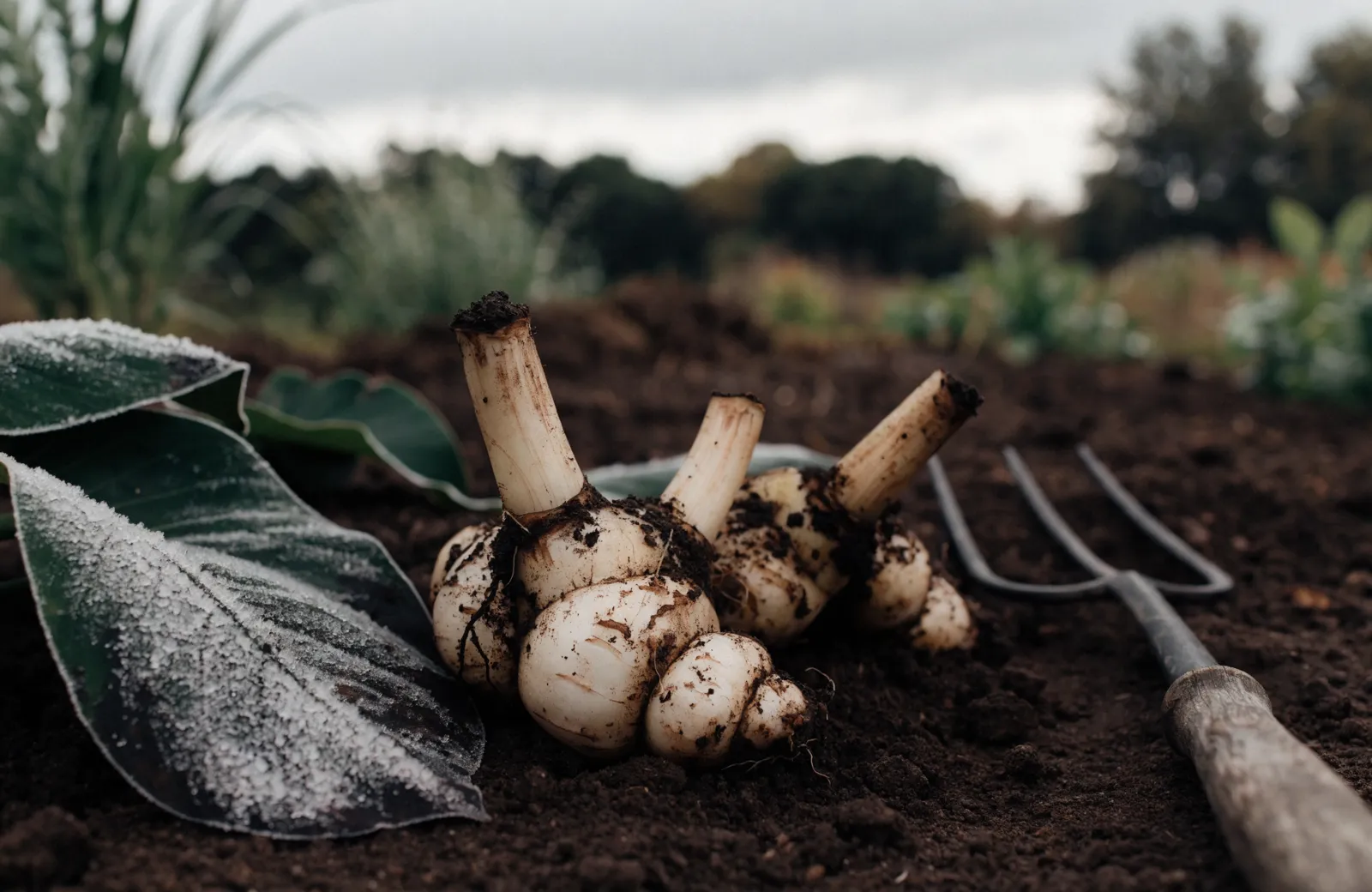
Cannas spend the summer pretending to be permanent residents, and then the first frost tells the truth in a single night: the great paddle leaves collapse into black rags. That isn't a disaster — it's the starting gun. What you do in the week or so after that first frost decides whether you're buying new rhizomes in April or shaking last year's out of a cardboard box, fatter and more numerous than when they went in. The whole job takes one afternoon. Here's the calendar.
Leave them in, or lift them?
There's an honest fork in the road here. In mild gardens — sheltered city plots, coastal borders, anywhere the ground never freezes more than a crust — the RHS view is that cannas can stay put: cut down the frosted stems and cover the root zone with a thick, insulating mulch. In a cold garden, or in heavy soil that sits wet all winter, lifting is the safer bet, because a frozen or waterlogged rhizome is compost by March. Pot-grown cannas get the easy version: cut back, then carry the whole pot, soil and all, into a frost-free shed or porch and keep it barely watered until spring.
If you're not sure which camp your garden falls into, our guide to protecting plants from frost covers reading your local frost pattern. When in doubt, lift. Rhizomes keep better in a box than in cold, soggy ground.
Timing: let the frost do its work first
Don't lift green plants in mid-October because the calendar says autumn. Right up until frost, the foliage is still feeding the rhizome — Missouri Botanical Garden's advice is to wait for the frost precisely because every extra week of leaves means more food banked for next year. So the sequence is: first frost blackens the foliage, then you dig, within a few days. What you must not do is dawdle until a hard freeze reaches into the soil. Frozen canna stems turn to mush, and mush follows the rhizomes into storage as rot.
Lifting and drying: one afternoon's work
- Cut the blackened stems back to about 5 cm, and label every clump as you go — one bare canna rhizome looks exactly like every other canna rhizome in March.
- Push a fork in a good hand's-width out from the stems, loosen all the way around, and lever the clump up whole. Cannas spread outward, so err on the side of digging wide rather than deep.
- Shake off the loose soil. If your soil is heavy and claggy, rinse the rhizomes clean — rot overwinters happily in wet pockets of clay.
- Dry them somewhere airy and frost-free. How long is genuinely disputed: the University of Wisconsin extension says a day or two is enough, while Missouri Botanical Garden air-dries for about a week at ordinary room temperature. The test that matters is by touch — surfaces dry, cut stem ends sealed over, no damp patches.
- Pack the dry rhizomes loosely in newspaper, or layer them in barely damp peat-free compost or wood shavings, inside a cardboard box or paper bag. Never sealed plastic — trapped moisture is how sound rhizomes rot by January.
Storage: cool, dark, and checked monthly
The target is roughly 7–10°C (45–50°F): a cellar, an unheated spare room, the cool corner of a frost-free outbuilding. The two classic failure spots are the loft and the uninsulated garage — both swing below freezing on clear January nights, and Missouri Botanical Garden warns against exactly those places for that reason. Dark and slightly humid beats bright and bone-dry.
Then put a monthly reminder in your phone and actually open the box. Shrivelling rhizomes want a flick of water over the packing material; anything soft, weeping or smelly comes out and goes in the bin before it spreads. Five minutes a month is the entire maintenance schedule.
Spring: divide, pot up, go again
In mid-spring, bring the box out and divide any clump that has outgrown its dignity: cut the rhizome into pieces, each with at least three growing eyes, and let the cuts dry for a day before potting. Start them in pots somewhere warm and light for a head start, and plant out only after your last frost. If you're already doing this dance with dahlia tubers or tuberous begonias, cannas slot into the same spring timetable — one more box in the cellar, one more reason April feels busy.
This week's jobs
- Check your local first-frost date and watch the ten-day forecast.
- Line up a cardboard box, newspaper or shavings, and plant labels now — not on digging day.
- Scout a storage spot that holds 7–10°C and test it with a thermometer overnight.
- Mild garden? Buy the mulch instead, and plan to pile it on once frost cuts the foliage down.
- While the fork is out, see what else the November garden wants doing.
Sources & further reading
About the author

Vegetable Garden & Seasons
Arthur has worked the same allotment for thirty years and measures the calendar in sowings, not months. He writes practical, no-nonsense guides to growing food and keeping a garden honest through the seasons — and has little patience for folklore that doesn't survive contact with a real plot.
Try it yourself
Diagnose it instantly with PlantMe
Snap a photo of any plant or leaf. Get the species, the diagnosis, and a care plan in seconds.
Download on theApp Store