Journal/Seasonal · 7 min read
How to Protect Plants from Frost
Frost in the forecast? Learn which plants actually need protecting, how cold they can take, and 8 proven methods — fleece, cloches, mulch and more.
Quick answer
Tender plants are damaged from about 0°C and killed outright below roughly −2°C, so act when a clear, still night is forecast near freezing. Cover plants with horticultural fleece or an old sheet before dusk (never plastic touching leaves), water the soil in the morning beforehand, mulch roots, and move pots against a house wall or indoors. Uncover again each morning.
The first frost of autumn is a deadline that moves. One year it holds off until November; the next it ambushes your dahlias in late September. The good news is that frost protection is mostly free, takes minutes, and can buy tender plants weeks of extra growth — or save a borderline shrub's life. Here's what frost actually does, who's at risk, and the eight methods worth your time.
What frost actually does to a plant
When temperatures drop low enough, ice crystals form inside and between plant cells, rupturing cell walls. That's why frosted growth looks water-soaked and limp the next morning before turning black. The classic damaging frost is radiative: on clear, still nights the ground beams its heat out into the sky, and surfaces — leaves included — can drop a degree or two colder than the air forecast. Cloud is a duvet; wind stirs warmer air back down. So the dangerous forecast isn't just "2°C" — it's "2°C, clear skies, no wind".
Know your numbers
- Light frost (0 to −2°C): damages or kills tender plants — tomatoes, courgettes, basil, dahlias, pelargoniums, begonias, fuchsias, houseplants left out for summer.
- Hard frost (below −2°C): finishes off anything tender and can damage half-hardy shrubs, new plantings, and blossom in spring.
- Frost-hardy plants — established trees and shrubs, most perennials, brassicas, leeks, parsnips — shrug all this off; some (parsnips, sprouts, kale) actually taste sweeter after frost.
- Cold air flows downhill like water: gardens in hollows and at the bottom of slopes frost first. A wall, hedge or fence traps warmth and can keep a bed several degrees safer.
1. Cover plants before dusk
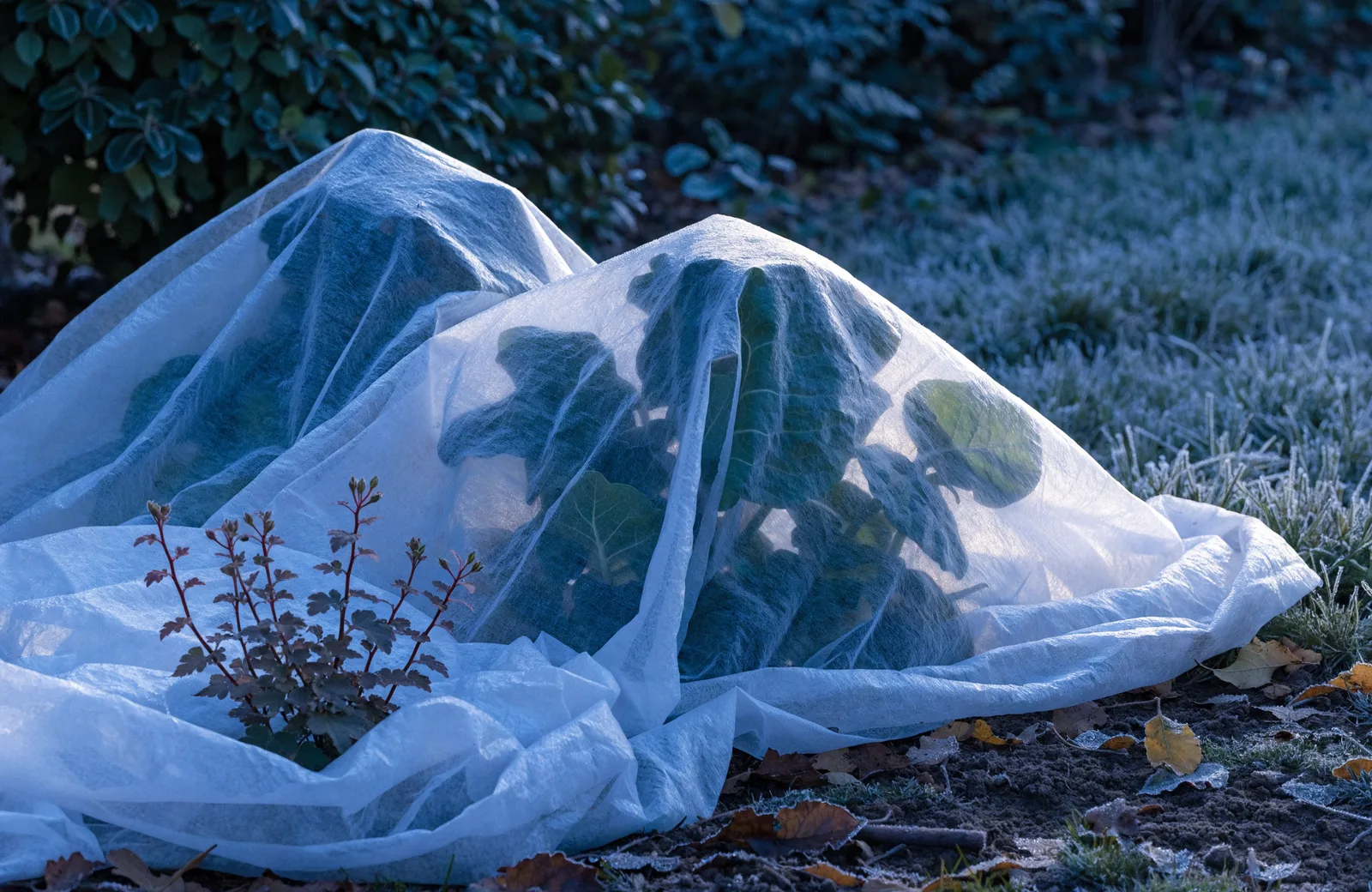
The single most effective trick. Horticultural fleece, an old bedsheet, or even newspaper draped over plants traps the heat still radiating out of the soil and typically keeps the air underneath 2–4°C warmer — the difference between damage and none. Cover in late afternoon while the ground is still warm, weigh the edges down so the cover reaches the soil, and take it off in the morning so light, air and pollinators get back in.
Warning: never lay plastic directly on foliage. Anywhere the plastic touches a leaf conducts the cold straight through, and you'll frost-print the sheet's wrinkles onto the plant. If plastic is all you have, hold it above the foliage on canes, and always remove it by mid-morning before it cooks the plant.
2. Use cloches for small plants
Individual seedlings and small tender plants are quickest to protect with a rigid cover: a cut-down clear plastic bottle, an upturned bucket or flowerpot, a glass jar. Pop it on at dusk, take it off after the sun's back up. It's the classic way to keep late-sown salads and overwintering veg seedlings moving.
3. Water the soil — in the morning, before the frost
It sounds backwards, but moist soil stores far more daytime heat than dry soil and releases it slowly overnight, keeping the air around your plants measurably warmer. On the day a frost is forecast, water in the morning so the surface can absorb heat all afternoon. Skip this for succulents and anything already sitting wet.
4. Mulch the root zone
A 5–8 cm blanket of bark, compost, straw or autumn leaves insulates the soil, protecting roots and crowns even when top growth gets caught. It's the standard way to see borderline-hardy perennials — penstemons, agapanthus, hardy fuchsias — through winter in the ground. Mulch after the soil has had a soak, and keep it a few centimetres clear of woody stems.
5. Move pots to shelter
Container plants are doubly exposed: their roots sit above ground in a small volume of compost that freezes far faster than garden soil. Cluster pots against a house wall — brick releases stored heat all night and can keep that microclimate several degrees warmer — or move the truly tender ones into a greenhouse, porch, garage or cool bright room. Raise overwintering pots on feet so they don't sit in freezing water.
6. Harvest what frost will ruin
If a real frost is coming, strip the tender harvest first: every tomato (green ones ripen indoors), the last courgettes, peppers, beans and basil. Pumpkins and squash need cutting and curing before frost too. One evening's picking beats a bed of mush.
7. Wrap the tender survivors
Plants too big to move — tree ferns, bananas, potted olives and citrus — get wrapped in place: fleece around the crown or canopy, straw packed into tree-fern crowns, bubble wrap around the pot (not the plant) to protect roots. Do this for genuine cold spells rather than all winter, and unwrap in mild weather so damp and rot don't do what frost couldn't.
8. Stop feeding, keep watch
From late summer, stop feeding shrubs and perennials with nitrogen-rich fertiliser — soft new growth is exactly what frost kills first. Then make checking the overnight forecast a habit from early autumn. Your first-frost date is an average, not a promise; the ambush frost two weeks early is the one that does the damage.
If frost catches you out
Don't reach for the secateurs. Frosted growth looks terrible — limp, dark, water-soaked — but on woody plants and perennials the damage is often only skin-deep, and the dead material actually insulates what's below from the next frost. Leave pruning until spring, when you can see exactly where new growth starts, and cut back to that. Annuals and tender veg caught by a hard frost, sadly, are done — compost them and plan next year's fleece moment. If you're not sure whether a blackened plant is dead or dormant, photograph it with PlantMe and the app will help you tell frost damage from disease and gauge whether there's live wood to save.
Tip: keep a roll of fleece and some pegs somewhere you can find them in the dark. Frost protection is a 6 pm job on a cold evening — the easier it is to grab, the more often you'll actually do it. Once nights sit near freezing for good, tender pot plants are better brought back indoors for winter.
Sources & further reading
Frequently asked questions
At what temperature should I cover my plants?
Act when the forecast shows 4°C or lower on a clear, still night — leaf surfaces can be a couple of degrees colder than the air forecast, and frost pockets colder still. Tender plants are damaged around 0°C and killed below about −2°C.
Can I use plastic to protect plants from frost?
Only if it's held above the plant on canes or hoops so it never touches the leaves — plastic conducts cold straight through at contact points. Fleece, old sheets or newspaper are safer, breathe better, and don't need removing quite so urgently in the morning.
Should I water plants before a frost?
Yes — water the soil in the morning before a frosty night. Moist soil absorbs more heat by day and releases it overnight, keeping the air around plants slightly warmer. Avoid soaking succulents or waterlogged pots.
My plants got frosted — should I cut off the damage?
Not yet. On shrubs and perennials, leave frosted growth in place over winter; it protects the live tissue beneath. Prune back to healthy growth in spring. Tender annuals killed by hard frost won't recover and can go on the compost.
About the author

Vegetable Garden & Seasons
Arthur has worked the same allotment for thirty years and measures the calendar in sowings, not months. He writes practical, no-nonsense guides to growing food and keeping a garden honest through the seasons — and has little patience for folklore that doesn't survive contact with a real plot.
Try it yourself
Diagnose it instantly with PlantMe
Snap a photo of any plant or leaf. Get the species, the diagnosis, and a care plan in seconds.
Download on theApp Store