Journal/Troubleshooting · 7 min read
How to Revive a Dying Plant: A Step-by-Step Rescue Plan
A step-by-step rescue plan for a dying plant: check for signs of life, diagnose overwatering vs underwatering, treat root rot, and help it recover.
Quick answer
First check the plant is actually alive: scratch a stem — green underneath means there's hope. Then diagnose the cause (overwatering is the number one killer), fix the roots and watering, adjust the light, prune dead growth, and give it 4–6 weeks of stable, gentle care before judging the result.
A plant that looks dead often isn't. Leaves are the first thing a stressed plant sacrifices, so a bare, crispy, droopy specimen can still have a living root system and stems full of stored energy. The difference between a plant you bin and a plant that regrows is usually a week of correct triage. Here is the rescue plan, in the order that actually works.
First: is it actually dead?
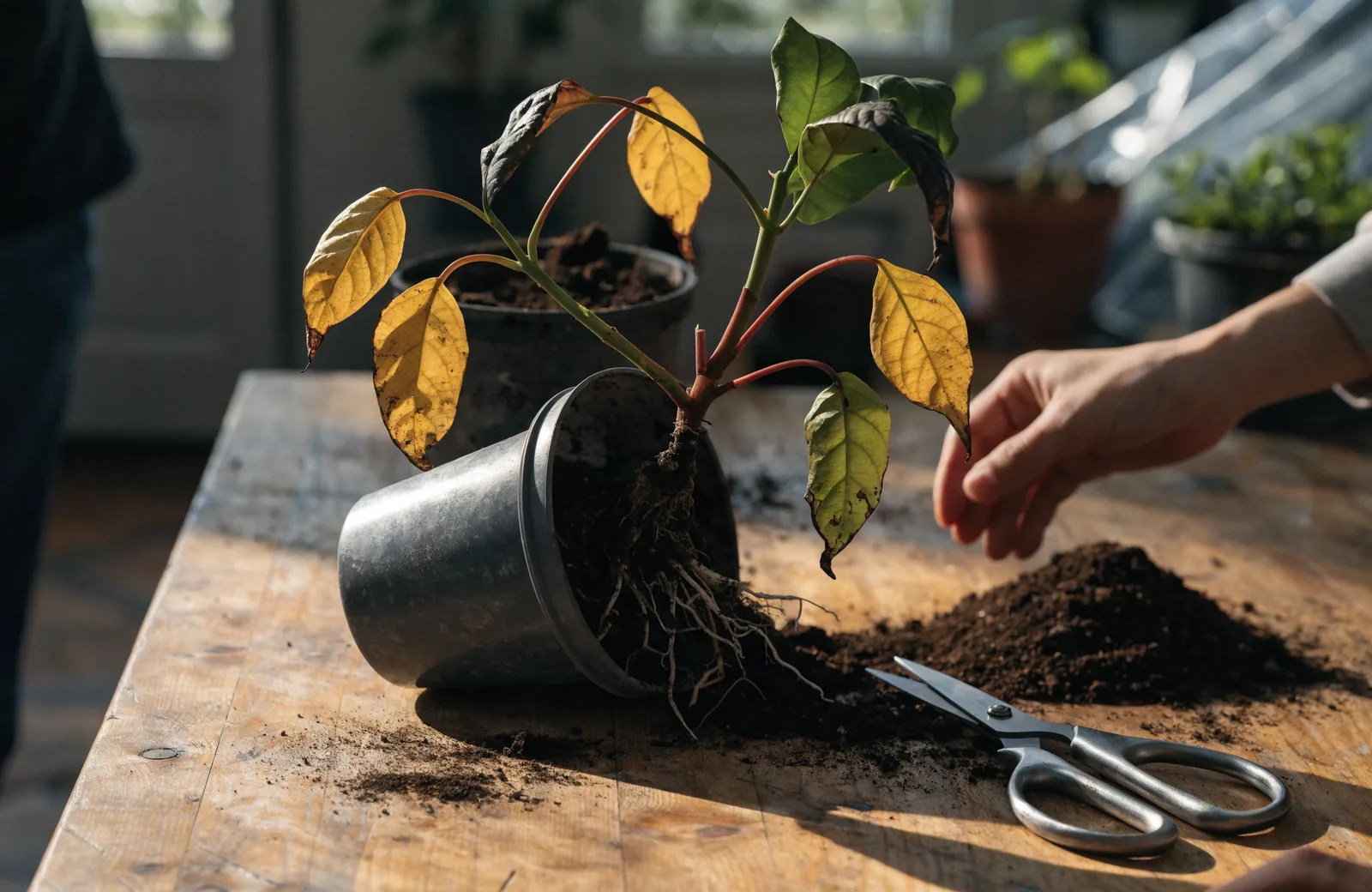
Before anything else, check for signs of life. Scratch a small patch of stem with your fingernail or a clean knife: green or moist white tissue underneath means the stem is alive; brown and dry means that stem is dead — but keep testing lower down, towards the base. Gently bend a few stems: living stems flex, dead ones snap like a twig. Finally, slide the plant out of its pot and look at the roots. Firm, white-to-tan roots are healthy; brown, mushy, foul-smelling roots are rotting. If you find any green stem tissue or any firm roots, the plant can usually be saved. Also rule out dormancy: many plants (oxalis, caladiums, some ferns, outdoor perennials) die back naturally and regrow — a "dead" plant with a firm bulb, tuber or crown may simply be resting.
Step 1: triage the symptoms
Read the plant before you act. Each pattern points to a different cause:
- Yellowing, limp leaves plus soil that stays wet for days: overwatering.
- Crispy, brown leaves and soil pulling away from the pot sides: underwatering.
- Wilting even though the soil is moist: likely root rot — the roots can no longer take up water.
- Pale, stretched, leggy growth leaning towards the window: not enough light.
- Speckled, stippled or sticky leaves, fine webbing, or visible insects: pests.
Treat the cause you identify, not all of them at once — a stressed plant can't cope with five interventions in one weekend.
Step 2: check the roots and treat rot
Improper watering kills more houseplants than anything else, and overwatering is the more common form. Slide the plant out of the pot and inspect the root ball. If you find rot, act immediately: rinse the roots, cut away every brown, mushy section with clean scissors, and repot into fresh, dry, well-draining mix in a clean pot with drainage holes — ideally only 2–5 cm wider than the root ball. Water lightly, then let the top of the soil dry before watering again.
Step 3: reset the watering
For an underwatered plant, don't just splash water on top — bone-dry compost repels water. Stand the pot in a basin of room-temperature water for 15–30 minutes so the root ball rehydrates from the bottom up, then let it drain fully. For an overwatered plant with healthy roots, simply stop: let the top 2–3 cm of soil dry out before the next watering, and empty the saucer every time. From now on, water by checking the soil with a finger, not by the calendar.
Step 4: get the light right
Look up what your specific plant wants — a fern's "bright room" and a succulent's "bright room" are very different — and move it accordingly. Make big moves gradually: a plant shifted from a dim corner straight into direct sun will scorch. Shift it closer to the light over a week or two.
Step 5: prune the dead growth
Once the plant is stabilised, remove fully dead leaves and stems with clean scissors so the plant stops spending energy on tissue it can't save, and so you can see new growth clearly. Cut dead stems back to just above the first living node.
Warning: never remove more than about one third of a plant at once — heavy pruning is itself a stress, and a recovering plant needs remaining leaves to photosynthesise its way back.
Step 6: deal with pests
If you found insects, isolate the plant from the rest of your collection first. Wipe leaves down, then treat with insecticidal soap or neem oil, repeating every 5–7 days — pest life cycles mean one treatment is never enough. Check the undersides of leaves, where most infestations start.
Recovery: what to expect
Put the patient somewhere with stable temperature, decent light and no cold draughts, and then be boring: consistent, slightly cautious care beats fussing. Hold off fertiliser entirely until you see new growth — feeding damaged roots burns them — then resume at half strength.
Tip: photograph the plant when you start the rescue. Recovery is slow enough that you won't notice day-to-day progress, but a two-week comparison photo will tell you clearly whether things are improving.
Some plants bounce back within a few weeks; woody or badly damaged plants can take months. As a rule of thumb, if there is no sign of improvement after 4–6 weeks of correct care — no new growth, stems still dying back — it's reasonable to let the plant go and keep the pot.
If you're not sure what's wrong in the first place, photograph the plant in the PlantMe app: the diagnosis engine recognises 500+ diseases and gives you a specific treatment plan instead of guesswork.
Sources & further reading
Frequently asked questions
How do I know if my plant is dead or dormant?
Check the season and the species. Bulbs, tubers and many perennials die back on schedule and keep a firm, healthy storage organ or crown below the soil. If the roots or bulb are firm and the plant is a species that goes dormant, wait — if the roots are mushy or absent, it's dead.
Can a plant with no leaves come back?
Yes, if the stems or roots are still alive. Plants store energy in stems, roots and bulbs, and many will push out new leaves within a few weeks once the underlying problem is fixed.
Should I fertilise a dying plant to help it recover?
No. Fertiliser is not medicine — it can burn already-damaged roots. Wait until the plant is clearly producing new growth, then feed at half strength.
Should I repot a struggling plant?
Only if the soil is the problem — root rot, compacted or waterlogged mix, or a severely root-bound pot. Otherwise repotting adds transplant shock on top of the existing stress.
About the author

Plant Rescue & Troubleshooting
Camille spent years behind the counter of a plant shop where every customer arrived with the same question: what's wrong with it? She writes the Journal's rescue guides — calm, diagnosis-first, no guilt — because most 'dying' plants are one correct decision away from recovery.
Try it yourself
Diagnose it instantly with PlantMe
Snap a photo of any plant or leaf. Get the species, the diagnosis, and a care plan in seconds.
Download on theApp Store