Journal/Seasonal · 6 min read
How to Store Apples: Keeping the Harvest Until Spring
Picked more apples than the household can eat? Which varieties keep, which to eat first, and the cold-damp storage rules that hold good fruit firm into the new year.
A mature apple tree does not understand portion control. One decent October weekend of picking and you are holding more fruit than the kitchen will get through by Christmas — which is fine, because a good storage apple is built to wait. What it will not forgive is careless handling in week one. Most of the difference between eating your own apples in March and tipping a soft brown crate-load onto the compost in November is decided at picking time. If you have not brought the fruit in yet, start with when to harvest apples; this guide picks up from the moment the crate is full.
Not every apple is a keeper
Early-season apples are for eating, not storing. They ripen in August and September, go mealy within weeks, and no cellar will change their mind. The keepers are the late-season, firm-fleshed varieties picked from late September onward — as a rule, the later a variety ripens, the longer it stores, and the university trial data backs the rule. Smaller fruit also keeps better than large fruit from the same tree, which is a quiet argument against the biggest-is-best instinct at the crate.
For storage, pick at the early end of the variety's window, when the fruit parts from the spur with a twist but is still hard. Fruit picked dead ripe is already spending its storage life on the tree. And ignore skin colour as a guide on red varieties — plenty of them colour up well before they are actually mature.
Sort like you mean it
Storage does not improve fruit; it slows its decline. Anything that goes into the crate damaged comes out worse, and takes its neighbours with it. So sort at the crate, in good light, and be ruthless:
- Store only perfect fruit — no bruises, no splits, no holes, no scab, stalk still attached.
- Anything damaged goes to the kitchen this fortnight: crumbles, chutney, juice.
- Anything diseased or grub-ridden goes on the compost heap, not in storage and not under the tree.
- Grade by size and plan to eat the largest first — big fruit breaks down soonest.
Cold, damp, and left alone
Apples keep best just above freezing — around 0 to 4°C — in air that stays humid, roughly 90 to 95 per cent. That is colder and damper than any spot inside a heated house, which is why the airing-cupboard-adjacent 'cool spot' fails every year. A fridge gets the temperature right: for modest quantities, a plastic bag in the crisper drawer, loosely closed so moisture stays in without condensation pooling, is the best storage most households own. There is no need to panic about frost in an outbuilding either — the sugar in an apple keeps it from freezing until around minus two.
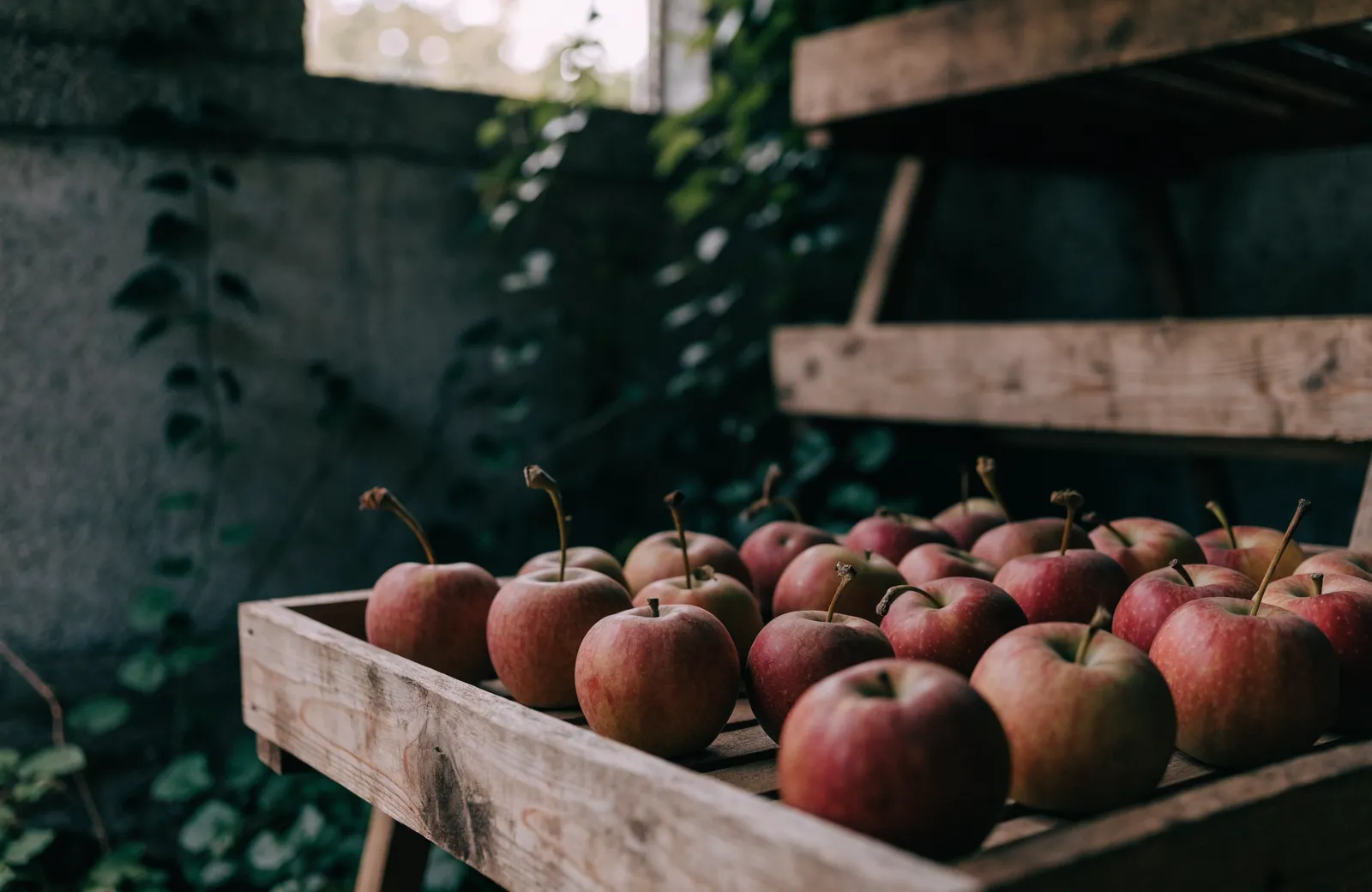
For crate quantities, use an unheated shed, garage, or cellar: fruit in a single layer on slatted trays, not touching. The old newspaper-wrapping routine is not magic, it is simply one way of keeping fruit apart so rot cannot walk from apple to apple — spacing achieves the same thing and lets you inspect at a glance. Keep the store dark, mouse-proof, and away from strong smells, and keep apples away from the rest of the harvest generally: ripening fruit gives off ethylene, and a shared drawer or shelf shortens everyone's life.
The monthly inspection
Once a month, walk the trays. Lift out anything soft, spotted, or browning around the stalk and use or bin it the same day. One rotting apple really does spoil the barrel — partly by contact, partly because damaged fruit pumps out ethylene that hurries the rest along. Ten minutes a month is the entire maintenance schedule; skipping December's round is how February's crate is lost.
What to actually expect
Be realistic. In a fridge or a proper cold store, a good late keeper holds three months comfortably, and the best varieties four or five under near-freezing, humid conditions. In an ordinary shed that swings with the weather, 30 to 90 days is the honest range, variety depending. That is still home-grown fruit in the depths of winter, which is the point. The tree is done for the year; the October garden still is not.
This weekend's jobs
- Finish picking late varieties while the weather holds — twist, don't pull.
- Sort every apple: perfect fruit to store, damaged fruit to the kitchen, diseased fruit to the compost.
- Set up trays or boxes in the coolest dark outbuilding you have; single layers, fruit not touching.
- Bag a fridge-drawer's worth for everyday eating — coldest storage wins.
- Move stored potatoes and other produce away from the apple shelf.
- Diary a ten-minute inspection for early November.
Sources & further reading
About the author

Vegetable Garden & Seasons
Arthur has worked the same allotment for thirty years and measures the calendar in sowings, not months. He writes practical, no-nonsense guides to growing food and keeping a garden honest through the seasons — and has little patience for folklore that doesn't survive contact with a real plot.
Try it yourself
Diagnose it instantly with PlantMe
Snap a photo of any plant or leaf. Get the species, the diagnosis, and a care plan in seconds.
Download on theApp Store