Journal/Care Basics · 6 min read
How to Care for a Jade Plant (Crassula ovata)
A practical jade plant care guide: light, watering, soil and propagation, plus fixes for dropped leaves, shrivelled leaves and leggy growth.
Quick answer
A jade plant wants at least four hours of bright light with some direct sun, a thorough watering only when the soil has dried out completely — roughly every two to three weeks — a gritty, free-draining succulent mix, and ordinary room temperatures. Treat it like the South African shrub it is: nearly every jade problem traces back to overwatering or too little light.
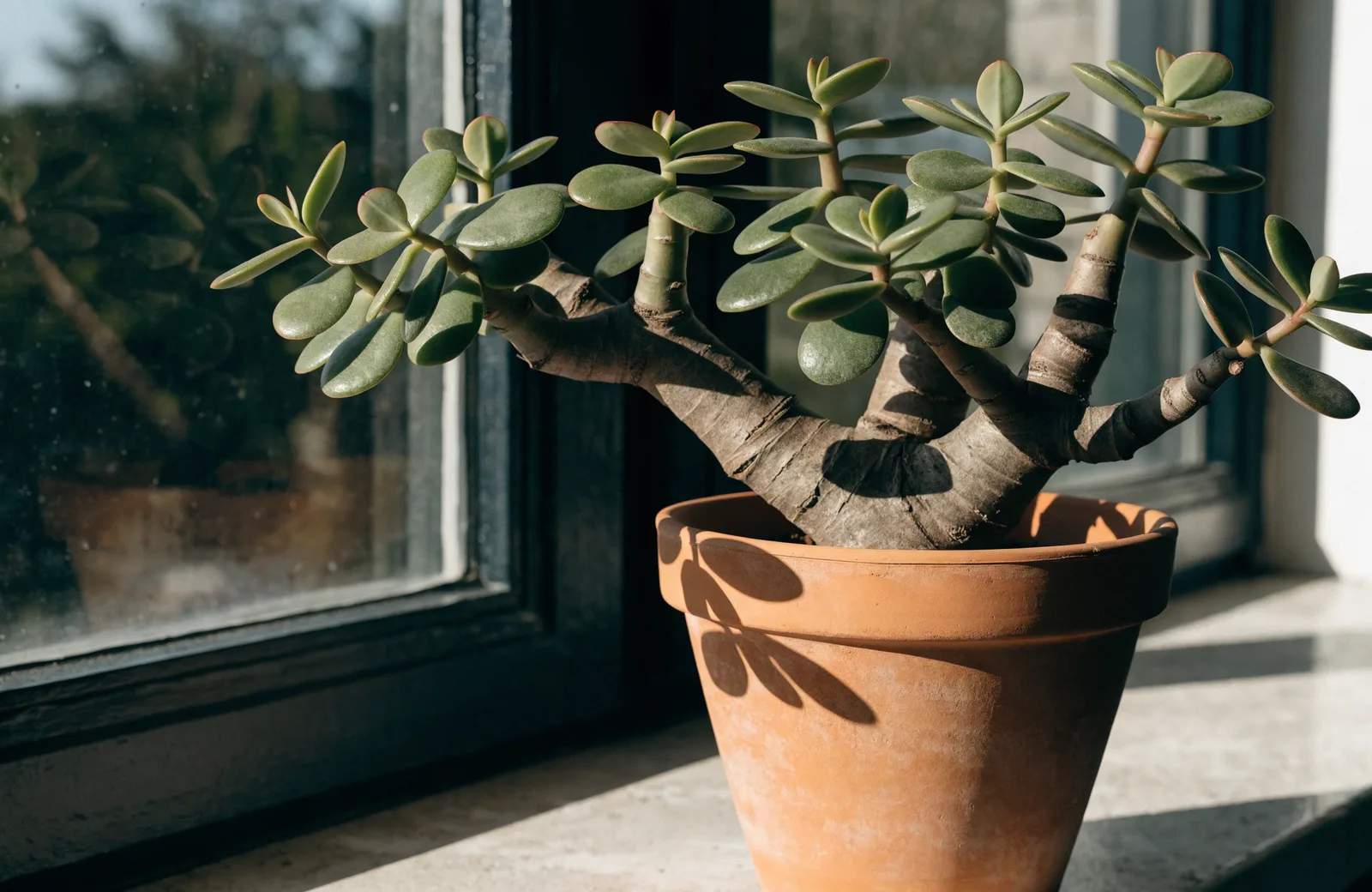
The jade plant is the houseplant people inherit. Given basic care, a Crassula ovata will outlive sofas, flats, and occasionally its owner — specimens passed down for fifty years or more are not rare. It earns the nickname "money plant" less from feng shui than from sheer reliability: thick, coin-shaped leaves on a woody trunk, growing slowly into something that looks like a miniature tree. The whole trick to jade care is remembering what it is: a drought-adapted shrub from the rocky hillsides of South Africa, not a tropical foliage plant. Care for the desert shrub and it thrives; care for it like a fern and it collapses.
Light
Jade plants need real light — at least four hours of bright light a day, ideally including some direct sun. A south- or west-facing windowsill is the classic spot. In strong light the leaf edges blush red, which is not damage but a sun-stress pigment and generally a sign the plant is living well. What a jade cannot do is low light: in a dim corner it stretches, the gaps between leaf pairs widen, stems grow thin and floppy, and the compact tree shape is lost. If your jade is leggy and pale, light is the problem — no watering schedule will fix it.
Acclimatise gradually when moving a jade into stronger sun, especially outdoors for summer. A plant that has spent winter in a living room can scorch in a weekend of full midday sun; give it a week or two of morning-sun-only first.
Watering
This is where most jade plants die — and it is almost never from thirst. Those plump leaves are water storage. Water only when the soil has dried out completely, all the way down the pot, then water thoroughly until it runs from the drainage holes and empty the saucer. In a bright spot in summer that works out to roughly every two weeks; in winter, once every three to four weeks or even less. If you are unsure, wait another week — a thirsty jade forgives you, a soggy one rots.
- Soft, shrivelled, wrinkled leaves mean the plant has genuinely used up its reserves — water deeply and they replump within days.
- Yellowing, mushy leaves that drop at a touch mean the opposite: too much water. Let the pot dry out fully and check the roots for rot.
- In winter, jade plants rest. Cut watering right back and never leave the pot standing in a cold, wet saucer.
Soil and pot
Use a cactus and succulent mix, or make your own by cutting ordinary houseplant compost with at least a third of coarse sand, grit or perlite. The mix should feel gritty and drain within seconds. A heavy terracotta pot is worth using for more than looks: it wicks moisture out of the soil, and a mature jade is top-heavy enough to tip a light plastic pot over. Drainage holes are non-negotiable. Repot every two to three years in spring — jades flower and behave better slightly pot-bound, so go up only one size.
Temperature, humidity and feeding
Ordinary room conditions suit a jade perfectly: 18–24°C, and it happily tolerates the dry air of a heated home that ruins calatheas. It will take a cool, bright winter room down to around 10°C — a slightly cold, dry winter rest actually encourages the starry white-pink flowers on mature plants. Keep it away from frost, which turns the leaves to mush overnight. Feed sparingly: a balanced liquid fertiliser at half strength once a month through spring and summer is plenty, and none at all in winter.
Pruning and shaping
Jades respond superbly to pruning, which is why they are a favourite beginner bonsai subject. Pinch out growing tips to force branching, or cut a leggy stem back to a leaf pair — new shoots emerge just below the cut. Prune in spring, use clean secateurs or a sharp knife, and let the cuts dry in the air; do not seal them. A regularly pinched jade grows into a dense, tree-like specimen with a thick trunk instead of a sprawl of rubbery arms.
Propagation
Few plants are easier to multiply. A single leaf laid on top of dry succulent mix will sprout roots and a tiny rosette at its base within weeks — no water, no rooting hormone. Faster still is a stem cutting: take a 5–8 cm piece, let the cut end dry and callus for two to three days, then stand it in barely-moist gritty mix and leave it alone. Water lightly only when the mix is bone dry. In a month it resists a gentle tug; in a year it is a small plant. Every pruning session is a propagation session if you want it to be.
Common problems
- Dropping healthy-looking leaves — usually sudden change: cold draught, a house move, or waterlogged roots. Check the soil first.
- Shrivelled, limp leaves — underwatering if the soil is bone dry; root rot if it is wet, because rotted roots cannot deliver water either.
- Leggy, stretched growth with wide leaf gaps — not enough light. Move it to a sunnier window and prune it back into shape in spring.
- White cottony fluff at the leaf joints — mealybugs, the jade's main pest. Dab each cluster with a cotton bud dipped in rubbing alcohol and re-check weekly.
- Black, soft stem base — advanced rot. Take healthy stem cuttings immediately; the parent is usually lost, but the plant lives on through them.
Warning: jade plants are mildly toxic to cats and dogs — chewed leaves can cause vomiting, drooling and lethargy. Keep the pot out of reach of persistent nibblers, and if a pet has eaten a significant amount, contact your vet.
Not sure whether your jade's wrinkles mean thirst or rot? Photograph the plant in PlantMe — the app identifies plants across 35,000+ species and cross-checks leaf symptoms against 500+ diseases and disorders, so you get a diagnosis and a fix instead of a guess.
Sources & further reading
Frequently asked questions
How often should I water a jade plant?
Only when the soil has dried out completely — typically every two to three weeks in the growing season and every three to four weeks or less in winter. Water deeply until it drains, then leave it alone. When in doubt, wait: jades tolerate drought far better than wet feet.
Why is my jade plant dropping leaves?
Sudden leaf drop usually follows a sudden change — cold draughts, relocation, or waterlogged soil. Mushy yellow leaves point to overwatering; wrinkled leaves that drop point to severe drought or rotted roots. Check soil moisture and the stem base first.
Do jade plants need direct sunlight?
They do best with at least four hours of bright light a day including some direct sun — a south- or west-facing sill is ideal. Red-tinged leaf edges are a healthy sun response. In low light a jade stretches and flops, and no other care compensates.
Are jade plants toxic to cats and dogs?
Yes, mildly. Eating the leaves can cause vomiting, incoordination and lethargy in cats and dogs, so keep jades out of reach of pets that chew plants and call your vet if a large amount has been eaten.
How long do jade plants live?
Decades — 50 to 70 years and beyond is well documented with basic care, and plants are commonly handed down between generations. Their slow, woody growth means a jade genuinely gets better with age.
About the author

Houseplants & Indoor Styling
Wren has killed enough houseplants to know exactly why yours is struggling — and kept hundreds more thriving in a small, bright flat that doubles as her test lab. She writes about reading plants instead of following rules, and believes every windowsill deserves at least one leaf.
Try it yourself
Diagnose it instantly with PlantMe
Snap a photo of any plant or leaf. Get the species, the diagnosis, and a care plan in seconds.
Download on theApp Store