Journal/Care Basics · 7 min read
How to Grow and Care for Lavender
How to grow lavender in beds and pots: sun, soil, watering, pruning and the right variety for your climate — plus fixes for woody, floppy plants.
Quick answer
Lavender needs full sun (6+ hours), sharply drained, low-fertility soil and very little water once established. Prune it by about a third every year straight after flowering, never cutting into bare old wood. In cold climates grow English lavender; in mild, humid ones choose Spanish lavender or grow it in pots.
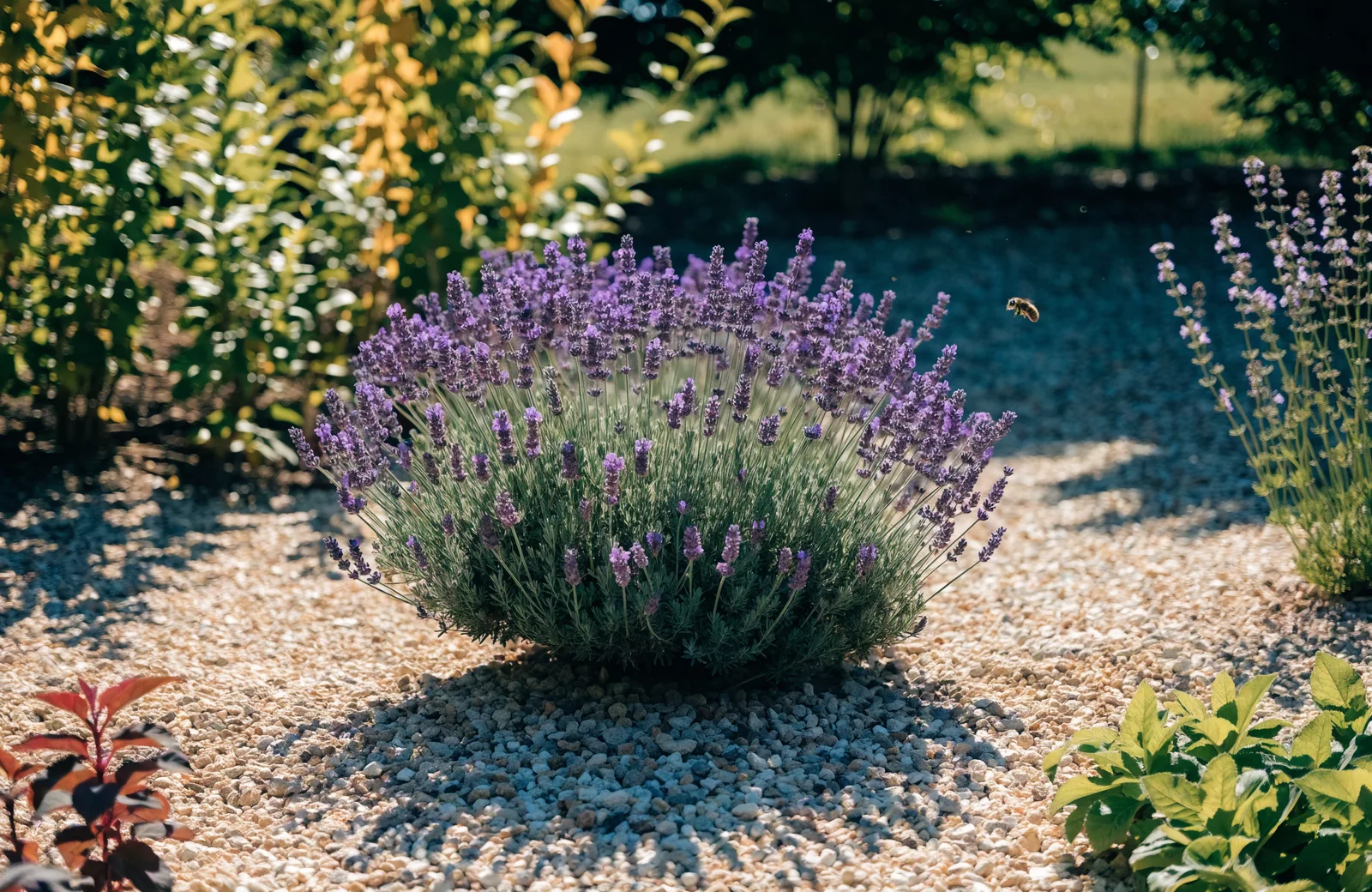
Lavender is one of those plants that thrives on a kind of benign neglect. Give it the hot, dry, gritty conditions of a Mediterranean hillside and it will repay you with silver foliage, weeks of fragrant flower spikes and a steady traffic of bees. Kill-with-kindness treatment — rich soil, frequent watering, a cosy sheltered corner — is exactly what finishes it off. This guide covers choosing the right type, planting, watering, pruning and keeping a plant compact for a decade or more.
Which lavender should you grow?
"Lavender" covers several species with very different tolerances, and most disappointments start with the wrong one for the climate.
The three main garden lavenders
| Type | Hardiness | Notes |
|---|---|---|
| English lavender (Lavandula angustifolia) | Hardy to around −15°C | Compact, sweetly scented; classic cultivars 'Hidcote' and 'Munstead'. Best for cold winters. |
| Lavandin (Lavandula × intermedia) | Hardy to around −10°C | Larger hybrid with long stems; 'Grosso' and 'Phenomenal' are the commercial-perfume workhorses. |
| Spanish/French lavender (Lavandula stoechas) | Tender below about −5°C | The one with "rabbit ears" on top of each flower head. Earliest to bloom; happiest in mild, dry regions or pots brought in for winter. |
Warning: Spanish lavender rarely survives a freezing, wet winter in the ground. In cold climates treat it as a container plant and overwinter it in a cold greenhouse or bright porch, or choose English lavender instead.
Light
Full sun is non-negotiable. Lavender wants at least six hours of direct sun a day; eight is better. In part shade it grows leggy and sparse, flowers poorly and becomes far more prone to fungal problems. If the sunniest thing you have is a bright windowsill, grow it in a pot outdoors for summer instead — lavender is not a happy year-round houseplant.
Soil and planting
Drainage matters more than anything else you do at planting time. Lavender's roots rot quickly in heavy, water-retentive soil, and winter wet kills far more plants than winter cold. Aim for a light, stony or sandy soil on the lean side — neutral to slightly alkaline suits it best, and English lavender in particular resents very acidic ground. On clay, plant on a mound or ridge a hand's-width above grade so water sheds away from the crown, and work in plenty of coarse grit — not compost. Space plants 30–90 cm apart depending on the cultivar's final size; good airflow between plants keeps the foliage dry and disease-free. Spring is the best planting time in cold regions, giving roots a full season to establish before their first winter.
Watering
Water new plants regularly through their first summer until you see strong new growth. After that first year, lavender in the ground rarely needs watering at all except in prolonged drought — its grey, felted leaves are built for dry air and sharp sun. If in doubt, don't. The classic decline sequence — greying, flopping stems, then whole branches dying back — is nearly always root rot from wet feet, not thirst.
Tip: If your summers are humid rather than dry, give lavender your most exposed, breezy spot rather than a sheltered one. Moving air around the foliage does more to prevent fungal disease than any spray.
Lavender in pots
Pots suit lavender well — they guarantee drainage and let cold-climate gardeners grow the tender species. Use a terracotta pot with a large drainage hole, and cut a soil-based compost with roughly a third coarse grit or perlite. Water only when the top few centimetres are dry, and never leave the pot in a saucer of water. Potted lavender does need feeding lightly (a half-strength liquid feed once a month in spring and early summer) and repotting every couple of years, because the roots exhaust the small volume.
Pruning: the key to a long life
Unpruned lavender turns woody, splays open and dies back from the centre within a few years — and it cannot regenerate from bare old wood, so the damage is one-way. The routine is simple: once a year, immediately after the main flush of flowers fades (late summer for most English lavenders), cut the whole plant back by about a third, removing the spent flower stalks and a couple of centimetres of leafy growth below them. Shape it into a tidy dome, always leaving green shoots on every stem. In spring you can tidy lightly, but save the hard cut for after flowering.
Warning: Never cut back into leafless brown wood hoping it will resprout — it almost never does. If a plant is already old, woody and gappy, take cuttings from its healthy tips and replace it rather than trying to renovate it.
Feeding
Almost none. Rich soil and fertiliser produce soft, floppy growth, fewer flowers and weaker scent. In the ground, no feed at all is the norm; at most, a thin mulch of grit or gravel around the crown, which also reflects light and keeps the collar dry.
Common problems
- Flopping, sprawling stems: too much shade, too much water or too rich a diet — not a staking problem.
- Whole branches greying and dying: root or crown rot from poor drainage; improve drainage or replant on a mound.
- Woody, bare base with a tuft on top: years of missed pruning; take cuttings and start again.
- Frothy white blobs on stems in early summer: spittlebugs — harmless, rinse off with a jet of water.
- Few flowers and weak scent: not enough sun.
If a lavender is declining and you can't tell whether it's rot, drought stress or simply old age, photograph it in the PlantMe app — the plant-health scanner distinguishes fungal dieback from cultural problems and suggests a fix.
Harvesting and using the flowers
For drying, cut stems just as the lowest buds on the spike open — scent and colour are at their peak. Gather small bunches, strip the lower leaves, and hang them upside down somewhere warm, dark and airy for two to three weeks. And the bees will forgive you: leave a portion of spikes unharvested and they'll work them until the petals drop.
Sources & further reading
Frequently asked questions
Why is my lavender turning grey and dying?
Grey, collapsing foliage usually means root rot from heavy or waterlogged soil, not disease you can spray away. Stop watering, improve drainage — ideally replant on a gritty mound — and take cuttings from healthy shoots as insurance.
Should I deadhead lavender?
Snipping spent spikes keeps plants tidy and can encourage a lighter second flush, but it doesn't replace the proper annual cut-back by a third after flowering, which is what keeps the plant compact.
Can lavender grow indoors?
Not well long-term. Even a bright windowsill delivers a fraction of the light lavender needs, so plants get leggy and weak within months. Grow it outside in a pot and bring only tender species in for winter, keeping them cool and as bright as possible.
How long does a lavender plant live?
With full sun, sharp drainage and an annual prune, English lavender commonly stays productive for 10–15 years. Neglect the pruning and most plants are woody wrecks within four or five.
About the author

Houseplants & Indoor Styling
Wren has killed enough houseplants to know exactly why yours is struggling — and kept hundreds more thriving in a small, bright flat that doubles as her test lab. She writes about reading plants instead of following rules, and believes every windowsill deserves at least one leaf.
Try it yourself
Diagnose it instantly with PlantMe
Snap a photo of any plant or leaf. Get the species, the diagnosis, and a care plan in seconds.
Download on theApp Store