Journal/Care Basics · 6 min read
How to Repot a Plant Without Killing It
A step-by-step repotting guide: when to do it, what size pot to choose, how to handle roots, and how to avoid transplant shock.
Quick answer
Repot most houseplants every 18–24 months, in spring, into a pot only 2–4 cm wider than the old one. Use fresh potting mix, loosen the root ball gently, water thoroughly, and keep the plant out of direct sun for two weeks while it recovers.
Repotting is one of those things that sounds scary and is actually simple — if you avoid the two mistakes almost everyone makes: pot too big, done at the wrong time of year.
How to tell it's time
- Roots poking out of the drainage hole or spiralling on the soil surface.
- Water runs straight through with almost no absorption.
- The plant hasn't grown at all for a full season.
- You can lift the plant out and the root ball holds pot shape.
When to do it
Early spring is ideal — the plant is waking up and will fill the new pot fast. Avoid repotting in winter unless you're rescuing from root rot; the plant won't push new roots and the wet extra soil sits sour.
Choose the right pot
Only go up 2–4 cm in diameter. A pot too large holds too much wet soil around too few roots and reliably causes rot. Always choose a pot with drainage — a cache pot (decorative outer pot) is fine as long as the plant sits in a smaller nursery pot inside.
Step by step
- 1. Water the plant a day before — moist roots handle disturbance better.
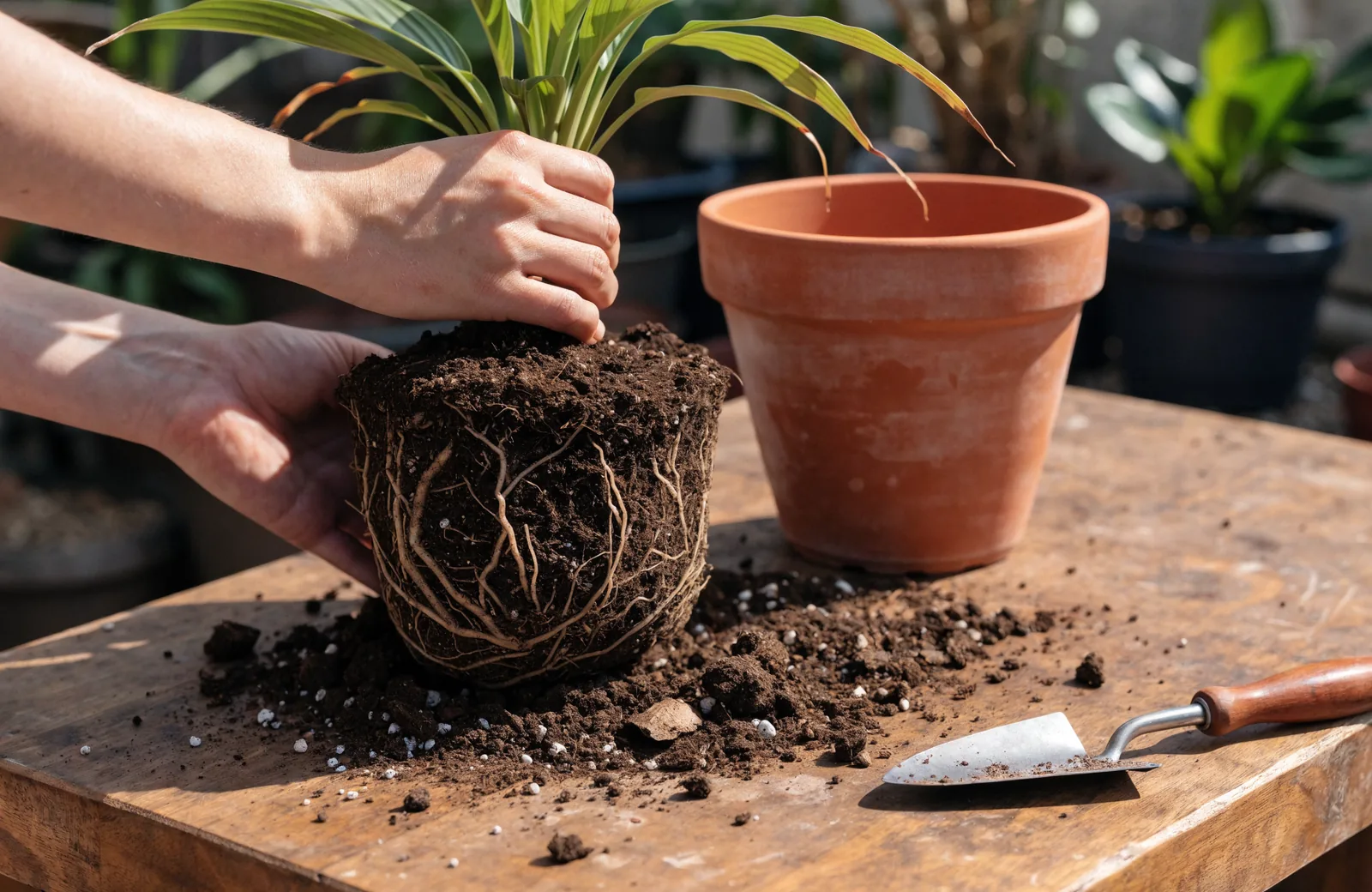
- 2. Gently tip out. Squeeze the sides of a plastic pot; run a knife around a ceramic one.
- 3. Loosen the outer roots with your fingers. If they're circling tightly, tease them apart or slice four vertical cuts down the sides — this triggers new root growth outward.
- 4. Trim any brown mushy roots with clean scissors.
- 5. Add fresh mix to the new pot, position the plant so the soil line matches its old height, then fill around and press gently.
- 6. Water thoroughly until it runs from the drainage hole. Don't fertilize for six weeks.
Avoiding transplant shock
Some leaf droop, colour dulling, or a paused growth phase is normal for 1–3 weeks. Keep the plant out of direct sun, hold humidity a bit higher than usual, and do not repot again to 'fix' it.
If your repot goes sideways, PlantMe's diagnosis tool tells overwater from shock from root rot from a single photo.
Sources & further reading
Frequently asked questions
Do I need to add pebbles at the bottom for drainage?
No. Research shows the 'drainage layer' myth actually raises the water table inside the pot, keeping roots wetter. Use good soil and a drainage hole instead.
Can I reuse old potting soil?
Not for the same plant — nutrients are depleted and pathogens can linger. You can mix 30% old soil into fresh mix for a large pot if you sterilize it by baking at 90°C for 30 minutes.
Why is my plant droopy after repotting?
Almost always transplant shock. Water once well, then wait. Do not feed. Most plants perk up within two weeks; see our guide on transplant shock for the full recovery timeline.
About the author

Houseplants & Indoor Styling
Wren has killed enough houseplants to know exactly why yours is struggling — and kept hundreds more thriving in a small, bright flat that doubles as her test lab. She writes about reading plants instead of following rules, and believes every windowsill deserves at least one leaf.
Try it yourself
Diagnose it instantly with PlantMe
Snap a photo of any plant or leaf. Get the species, the diagnosis, and a care plan in seconds.
Download on theApp StoreKeep reading
See also