Journal/Troubleshooting · 5 min read
Transplant Shock: Symptoms and Recovery
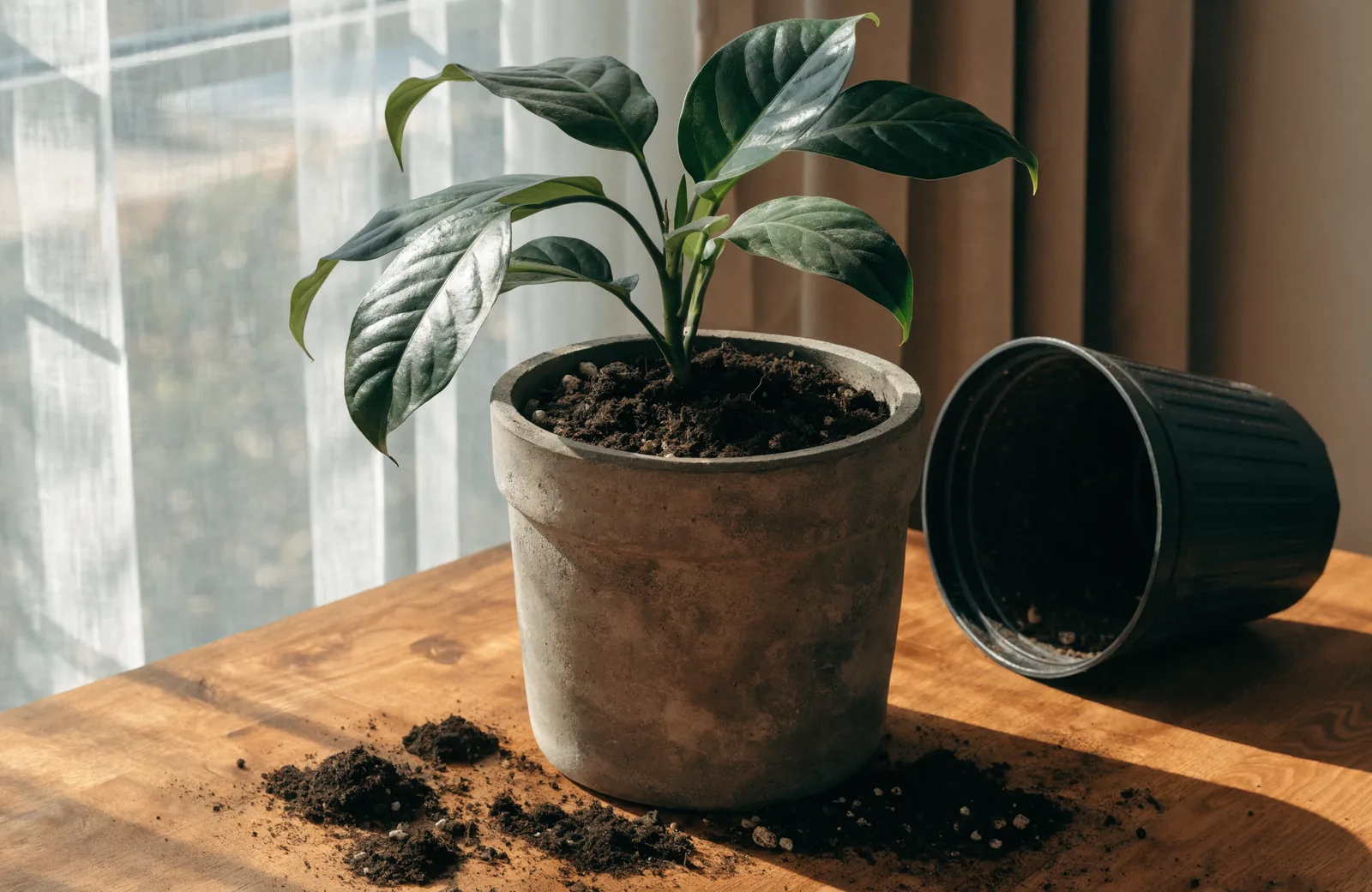
Repotted your plant and it's suddenly wilting? That's transplant shock — not death. Here's the full symptom list and a two-week recovery plan.
Quick answer
Transplant shock shows up as drooping, yellowing lower leaves, paused growth, and dull leaf colour in the first 1–3 weeks after repotting. Don't fertilize, don't repot again — just water once thoroughly, keep the plant out of direct sun, and wait. Most plants recover in 2–3 weeks.
Repotting always disturbs some roots. Even carefully done, the plant loses a small percentage of its water-uptake capacity and has to grow new root hairs before it can supply the leaves normally. That's transplant shock — normal, temporary, and rarely fatal.
The typical symptoms
- Leaves droop within hours of repotting.
- Lower leaves yellow and drop over 5–10 days.
- New growth pauses for 1–4 weeks.
- Leaves look duller, sometimes slightly wrinkled.
How to tell shock from disaster
Shock = pause + light leaf loss + the plant otherwise holds its shape. Root rot = smelly soil, mushy stems, wet-but-wilting plant. Underwatering after repot = bone-dry lightweight pot with crispy leaves. Diagnose the difference before you 'help'.
The recovery protocol
- Water once, thoroughly, until it runs from the drainage hole — then don't water again until the top 2–3 cm are dry.
- Move the plant out of direct sun to a bright, indirect spot.
- Skip fertiliser for 4–6 weeks — fresh mix already contains what it needs, and roots can't process fertiliser while healing.
- Bump humidity slightly if possible (grouping, humidifier).
- Do not repot again to 'check' the roots. Every disturbance restarts the clock.
How to minimise shock next time
- Repot in early spring, not autumn or winter.
- Water the plant a day before, not the day of.
- Only go up 2–4 cm in pot diameter.
- Disturb the outer roots gently — don't scrub soil off.
- Water immediately after repotting to settle the mix around the roots.
What if it isn't recovering?
If 3 weeks have passed and the plant is still declining, unpot and inspect the roots. Brown mushy roots = rot from over-eager watering. Dry, brittle roots = went too dry during recovery. Trim the damage, repot in appropriately-moist fresh mix, and restart the clock.
PlantMe's diagnosis tool distinguishes shock, rot, and drought from a single photo of the wilting plant.
Frequently asked questions
How long does transplant shock last?
For most houseplants, 1–3 weeks. Larger or more sensitive plants (fiddle leaf figs, mature palms) can take 6 weeks to fully resume normal growth.
Should I water more or less after repotting?
Neither. Water once well, then check the top 2–3 cm of soil and water only when dry. Fresh soil holds water differently from old — feel before you pour.
Can I prevent shock by not disturbing roots?
Partially. If you slip the whole root ball into a bigger pot without loosening, shock is minimal — but tightly circling roots won't spread into the new soil either. A little disturbance is a good long-term trade.
About the author

Plant Rescue & Troubleshooting
Camille spent years behind the counter of a plant shop where every customer arrived with the same question: what's wrong with it? She writes the Journal's rescue guides — calm, diagnosis-first, no guilt — because most 'dying' plants are one correct decision away from recovery.
Try it yourself
Diagnose it instantly with PlantMe
Snap a photo of any plant or leaf. Get the species, the diagnosis, and a care plan in seconds.
Download on theApp StoreKeep reading
See also