Journal/Troubleshooting · 5 min read
Why Your Plant Stopped Growing (and How to Restart It)
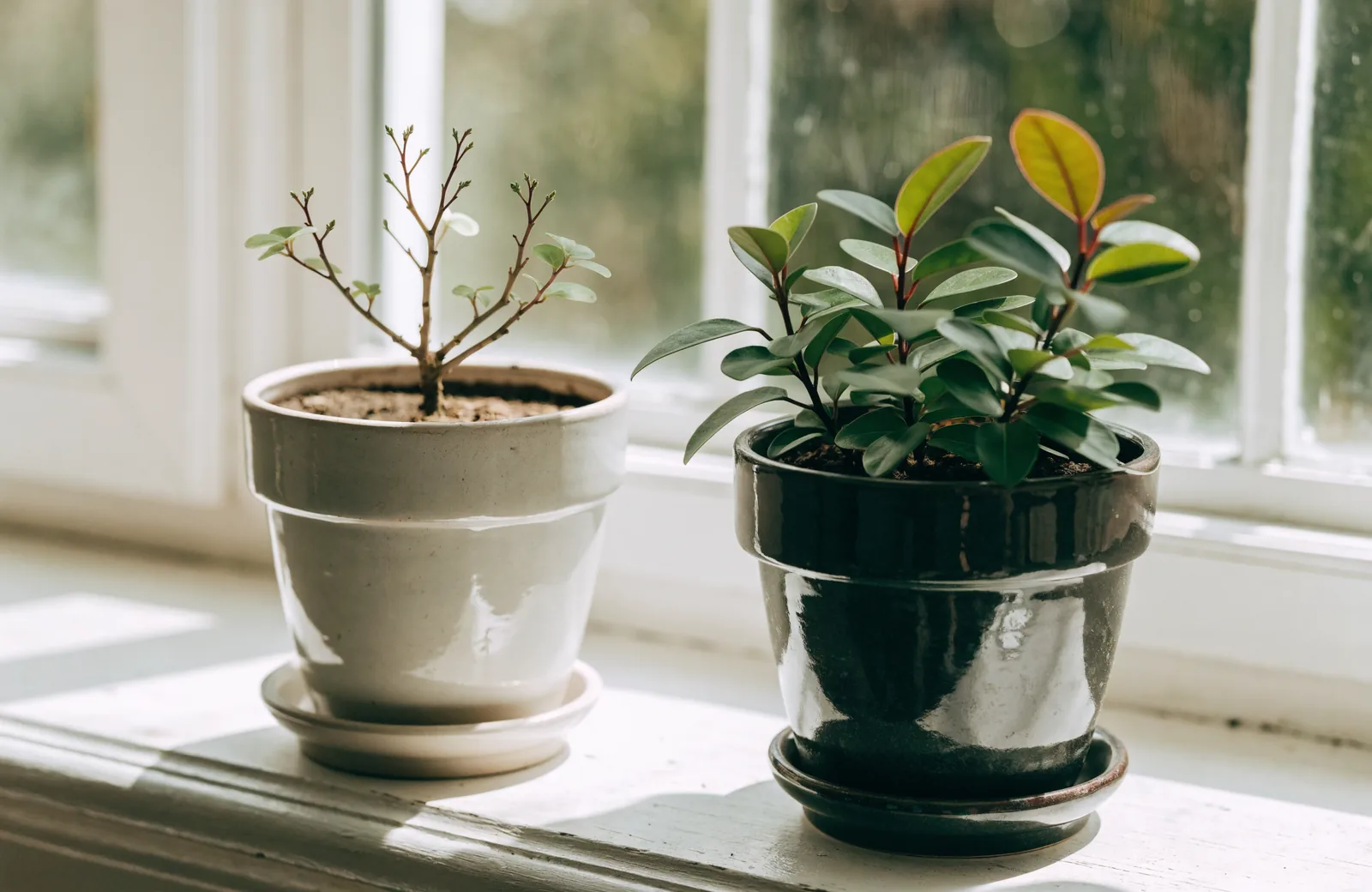
A stalled plant isn't a dying plant — but it is telling you something. The seven reasons houseplants stop growing and what to do about each.
Quick answer
Houseplants usually stop growing because of insufficient light, dormancy (winter), root-bound pots, depleted soil nutrients, temperature stress, watering issues, or pest pressure. Address one variable at a time; expect visible new growth within 4–6 weeks of the fix.
A plant that hasn't grown in months isn't necessarily unhealthy — sometimes it's saying "I have what I need to survive, but not enough to grow." Here are the seven levers to check, in order of likelihood.
1. Not enough light
The single biggest cause of stalled growth. Photosynthesis, and therefore growth, is directly proportional to light. Move the plant closer to a window or add a grow light and give it 4 weeks.
2. It's winter
Most temperate-latitude houseplants slow down or stop entirely from November to February. This is normal. Don't push fertiliser on a dormant plant.
3. Root-bound
Tip the plant out. If the root ball is a tight coil filling the whole pot with little visible soil, it's root-bound. Repot into a pot 2–4 cm wider in spring.
4. Nutrient-depleted soil
Potting soil runs out of major nutrients in 4–6 months. If you haven't fed in a year, that's the problem. Start a fortnightly half-strength liquid feed from March to September.
5. Temperature stress
Rooms below 15°C stop most tropical plants growing entirely. Draughts and radiators create hot/cold cycles that also pause growth. Aim for a steady 18–24°C.
6. Watering out of balance
Both chronic overwatering (damaged roots can't feed the plant) and chronic underwatering (plant conserves energy) lead to stalled growth. Establish a reliable soak-and-dry pattern.
7. Pests
A quiet spider mite or thrip infestation drains resources before it becomes visible. Inspect leaf undersides and stem joints; treat if you find anything.
The restart routine
- Move the plant to the brightest indirect light you have.
- In spring, repot with fresh mix if root-bound, one size up.
- Begin fortnightly half-strength feeding once new growth appears.
- Keep temperature steady 18–24°C, humidity 50%+.
- Wait 6 weeks before making further changes.
PlantMe's care plan tracks new leaf output and flags if a plant hasn't grown when its species should be — so you catch the stall early.
Frequently asked questions
How long should new growth take to appear?
In spring/summer with the right light, most houseplants push a new leaf every 3–6 weeks. If nothing has moved in 8 weeks in growing season, something's wrong.
Should I fertilise a plant that isn't growing?
Only if you've fixed the underlying cause. Feeding a light-starved or root-bound plant just burns the roots — nutrients aren't the limit.
Can I speed up growth with a grow light?
Yes — an LED grow light 20–30 cm above the canopy for 12 hours a day can dramatically accelerate growth in dark rooms, especially in winter.
About the author

Plant Rescue & Troubleshooting
Camille spent years behind the counter of a plant shop where every customer arrived with the same question: what's wrong with it? She writes the Journal's rescue guides — calm, diagnosis-first, no guilt — because most 'dying' plants are one correct decision away from recovery.
Try it yourself
Diagnose it instantly with PlantMe
Snap a photo of any plant or leaf. Get the species, the diagnosis, and a care plan in seconds.
Download on theApp Store