Journal/Seasonal · 5 min
What to Do with Pumpkins After Halloween
Don't bin your jack-o'-lantern. How to compost, bury or repurpose pumpkins after Halloween, feed wildlife responsibly, and save the seeds for spring.
Quick answer
Don't put a spent jack-o'-lantern in the bin — in landfill, pumpkins break down without oxygen and give off methane. Remove candles, wax and any paint, then smash it onto the compost heap, bury it in an empty bed, or set an intact one out as a birdseed feeder on your own property. Dry a few seeds for spring sowing, and never dump pumpkins in woods or parks.
Halloween ends on a fixed date; a carved pumpkin's decline is less punctual. Some collapse by the 2nd of November, others sit on the doorstep looking apologetic until mid-month. Either way, the one place a pumpkin should not go is the household bin. In landfill it breaks down without oxygen and gives off methane, which is why community composting drives have grown up around the holiday — University of Illinois Extension reports that its "Pumpkin Smash" collection events have composted more than 1,012 tons of pumpkins over nine years. You do not need an event, though. A garden will take everything a pumpkin has left to give, by one of four routes: the heap, the ground, the birds, or the kitchen.
Strip the decorations first
Whichever route you choose, the pumpkin goes nowhere until it is plain squash again. Lift out tea lights and candle stubs, pick off wax drips, and remove ribbons, stickers and anything else that will not rot — Mississippi State University Extension's disposal advice is blunt on this point: take off anything that isn't natural. Painted pumpkins need extra attention, because paint has no place in compost. Cut the painted skin away and work with what's underneath.
Route one: the compost heap
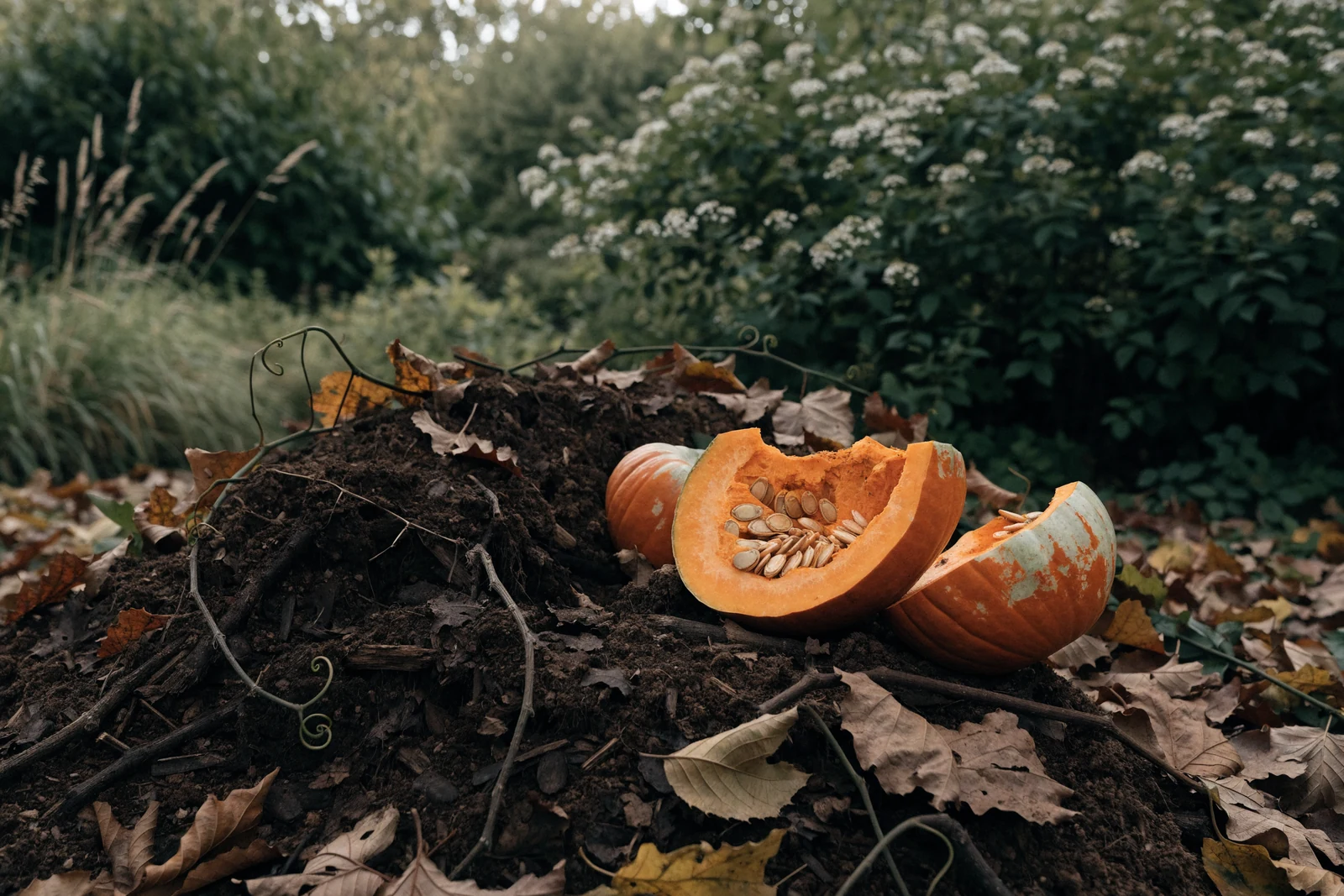
A pumpkin is mostly water, which makes it one of the fastest-rotting things you will ever add to a compost heap. Help it along by breaking it up — smashed or chopped into fist-sized chunks, it disappears in weeks rather than months. Treat it as a green, nitrogen-rich ingredient, and balance it with browns. Conveniently, the garden delivers browns on schedule at this time of year: the same fallen leaves you might be stockpiling for leaf mould are exactly what a wet heap of smashed pumpkin wants mixed through it.
Route two: bury it where next year's crops will grow
No bin, or a bin already full? Trench composting is older than any of them. Dig a hole or short trench about a spade's depth in a bed that is empty for winter, chop the pumpkin in, and cover it back over. The soil life works through it unseen, and by the time you plant in spring there is nothing left but better soil. If the pumpkin came from your own patch, this returns the borrowed fertility to roughly where it started — a tidy piece of accounting.
Route three: the birds, on your own ground
An intact jack-o'-lantern has one more act in it. Mississippi State Extension suggests filling the hollowed shell with birdseed and setting it out as a short-lived feeder; the seeds from the carving session can go in too, unsalted and unseasoned. What you should not do is lob pumpkins over the fence into woods, parks or verges. University of Illinois Extension warns that dumping them in natural areas harms wildlife and native plants, and that pumpkins left in ditches or near roadsides draw animals toward traffic. Generosity to wildlife stays inside your own boundary.
Route four: seeds for spring
Before the smashing starts, set aside a dozen seeds. Rinse them, lay them flat on a paper towel to dry, then store them somewhere cool — a labelled bag in the refrigerator does fine — and sow once frost danger has passed and the soil has warmed. Be warned that seed from a shop-bought carving pumpkin may be a hybrid, so next year's fruit can differ from this year's. If that bothers you, you are a seed-saver now, and growing your own pumpkins next season is the obvious next step. A carved pumpkin that has spent a week on a doorstep is not food, by the way — if you want pumpkin soup, cook an uncarved one.
The first-week-of-November task list
- 1. Lift pumpkins before they slump — a collapsed one is unpleasant to move and leaves a stain on the step.
- 2. Remove candles, wax, ribbons and stickers; cut away any painted skin.
- 3. Set aside seeds to dry if you want to sow them, and an intact shell for a birdseed feeder if you like.
- 4. Smash and compost the rest, mixed with dry leaves — or trench-bury it in an empty bed.
- 5. Then look forward, not back: the November planting jobs are waiting.
Sources & further reading
About the author

Vegetable Garden & Seasons
Arthur has worked the same allotment for thirty years and measures the calendar in sowings, not months. He writes practical, no-nonsense guides to growing food and keeping a garden honest through the seasons — and has little patience for folklore that doesn't survive contact with a real plot.
Try it yourself
Diagnose it instantly with PlantMe
Snap a photo of any plant or leaf. Get the species, the diagnosis, and a care plan in seconds.
Download on theApp Store