Journal/Seasonal · 6 min read
When to Plant Allium Bulbs
Plant allium bulbs in early to mid-autumn, September to November, before the ground freezes. Depth, spacing, varieties and container tips.
Quick answer
Plant allium bulbs in early to mid-autumn — September to November in most temperate gardens — while the soil is still workable but cooling. Set bulbs at about four times their own depth, pointed end up, in free-draining soil in full sun, and they'll flower from late spring into early summer.
Those floating purple globes in every early-summer garden photo all start the same way: as papery bulbs that go into the ground in autumn. Alliums — ornamental relatives of the onion — are among the easiest and most dramatic spring bulbs you can plant, largely ignored by slugs, deer and squirrels that treat tulips as a buffet.
The window to plant them is open right now. Here's exactly when and how to get them in the ground.
The short answer: early to mid-autumn
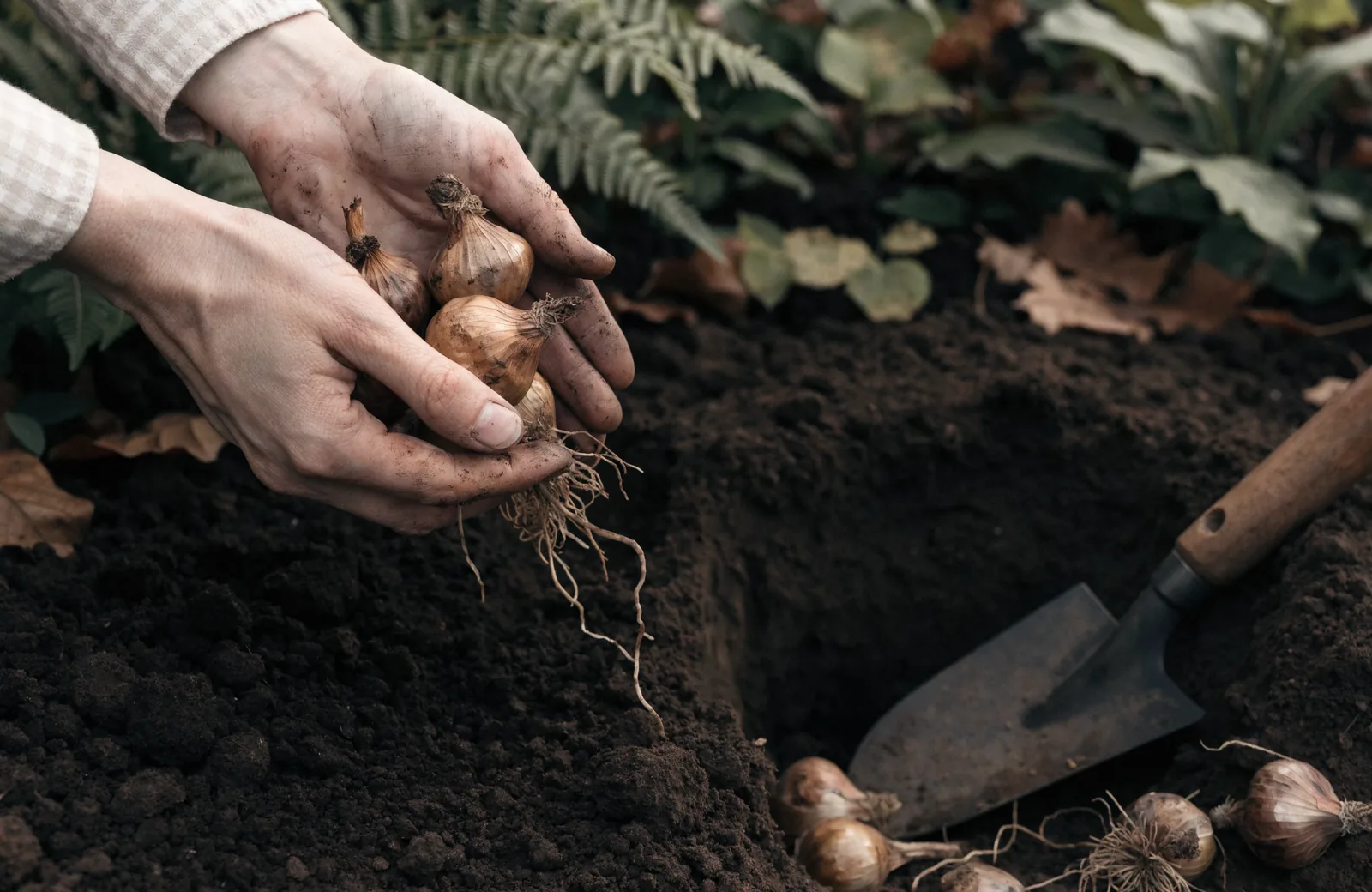
Plant alliums from September to November, once summer heat has passed and the soil is cooling but before it freezes. Earlier in that window is better: bulbs planted in September and October have time to grow a strong root system before winter, which translates into taller stems and bigger flower heads. If you find a forgotten bag of bulbs in December and the ground is still workable, plant them anyway — a late allium nearly always beats a bulb left to shrivel in the shed.
Why autumn, not spring
Allium bulbs need a sustained period of winter cold to trigger flowering — that's the built-in clock that tells them spring has arrived. Planted in autumn, they root through the mild weeks, sit tight through winter, and then throw up foliage and those signature drumstick flower stems from late spring to early summer, filling the awkward gap between tulips and summer perennials.
How deep and how far apart
- Depth: about four times the height of the bulb — roughly 15 cm for big varieties like 'Globemaster', 8–10 cm for small ones.
- Spacing: 8–10 cm apart for small varieties, at least 20 cm for the giants so each globe stands clear.
- Always plant pointed end up, and firm the soil gently after covering.
- Planting in groups of odd numbers (5, 7, 9) gives the most natural drift.
Where to plant them
Alliums come from sun-baked, well-drained hillsides, and they want the same in your garden: full sun and soil that never sits waterlogged. Heavy, wet soil is the one thing that reliably kills them — the bulbs rot over winter. On clay, work in coarse grit before planting or grow them in raised beds or pots. Avoid adding fresh manure to the planting hole. A sheltered spot keeps the tall flower spikes from toppling in wind.
Five reliable varieties
- 'Purple Sensation' — the classic: rich violet, 10 cm globes on 80 cm stems, flowers May–June.
- 'Globemaster' — huge 15–20 cm heads of deep purple; sterile, so it blooms for weeks.
- Allium cristophii (star of Persia) — enormous starry, silvery-lilac spheres on shorter stems; spectacular seedheads.
- Allium sphaerocephalon (drumstick allium) — small egg-shaped burgundy heads in July–August, extending the season; cheap enough to plant by the fifty.
- 'Mount Everest' — pure white globes on 90 cm stems for cooler colour schemes.
Growing alliums in pots
Alliums do well in deep containers with free-draining, gritty compost. Plant at the same four-times depth, water in once, then keep the pot on the dry side and sheltered from constant winter rain. In very cold regions, tuck the pot against the house wall or into an unheated shed during hard freezes.
Aftercare: the one rule that matters
Allium foliage starts yellowing at the tips just as the flowers open — that's normal, not a disease. Let the leaves die back naturally so the bulb can recharge for next year; never cut or knot green foliage. Plant them behind hostas, hardy geraniums or grasses that hide the fading leaves. The dried seedheads are one of the best parts of the plant: leave them standing for structure through summer, or cut a few for the vase. Left in well-drained soil, most alliums come back and slowly bulk up for years.
Problems to watch for
- Bulbs rotting: nearly always waterlogged soil — improve drainage or switch to pots.
- Allium leaf miner and onion fly: pests of the onion family; damage on ornamental alliums in borders is uncommon, but avoid planting into ground where onions recently suffered.
- Floppy stems: too much shade or an exposed, windy site.
- No flowers in year two: foliage was cut too early last year, or the bulb split — feed in spring and be patient.
Not sure whether the bulbs you inherited are alliums at all, or which spring bulbs are pushing up in your borders? Point PlantMe at any sprout, leaf or flower — it identifies plants from 35,000+ classes with 93% top-3 accuracy.
Sources & further reading
Frequently asked questions
Is it too late to plant alliums in November or December?
If you can still get a trowel in the ground, plant them. They'll root more slowly and may flower a touch shorter the first spring, but planting late always beats storing bulbs until spring.
Do alliums come back every year?
Yes — in full sun and free-draining soil most varieties are reliably perennial, and many slowly multiply. In heavy wet soil they tend to dwindle after the first year.
How many allium bulbs should I plant together?
Odd-numbered groups of five to nine look most natural for large varieties; small types like drumstick alliums are best in generous drifts of twenty or more.
Do squirrels dig up allium bulbs?
Rarely. The oniony scent puts off squirrels, mice, deer and rabbits — one reason alliums are a smart swap where tulips keep vanishing.
About the author

Vegetable Garden & Seasons
Arthur has worked the same allotment for thirty years and measures the calendar in sowings, not months. He writes practical, no-nonsense guides to growing food and keeping a garden honest through the seasons — and has little patience for folklore that doesn't survive contact with a real plot.
Try it yourself
Diagnose it instantly with PlantMe
Snap a photo of any plant or leaf. Get the species, the diagnosis, and a care plan in seconds.
Download on theApp Store