Journal/Troubleshooting · 6 min read
How to Get Rid of Aphids on Plants
Aphids on your plants? How to spot greenfly and blackfly early, get rid of them naturally, and keep them from coming back.
Quick answer
To get rid of aphids, start physical: blast them off with a jet of water or wipe them from stems and leaf undersides by hand, then repeat every couple of days. For stubborn colonies, spray with insecticidal soap, covering the undersides where aphids cluster. Outdoors, ladybirds, lacewings and hoverfly larvae will finish the job if you let them — so avoid broad-spectrum sprays.
Aphids are the pest almost every gardener meets first. Greenfly clustered on rose buds, blackfly coating the tips of broad beans, pale green specks under a pepper leaf — different colours, same insect family, same fix. The good news is that aphids are soft-bodied, slow, and near the bottom of the garden food chain, which makes them one of the easiest pests to control without reaching for anything harsh. Here is how to spot them early and clear them properly.
How to recognise an aphid problem
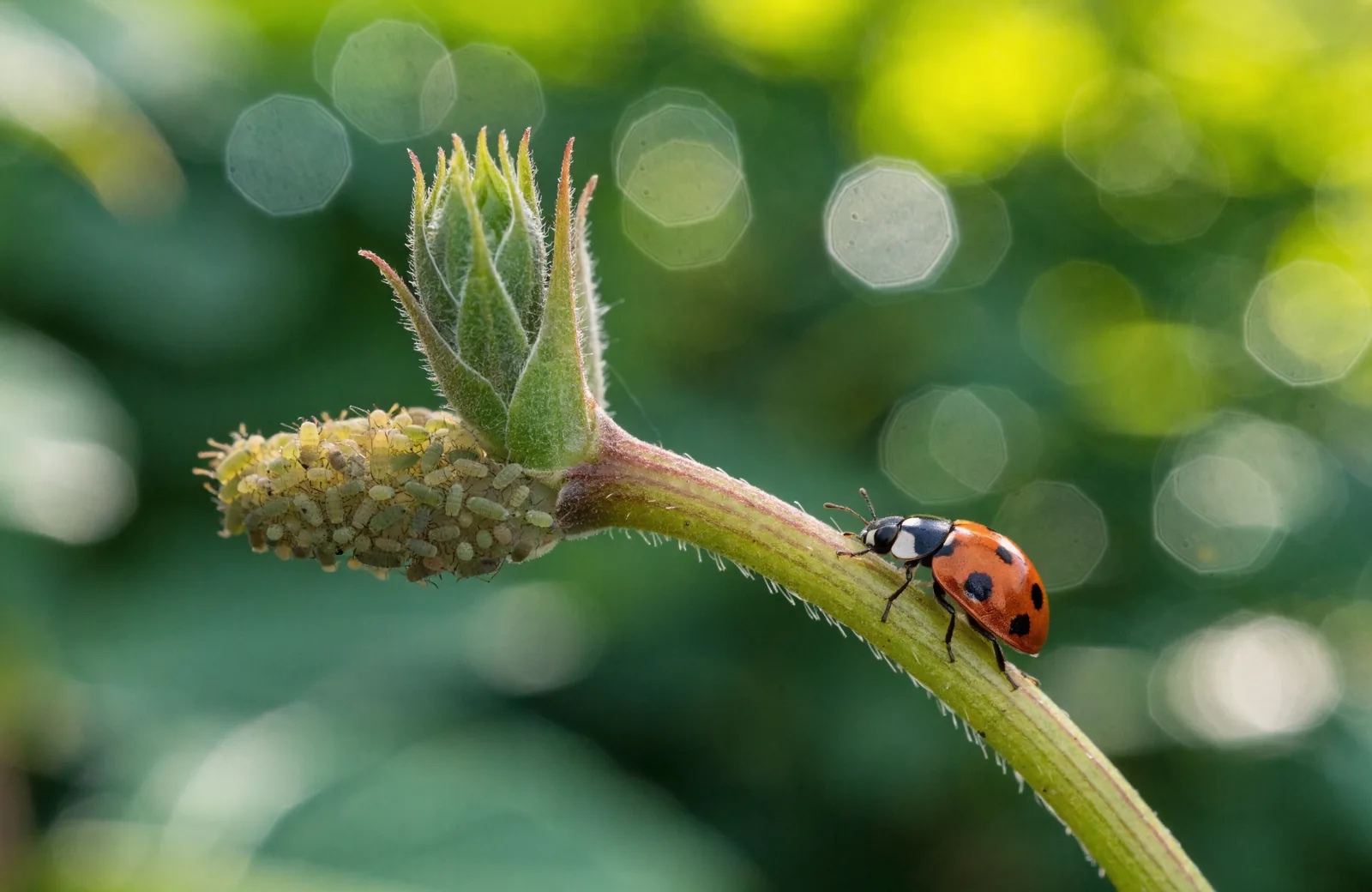
Aphids are small, pear-shaped, soft-bodied insects a few millimetres long, in green, black, grey, pink or white, usually packed together on the newest, juiciest growth: shoot tips, flower buds and the undersides of young leaves. Look for the signs before you see the insects themselves: sticky, shiny 'honeydew' on leaves or on the floor beneath the plant, a black sooty mould growing on that honeydew, curled or puckered new leaves, and ants trooping up and down the stems. Ants actively farm aphids for their honeydew and will defend them from predators, so a line of ants on a plant is worth investigating.
The reason aphids seem to appear overnight is that, for most of the growing season, females give birth to live young without mating — and those young are born already pregnant. One aphid can become hundreds in a fortnight, and when a colony gets crowded it produces winged individuals that fly off and start new colonies. That speed is why early action matters more than the choice of treatment.
Step 1: physical removal (surprisingly effective)
- Blast them off. A firm jet of water from a hose or shower head knocks aphids from the plant, and most never make it back. Repeat every two or three days for a week or two.
- Squish and wipe. On houseplants and small infestations, run gloved fingers or a damp cloth along the stems and leaf undersides. It is quick, free, and removes eggs as well as adults.
- Prune the worst of it. If a shoot tip is completely encrusted — classic with blackfly on broad beans — pinch out and bin the tip. The plant will not miss it.
Step 2: insecticidal soap for stubborn colonies
If aphids keep coming back, spray with insecticidal soap (sold as bug spray for edibles) or a soap-based homemade version. Soap works on contact by disrupting the insect's outer coating, so coverage is everything: spray until the undersides of leaves and every cluster are wet, in the cool of the morning or evening rather than hot sun, and repeat every five to seven days until clear. Neem-based sprays work similarly. Because these only kill what they touch and leave no lasting residue, they are far kinder to bees and predators than broad-spectrum insecticides — but still avoid spraying open flowers.
Step 3: let the predators do the night shift
Outdoors, aphids are dinner for an entire ecosystem: ladybirds and their larvae, lacewing larvae, hoverfly larvae, earwigs, and tiny parasitoid wasps that leave behind bloated, bronze 'aphid mummies'. A healthy garden usually corrects an aphid boom within a few weeks on its own. You can speed this up by planting open, nectar-rich flowers that feed adult hoverflies and lacewings — pot marigolds, alyssum, fennel, yarrow — and by tolerating small aphid populations early in the season so predators have something to breed on. This is also the strongest argument against broad-spectrum sprays: they kill the predators too, and aphids rebound far faster than ladybirds do.
Tip: nasturtiums make an excellent trap crop. Blackfly find them irresistible, so a clump sown near beans or brassicas draws the pest away from your crops — and you can simply pull and compost a badly infested nasturtium.
Stop them coming back
- Ease off high-nitrogen feeding. Over-fertilised plants push out exactly the soft, sappy growth aphids love.
- Deal with the ants. If ants are farming aphids on a potted plant, a sticky barrier band around the pot or stem breaks up the partnership and lets predators in.
- Check new plants and bouquets before they come indoors — that is how most houseplant aphid problems start.
- Keep plants unstressed. Consistent watering and good light make plants less attractive and more resilient.
When aphids are more than a nuisance
A modest aphid colony rarely kills an established plant, but heavy infestations stunt new growth, distort buds, and smother leaves in sooty mould that blocks light. Aphids can also transmit plant viruses as they feed — mosaic-patterned, streaked or oddly distorted leaves that persist after the aphids are gone point that way. Virus-infected annuals and vegetables are best removed, since there is no cure and aphids will spread it further.
Not certain the specks on your plant are aphids at all? Photograph the affected leaves in PlantMe. The app identifies the plant from 35,000+ species and cultivars and checks the symptoms against a library of over 500 diseases and pest disorders, so you can tell aphids from whitefly, thrips or scale in seconds — and treat the right problem first time.
Sources & further reading
Frequently asked questions
What kills aphids instantly?
Direct contact with insecticidal soap kills aphids on the spot, and a strong jet of water removes them just as fast. Neither has any lasting effect, though, so repeat treatments every few days until new growth stays clean.
Should I get rid of every aphid in the garden?
No — a small background population is what feeds ladybirds, lacewings and hoverflies, the predators that keep aphids controlled all season. Aim to protect vulnerable new growth and edibles, not to eradicate aphids entirely.
Why do my plants get sticky leaves?
Sticky, shiny leaves are usually honeydew — the sugary waste aphids (and their relatives scale and whitefly) excrete as they feed. Find and treat the insects above the sticky patch, then wipe the leaves clean so sooty mould doesn't take hold.
About the author

Plant Rescue & Troubleshooting
Camille spent years behind the counter of a plant shop where every customer arrived with the same question: what's wrong with it? She writes the Journal's rescue guides — calm, diagnosis-first, no guilt — because most 'dying' plants are one correct decision away from recovery.
Try it yourself
Diagnose it instantly with PlantMe
Snap a photo of any plant or leaf. Get the species, the diagnosis, and a care plan in seconds.
Download on theApp Store