Journal/Indoor Styling · 6 min read
Best Bathroom Plants: What Actually Thrives in the Steam
The best plants for bathrooms, from ferns to peace lilies — which species enjoy the humidity, how much light they really need, and what a windowless bathroom can (and can't) support.
Quick answer
Ferns, spider plants and peace lilies are the classic bathroom plants: they enjoy the humidity spikes and cope with softer light. The real constraint is light, not steam — a bathroom with no window suits no plant long-term. Match the plant to your actual window, then let the shower do the rest.
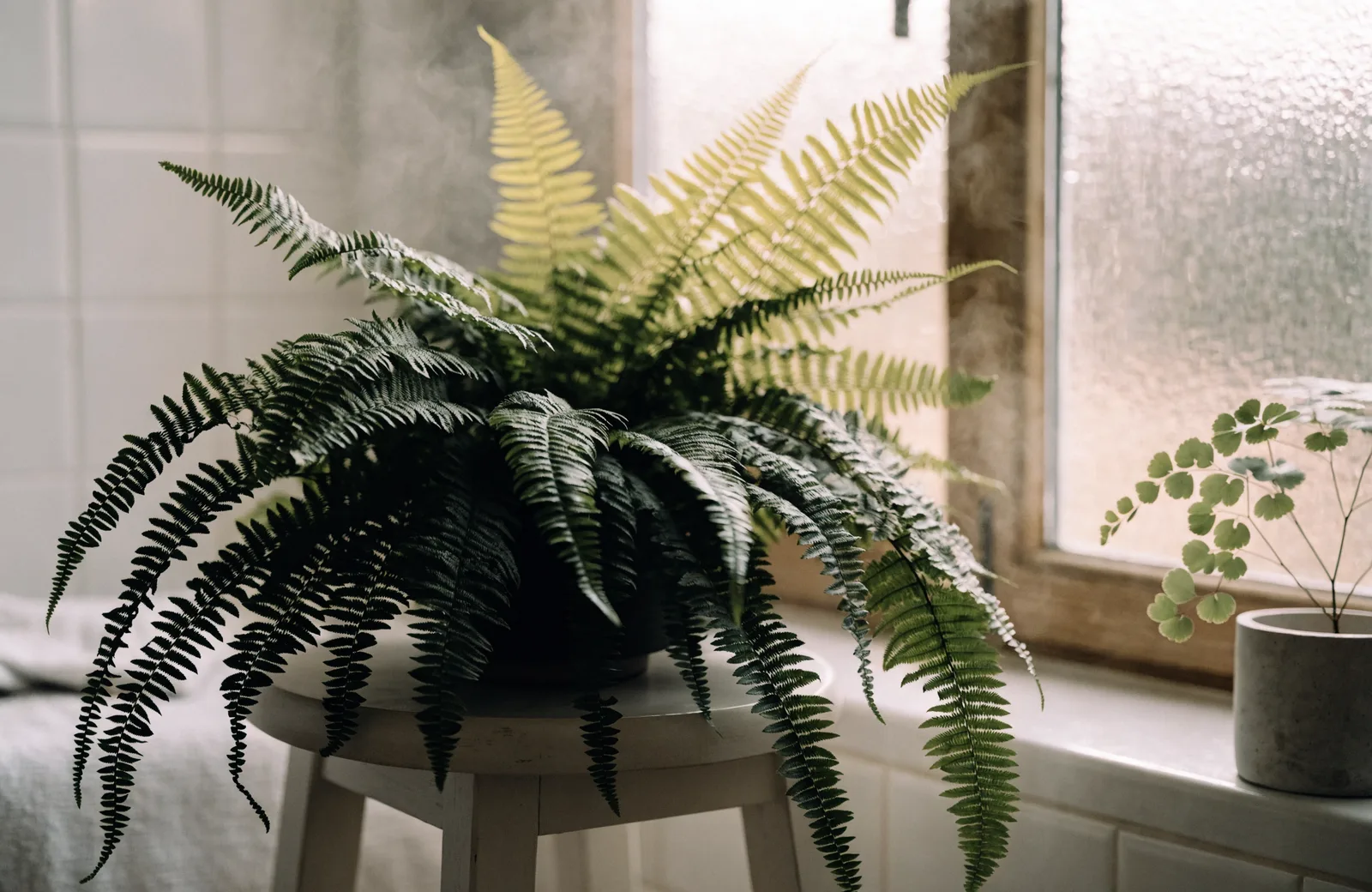
There's a reason the bathroom fern is a cliché: it works. Every shower sends a pulse of warm, damp air through the room, and a handful of plants — mostly the ones with rainforest ancestors — respond as if they've been posted home. If you've got a sill, a shelf or a corner of tile going spare, it's one of the most forgiving places in the flat to keep something green.
But before you carry every pot you own into the steam, it's worth being honest about what a bathroom does and doesn't offer. Get that right and the rest is easy.
First, the honest bit about humidity
The humidity boost from a shower is real but brief. Researchers at Penn State Extension point out that a rise in moisture only lasts until the water evaporates and disperses — which is also why misting your plants achieves so little; the effect is gone within minutes. A bathroom used for one quick shower a day is drier than its reputation. If you're curious what yours actually delivers, a cheap hygrometer on the shelf will tell you in a week.
That said, a bathroom in regular use is still usually the most humid room you have, and the Royal Horticultural Society recommends it for exactly that reason: the warm, damp air replicates the jungle habitat many of our favourite houseplants evolved in. Ferns that crisp up on a living-room shelf often relax visibly within a fortnight of moving in. If your whole home runs dry, our guide to humidity for houseplants covers what genuinely helps and what's folklore.
Light decides everything
Steam is the bonus; light is the deal-breaker. A frosted window is actually a gift — it scatters direct sun into the soft, bright-but-indirect light most tropical plants prefer. A small north-facing window narrows your choices to the shade-tolerant crowd, the same names you'll find among the best low-light houseplants. And a fully windowless bathroom, whatever the shops suggest, is a place plants go to fade: no species photosynthesises off a light switch and an extractor fan. If that's your bathroom, rotate a tough plant in for a week or two at a time and let it recover somewhere brighter — or enjoy a beautiful pot of dried stems guilt-free.
Small plants for sills and shelves
For the average bathroom — one window, limited flat surfaces — small and lush beats big and architectural. These five earn their spot:
- Maidenhair fern (Adiantum) — the bathroom diva that finally behaves. Its whisper-thin leaflets scorch in dry rooms; beside a shower it stays green.
- Boston fern (Nephrolepis exaltata) — arching, generous, and far less prone to shedding in humid air. Our Boston fern care guide covers the details.
- Spider plant (Chlorophytum comosum) — cheerfully indestructible, happy in soft light, and quick to fill a shelf with plantlets.
- Bird's nest fern (Asplenium nidus) — glossy rosettes that prefer their light filtered and their air damp.
- Pink quill (Tillandsia cyanea) — a bromeliad that drinks partly through its leaves, so a steamy room suits it beautifully.
Statement plants for bigger bathrooms
If you have floor space and decent light, a bathroom can carry one proper statement plant:
- Peace lily (Spathiphyllum) — tolerates lower light, flowers anyway, and visibly tells you when it's thirsty.
- Swiss cheese plant (Monstera deliciosa) — a humid corner mimics the forest floor it started on; expect glossier leaves than in the lounge.
- ZZ plant (Zamioculcas zamiifolia) — for the darker bathroom; it shrugs at both low light and neglect.
- Weeping fig (Ficus benjamina) — elegant by a bright window, but position it once and leave it; it drops leaves at draughts and sudden change.
That weeping-fig caveat matters more in a bathroom than anywhere else: an extractor fan, a frequently opened window and a radiator can make it the draughtiest room in the house. Choose the calmest corner you have.
Three mistakes the steam won't forgive
First, watering on autopilot. Humid air slows how fast compost dries, so a bathroom plant needs less from the can than the same plant in the lounge — poke a finger in before you pour, or you'll trade crispy tips for rotten roots. Second, ignoring temperature swings: a cold tile floor in January and a hot shower an hour later is a stressful combination, so keep pots off the coldest surfaces. Third, trusting the room instead of the plant. Underfloor heating, the RHS notes, dries pots out surprisingly fast — the room feels tropical while the compost turns to dust.
Let the room do the work
A bathroom plant is the rare case where the easiest spot is also the kindest one. Pick for your light, water with a lighter hand, and the daily steam becomes a care routine you never have to remember. And if a fern arrives unlabelled from the supermarket, the PlantMe app can identify it from a photo — from 35,000+ plant classes — so you know whether you're holding a maidenhair or something far less fussy before you decide which shelf it earns.
Sources & further reading
About the author

Houseplants & Indoor Styling
Wren has killed enough houseplants to know exactly why yours is struggling — and kept hundreds more thriving in a small, bright flat that doubles as her test lab. She writes about reading plants instead of following rules, and believes every windowsill deserves at least one leaf.
Try it yourself
Diagnose it instantly with PlantMe
Snap a photo of any plant or leaf. Get the species, the diagnosis, and a care plan in seconds.
Download on theApp Store