Journal/Troubleshooting · 5 min read
Christmas Cactus Buds Falling Off: Why It Happens and How to Stop It
Camille Fournier on Christmas cactus bud drop: the normal self-thinning, the changes that trigger it — moving the plant, heat, draughts, watering extremes — and how to keep the buds you still have.
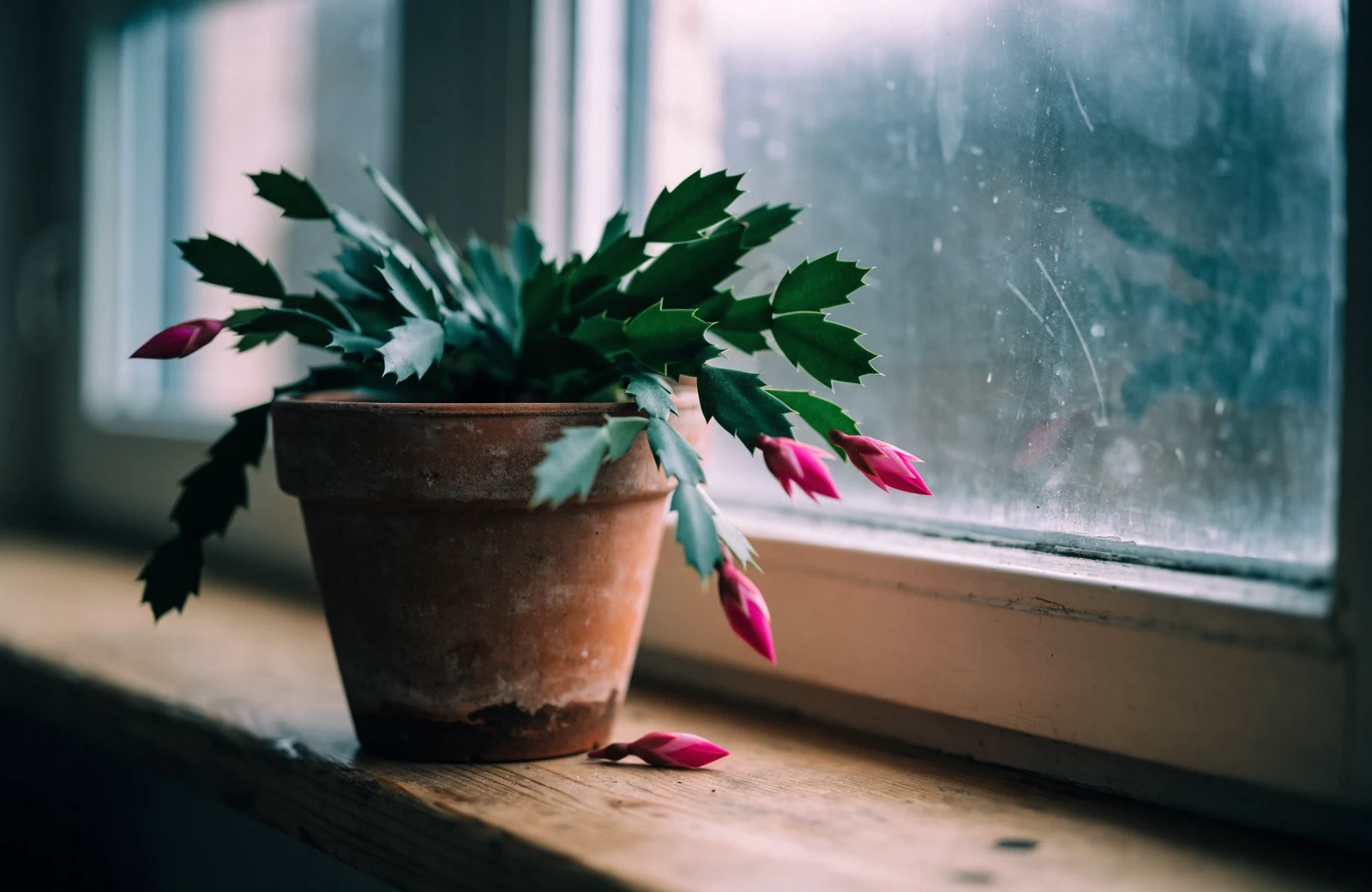
Your Christmas cactus finally set buds — a neat row of pink points at the tips of the segments — and now they are letting go, one by one, before a single flower opens. Of all the houseplant disappointments, this one has particular timing: it tends to happen in the few weeks before the plant was due to be the centrepiece. The good news is that bud drop is rarely the sign of a sick plant. It is almost always a plant reacting to a change — and once you work out which change, the fix is mostly a matter of putting things back the way they were.
Start here: a little drop is built in
Before you go looking for a culprit, count what is left. A healthy Schlumbergera routinely sets more buds than it can carry to flower, and the University of Minnesota Extension notes that a plant with too many buds will simply shed the surplus. If you have lost a scattering of the smallest buds while the larger ones stay plump and firmly attached, you may be watching ordinary self-thinning, not a problem. Keep conditions steady and let the plant edit itself. The time to diagnose is when buds of every size are dropping, or when buds barely form before they fall.
The usual suspects, in order
A Christmas cactus holds its buds on a short lease. These are the conditions that persuade it to cancel, roughly in the order worth checking:
- You moved the plant. The most common trigger of all. Iowa State University Extension's advice is blunt: once buds are developing, leave the plant where it is. A move changes light direction, temperature and humidity all at once, and the buds pay for it. If the plant must go to a warmer display spot, Minnesota Extension's version is to do it as soon as the buds first appear — not three weeks in.
- It is too warm. Buds form and hold best with cool nights around 15–18°C and days only slightly warmer. Above about 18°C at night the plant struggles to flower at all, and Iowa State notes that exposure to temperatures above 21°C can stop flower development outright. A spot that was pleasantly cool in October can quietly become too warm once the heating comes on.
- Draughts and sudden swings. A plant parked near a radiator, above a heating vent or in the path of a frequently opened front door gets a blast of warm or cold air many times a day. Minnesota Extension lists draughts and abrupt changes in temperature or humidity as classic bud-drop triggers.
- Watering extremes. Soggy compost is the dangerous one — excess water can mean dropped buds, wilting and, eventually, root rot. A budded plant left bone dry for weeks will also cut its losses. Aim for the middle: water when the top of the compost has dried, and never leave the pot standing in a saucer of water.
The fix: lock the conditions in
There is no reattaching a bud that has dropped, but the ones still on the plant respond quickly to stability. Tonight's checklist:
- Pick the plant's spot and commit to it until the first flowers actually open — Iowa State's marker for when it is safe to move the plant for display.
- Check the temperature where the plant sits, not across the room. You want cool nights of roughly 15–18°C and bright, filtered light by day.
- Put real distance between the plant and any radiator, vent or draughty doorway.
- Water on a dry-then-water rhythm, and tip out anything standing in the saucer — cachepots are repeat offenders.
- If you feed, keep it light: Minnesota Extension suggests a low-nitrogen fertiliser at half strength while buds are forming — nothing stronger.
If the buds never really formed at all
Sometimes the complaint is not dropped buds so much as buds that stalled at pinhead size, or a plant that never budded properly. That is usually a bloom-trigger problem rather than a stress problem. Schlumbergera is a short-day plant: it initiates buds in autumn in response to long, dark nights and cool temperatures, and Iowa State points out that artificial light in the evenings — a lamp left on, even a nearby streetlight — is enough to disrupt it. If that sounds like your windowsill, the full routine is in our guide to making a Christmas cactus bloom, and the mechanism behind it — why a plant counts the hours of darkness at all — is covered in what is photoperiodism.
Bud drop looks dramatic because it is so visible, but it is a protest, not a verdict. A plant that dropped buds this year has not lost the habit of flowering — hold it cool, bright and undisturbed and it will try again. The plant's year-round routine is in the Christmas cactus care guide; and if a different windowsill resident is shedding buds before they open, orchids pull the same trick for related reasons — see orchid buds falling off.
Sources & further reading
Frequently asked questions
Is it normal for a Christmas cactus to drop a few buds?
Yes. A healthy plant often sets more buds than it can support and sheds the extras. Scattered loss of the smallest buds while the rest stay plump is routine; steady loss of buds of all sizes points to a change in conditions — usually a move, warmth or watering.
Can I move my Christmas cactus while it is in bud?
Avoid it if you can. If it must go to a warmer display spot, move it as soon as the buds first appear; otherwise leave it in place until the first flowers have opened, after which moving it is much safer.
About the author

Plant Rescue & Troubleshooting
Camille spent years behind the counter of a plant shop where every customer arrived with the same question: what's wrong with it? She writes the Journal's rescue guides — calm, diagnosis-first, no guilt — because most 'dying' plants are one correct decision away from recovery.
Try it yourself
Diagnose it instantly with PlantMe
Snap a photo of any plant or leaf. Get the species, the diagnosis, and a care plan in seconds.
Download on theApp Store