Journal/Care Basics · 7 min read
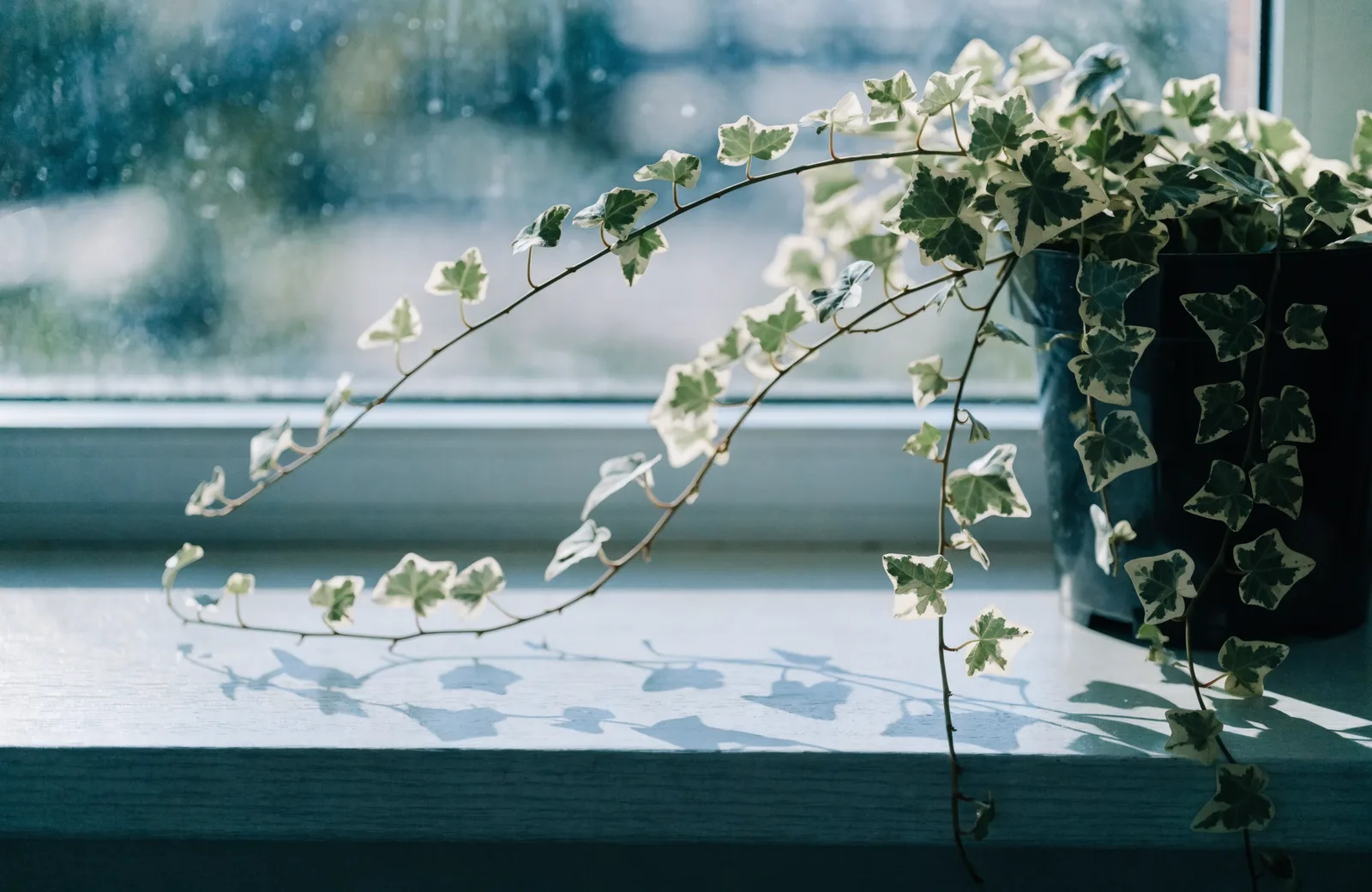
English Ivy Care Guide: How to Grow Hedera helix Indoors
How to care for English ivy indoors: bright light, cool rooms, when to water, spider mite fixes, pruning, propagation, and pet safety.
Quick answer
English ivy (Hedera helix) does best in bright, indirect light and a cool room — roughly 10–21°C by day, a few degrees cooler at night. Water thoroughly when the top 1–2 cm of soil has dried, keep humidity up to deter spider mites, and prune regularly for a bushy plant. Keep it away from pets: the leaves are toxic if eaten.
English ivy has been draping itself over European walls, oaks and ruins for millennia, so people assume it will shrug off anything a living room throws at it. Then the same plant that swallows whole buildings outdoors turns crispy on a bookshelf within a month. The catch: ivy is not a tropical houseplant. It is a temperate woodland climber that wants cool air, real light and regular showers — and once you give it those three things, it becomes one of the most rewarding trailing plants you can grow indoors.
Light: bright but not baked
Indoors, most ivy cultivars want bright, indirect light — a spot near an east-facing window, or a metre or two back from a south- or west-facing one. Direct midday sun through glass scorches the foliage, while deep shade produces weak, stretched stems with small, widely spaced leaves. Variegated cultivars such as 'Glacier' or 'Goldchild' need the brighter end of the range: in poor light they quietly revert to plain green as the plant prioritises chlorophyll over decoration.
Temperature: the secret most care guides skip
Ivy is happiest at cool to moderate room temperatures — about 10–21°C during the day and ideally 5°C cooler at night. That makes it perfect for stairwells, bedrooms, porches and cooler offices, and a poor match for a spot directly above a radiator. Hot, dry rooms are the single biggest reason indoor ivy declines: the plant sulks, stops growing and becomes a magnet for spider mites.
Watering
Water thoroughly until it runs from the drainage holes, then let the top 1–2 cm of soil dry before watering again. Ivy prefers slightly moist soil but hates wet feet — roots sitting in a full saucer will rot. In a cool room in winter that can mean watering only every 10–14 days, so always check the soil with a finger rather than watering on a schedule. Limp, dark, mushy growth points to overwatering; dry, crispy leaves that crunch when touched mean the root ball dried out or the air is far too hot and dry.
Humidity — and the spider mite problem
Ivy tolerates average home humidity, but dry air is an open invitation to its nemesis: the two-spotted spider mite. If your ivy looks faded and dusty, with pinprick speckling on the leaves and fine webbing where leaf meets stem, mites have moved in. They thrive in exactly the conditions ivy hates — hot, dry, stagnant air.
- Shower the plant with lukewarm water every couple of weeks — physically washing foliage is the best mite prevention there is.
- Raise humidity with a pebble tray or by grouping plants, especially in winter when heating dries the air.
- At the first sign of webbing, rinse the whole plant, then treat with insecticidal soap or neem, repeating weekly for three weeks to catch hatching generations.
- Isolate an infested ivy immediately — mites spread to neighbouring plants with ease.
Tip: make the shower routine a habit even on a healthy plant. Clean, humid foliage is the difference between ivy that trails a metre a year and ivy that slowly disintegrates.
Soil, feeding and repotting
Any good peat-free houseplant compost with a handful of perlite works — the only non-negotiable is a pot with drainage. Feed monthly with a balanced houseplant fertiliser while the plant is actively growing in spring and autumn, and skip feeding in the depths of winter and during summer heat, when growth stalls. Repot when roots circle the pot or the plant gets top-heavy, going up just one pot size; ivy grows better slightly snug than swimming in compost.
Pruning and training
Ivy answers pruning with enthusiasm. Pinch or cut just above a leaf every few weeks and each cut stem branches, turning a stringy plant into a full one. Long runners can be trained up a small trellis, around a hoop or along a shelf — indoors it clings less aggressively than outdoors, so give it something to twine through rather than expecting it to glue itself to your wall.
Propagation
Take 10 cm tip cuttings just below a node, remove the lowest leaves and stand them in water on a bright windowsill. Roots appear within two to four weeks; pot several rooted cuttings together for an instantly full plant. Autumn prunings are perfect material, and a jar of rooting ivy looks good enough to count as decor.
Safety first
Warning: English ivy is toxic to cats, dogs and humans if eaten — the leaves contain saponins that cause drooling, vomiting and stomach pain — and the sap gives some people contact dermatitis. Hang it, shelf it, or grow it in rooms your pets don't patrol, and wear gloves for big pruning sessions if you have sensitive skin.
Common problems at a glance
- Crispy, dry leaves: air too hot and dry, or the root ball dried out — move it somewhere cooler and check your watering rhythm.
- Faded, speckled, dusty foliage with fine webbing: spider mites — rinse and treat immediately.
- Leggy stems with sparse small leaves: not enough light.
- Variegated leaves turning plain green: also a light problem — brighter spot, colour returns on new growth.
- Black, mushy stems at soil level: overwatering and poor drainage — repot into fresh compost and water less.
Not sure whether you're looking at mites, scorch or rot? Snap a photo in PlantMe and the app's plant doctor will compare your ivy's symptoms against its problem library and give you a step-by-step treatment plan.
Sources & further reading
Frequently asked questions
Why is my English ivy drying up indoors?
Almost always heat and dry air. Ivy wants cool rooms (10–21°C) and moderate humidity; above a radiator or in a hot, dry room it desiccates and attracts spider mites. Move it somewhere cooler and brighter and shower the foliage regularly.
Is English ivy a good indoor plant for low light?
It tolerates medium light better than most trailing plants, but it doesn't love gloom — growth slows and variegation fades. Bright, indirect light is ideal; save the dark corners for pothos or ZZ plants.
Is English ivy toxic to cats and dogs?
Yes. The leaves are the most toxic part and can cause drooling, vomiting and abdominal pain in pets. Keep ivy in hanging planters or on high shelves out of reach.
How fast does English ivy grow indoors?
In good conditions — bright light, cool air, regular feeding — expect up to a metre of new trailing growth a year. Regular pinching converts that length into fullness.
About the author

Houseplants & Indoor Styling
Wren has killed enough houseplants to know exactly why yours is struggling — and kept hundreds more thriving in a small, bright flat that doubles as her test lab. She writes about reading plants instead of following rules, and believes every windowsill deserves at least one leaf.
Try it yourself
Diagnose it instantly with PlantMe
Snap a photo of any plant or leaf. Get the species, the diagnosis, and a care plan in seconds.
Download on theApp Store