Journal/Care Basics · 7 min read
How to Care for a Peace Lily
How to care for a peace lily: light, watering, humidity, and how to get it to flower — plus fixes for drooping, brown tips, and yellow leaves.
Quick answer
A peace lily wants medium to bright indirect light, water when the top 2–3 cm of soil feels dry (it droops dramatically when thirsty and bounces back within hours), temperatures of 18–27°C, and humidity above 50%. Feed monthly in spring and summer. It needs decent light to flower, and it is toxic to cats and dogs.
The peace lily (Spathiphyllum) has a reputation as the houseplant that survives people who kill houseplants — and it's mostly deserved. It tolerates the lower light of a north-facing room, tells you loudly when it's thirsty, and rewards even average care with elegant white 'flowers'. This guide covers what a peace lily actually needs, how to get it to bloom again, and how to read its warning signs.
Light: brighter than its reputation
Peace lilies are famous as low-light plants, and it's true they won't die in a dim corner. But surviving and thriving are different things. For lush growth and regular flowering, give yours medium to bright indirect light — near an east-facing window, or a metre or two back from a brighter one. Direct midday sun scorches the thin leaves, while deep shade means fewer, smaller leaves and usually no flowers at all. If your peace lily hasn't bloomed in over a year, light is the first thing to fix.
Watering: the famous droop
Water when the top 2–3 cm of soil feels dry — in a warm room that's typically once a week, less in winter. Peace lilies prefer consistently, lightly moist soil, never soggy. Water thoroughly until it drains from the pot's holes, then empty the saucer.
The peace lily's party trick is its droop: when it gets properly thirsty, the whole plant collapses theatrically, then perks back up within a few hours of watering. It's a useful backup alarm, but don't rely on it as a schedule. Each full collapse stresses the plant, browns leaf tips, and shortens the life of its flowers. Aim to water just before the droop.
Peace lilies can be sensitive to fluoride and chlorine in tap water, which shows up as brown leaf tips. If your tap water is heavily treated or softened, use filtered or rainwater, or let tap water sit out overnight.
Humidity and temperature
Native to tropical forest floors, peace lilies like humidity of 50% or more. They'll cope with average room air, but brown, crispy leaf edges are the usual sign it's too dry. Grouping plants, a pebble tray, or a spot in a bright kitchen or bathroom all help. Keep temperatures between 18–27°C and protect the plant from cold draughts, air-conditioning blasts, and radiators — anything below about 12°C causes damage.
Soil, potting and repotting
A standard peaty houseplant mix lightened with a few handfuls of perlite is ideal — moisture-retentive but free-draining. Peace lilies flower best when slightly snug in their pots, so don't rush to size up. Repot in spring every one to two years, or when roots circle the pot and the plant needs watering constantly, going up just one pot size. Repotting is also the moment to divide a large plant: pull the root ball apart into clumps, each with several leaves and healthy roots, and pot them separately.
Feeding and how to get flowers
Feed monthly through spring and summer with a balanced houseplant fertiliser at half strength, and stop over winter. Overfeeding is a common mistake — it produces lots of leaves, green-tinged flowers, or no flowers at all.
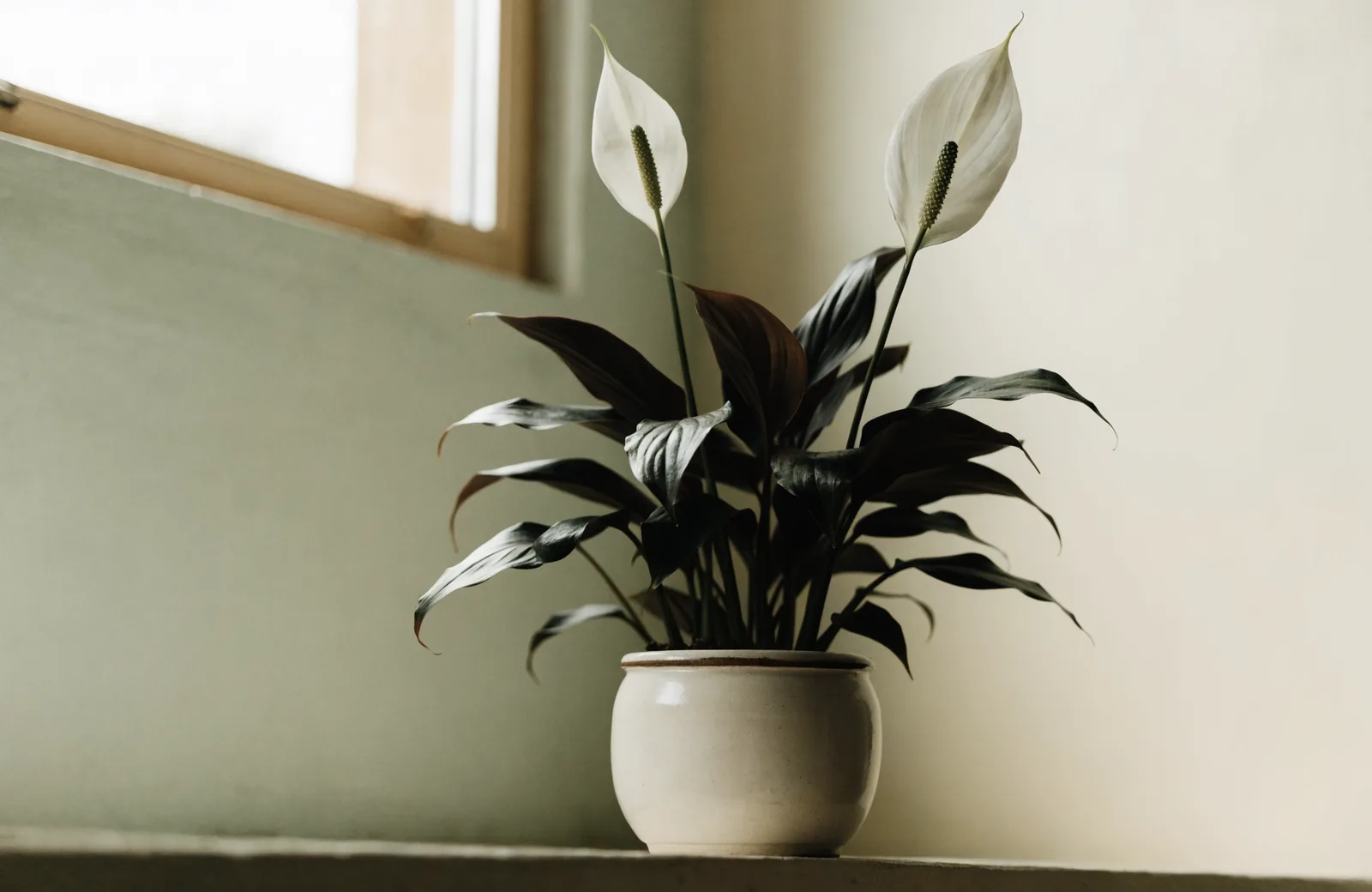
The white 'flower' is actually a spathe — a modified leaf sheltering the true flower spike (the spadix) inside. Supermarket plants are often forced into bloom with plant hormones, so a gap of a few months after the first flush is normal, not a failure. To trigger flowering at home: more indirect light, steady watering, slight root snugness, and patience — most healthy plants bloom in spring and again in late summer. Snip spent flowers at the base of their stalk to keep the plant tidy.
Common problems
- Drooping that watering doesn't fix: check for soggy soil and root rot — the collapse looks the same, but the soil is wet.
- Brown leaf tips: low humidity, erratic watering, or fluoride/salts in tap water.
- Yellow lower leaves: usually overwatering; occasionally just old leaves retiring.
- Green flowers: normal as blooms age, but early greening suggests too much fertiliser or too little light.
- No flowers: almost always not enough light.
Is a peace lily toxic?
Yes. Like many aroids, peace lilies contain insoluble calcium oxalate crystals. Chewing any part causes mouth and throat irritation, drooling and vomiting in cats and dogs, and it's irritating for people too. It's not usually life-threatening, but keep it out of reach of pets and toddlers, and call a vet if a pet has chewed a lot of it. (Despite the name, it is not a true lily — it doesn't carry the severe kidney toxicity true lilies have for cats — but it's still firmly on the do-not-nibble list.)
Not sure whether your droopy, brown-tipped peace lily is thirsty, sunburnt or overfed? Snap a photo in PlantMe and the app will diagnose the problem and give you a step-by-step treatment plan.
Sources & further reading
Frequently asked questions
How often should I water a peace lily?
Roughly once a week in warm months, whenever the top 2–3 cm of soil feels dry. In winter, every 10–14 days is common. Let the soil — not the calendar — decide.
Why are my peace lily's flowers green or brown?
Flowers naturally fade green then brown with age — just cut them off at the base. If brand-new flowers open green, the plant is usually getting too much fertiliser or too little light.
Is a peace lily poisonous to cats and dogs?
Yes — chewing it causes oral irritation, drooling and vomiting due to calcium oxalate crystals. It's rarely dangerous but unpleasant; keep it away from pets.
Why won't my peace lily flower?
Insufficient light is the cause in the vast majority of cases. Move it closer to a window (indirect light), feed lightly, and give it a few months.
About the author

Houseplants & Indoor Styling
Wren has killed enough houseplants to know exactly why yours is struggling — and kept hundreds more thriving in a small, bright flat that doubles as her test lab. She writes about reading plants instead of following rules, and believes every windowsill deserves at least one leaf.
Try it yourself
Diagnose it instantly with PlantMe
Snap a photo of any plant or leaf. Get the species, the diagnosis, and a care plan in seconds.
Download on theApp Store