Journal/Troubleshooting · 7 min read
Why Is My Peace Lily Drooping? Causes and Fixes
A drooping peace lily is usually thirsty, but it can also mean overwatering, root rot, cold or a cramped pot. Here's how to read the wilt and revive it.
Quick answer
A peace lily droops most often because it is thirsty — give it a thorough water and it usually perks up within a few hours. But the same wilt can also mean the opposite problem, overwatering and root rot, so before you reach for the watering can, check whether the soil is bone dry (thirst) or soggy (rot). Cold draughts, too much direct sun and a pot full of roots are the other common causes.
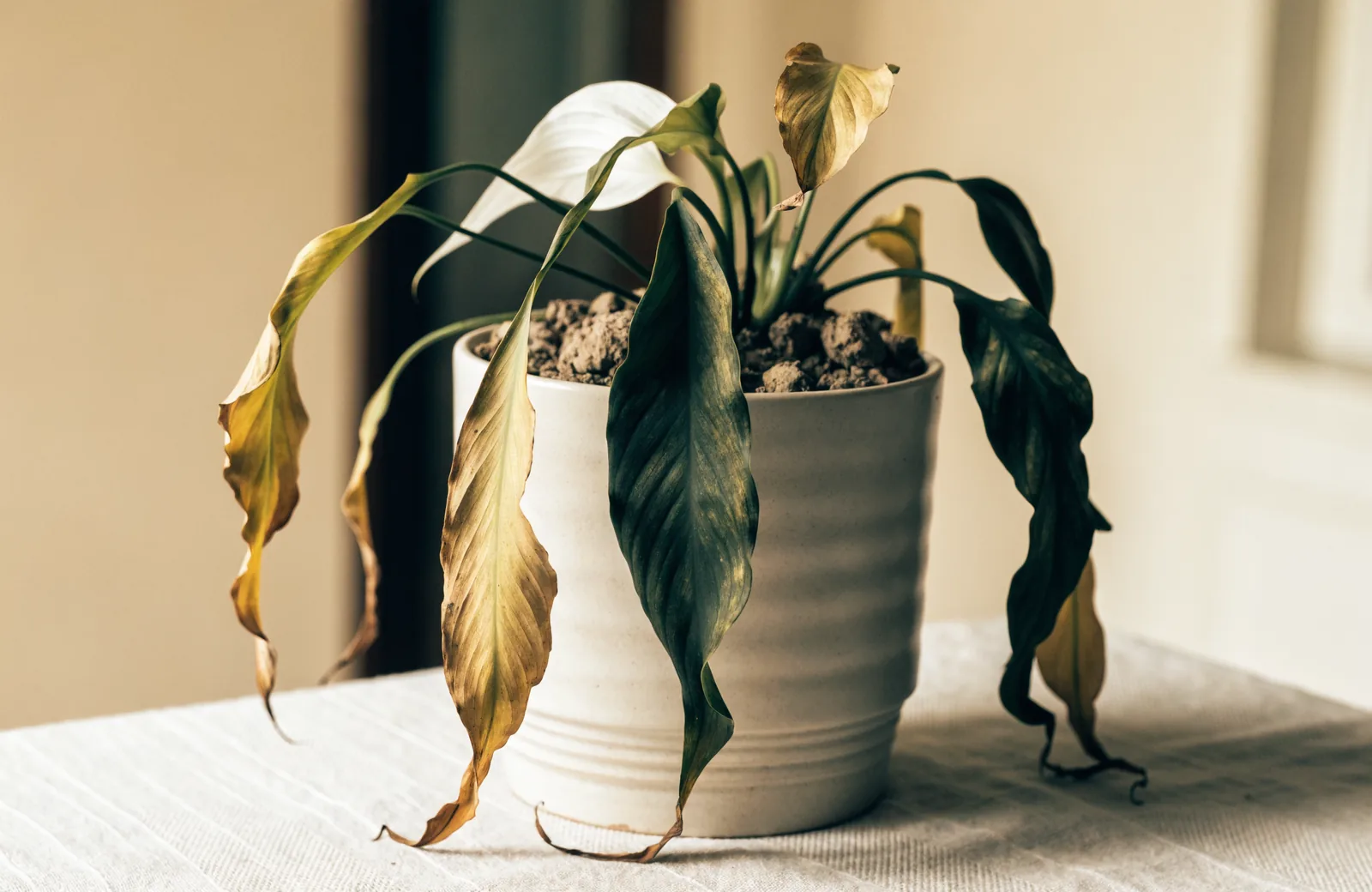
The peace lily (Spathiphyllum) is one of the most expressive houseplants you can own: when something is wrong, it flops dramatically, leaves and stems collapsing over the side of the pot as if it has given up entirely. The good news is that a droop is a signal, not a death sentence, and a healthy peace lily is remarkably good at bouncing back. The trick is reading the wilt correctly, because two opposite problems — too little water and too much — produce almost identical drooping. Water the wrong one and you make things worse.
First, check the soil
Before anything else, push a finger a few centimetres into the compost. This single test tells you which way to go. If the soil is dry and the pot feels light, your plant is simply thirsty — the most common cause by far. If the soil is wet, heavy and perhaps a little sour-smelling, stop: watering a soggy peace lily is exactly what caused the droop, and more water will finish the job.
Cause 1: it is thirsty (the usual answer)
Peace lilies are thin-leaved tropical plants that lose water quickly and have little internal reserve, so when the compost dries out the whole plant wilts fast. It is genuinely one of the best plants for telling you it needs a drink. Give it a thorough watering — water until it runs from the drainage holes, let it drain, and tip away anything left in the saucer — and a thirsty peace lily typically stands back up within two to twenty-four hours. If the root ball has dried so hard that water races straight through, stand the pot in a basin of water for twenty to thirty minutes so the compost can rewet properly, then let it drain. To avoid the drama in future, water when the top two to three centimetres of soil are dry rather than on a fixed calendar.
Cause 2: overwatering and root rot
This is the dangerous one, because it looks identical to thirst but the remedy is the reverse. Constantly wet compost starves the roots of oxygen and invites rot; rotten roots can no longer draw up water, so the leaves wilt even though the pot is soaking. The tells are wet soil, yellowing lower leaves, a musty smell, and drooping that does not recover after watering. Slide the plant out and look at the roots: healthy ones are firm and pale, while rotten ones are brown, soft and stringy. Trim away the mush with clean scissors, repot into fresh, barely-damp compost in a clean pot with good drainage, and then water sparingly while it recovers. A peace lily prefers to dry out slightly between waterings — err toward under- rather than over-watering.
Cause 3: cold, draughts and heat stress
Peace lilies are tropical and dislike the cold. Temperatures below about 15°C, or a sudden chill from an open window, a draughty doorway or an air-conditioning vent, can make the leaves droop and, over time, blacken at the edges. Keep the plant in a stable spot between 18 and 27°C, away from cold draughts in winter and away from blasting air-conditioning in summer. At the other extreme, a peace lily sitting in direct sun will wilt and scorch — which leads to the next cause.
Cause 4: too much direct sun
Peace lilies evolved on shaded forest floors and are famous for tolerating low light, so people often place them well away from windows. But direct sun is the opposite problem: hot midday rays cause the leaves to lose water faster than the roots can supply, so the plant wilts in the brightest part of the day and may develop pale, scorched patches. Bright, indirect light is the sweet spot. If your plant droops every afternoon in a sunny window but the soil is moist, move it back from the glass or filter the light with a sheer curtain.
Cause 5: it has outgrown its pot
A peace lily that has filled its pot with a dense mat of roots simply cannot hold enough moisture between waterings, so it dries out and droops far sooner than it used to — sometimes within a day or two of watering. If you see roots circling out of the drainage holes, or water flashes straight through the pot, it is time to repot. Move it up just one pot size in spring or early summer, using fresh houseplant compost, and it will hold water far better.
Reading the droop at a glance
Peace lily droop diagnosis
| What you see | Most likely cause |
|---|---|
| Soil dry, pot light, recovers hours after watering | Thirst — water more consistently |
| Soil wet, lower leaves yellow, musty smell, no recovery | Overwatering / root rot |
| Droops near a cold window, vent or draught; blackened edges | Cold or draught stress |
| Wilts in afternoon sun, moist soil, pale patches | Too much direct light |
| Roots out of drainage holes, dries out within a day | Root-bound — repot one size up |
How to help it recover
Once you have identified the cause, the fixes are simple: water a thirsty plant thoroughly and then settle into a soil-check routine; for a soggy plant, hold off watering, improve drainage and check the roots. Move the plant out of cold draughts and out of direct sun into bright, indirect light, and keep the room comfortably warm. A repeatedly wilted peace lily may lose a few outer leaves — trim these off at the base — but new growth from the centre is the sign it has forgiven you.
A quick caution on pets
One important warning: peace lilies contain insoluble calcium oxalate crystals and are toxic to cats and dogs if chewed, causing mouth irritation, drooling and vomiting. If you share your home with curious pets, keep the plant well out of reach, and consider a pet-safe alternative for floor-level spots.
If you are still unsure whether you are looking at thirst or rot, photograph the whole plant and the worst leaves in PlantMe — its diagnosis model recognises over 500 plant problems and will suggest the likely cause and a treatment plan in seconds, so you water the right way rather than guessing.
Sources & further reading
Frequently asked questions
How long does a peace lily take to recover after drooping?
If the cause was simple thirst, a peace lily usually stands back up within a few hours to a day of a thorough watering. Recovery from cold or root rot takes longer and may cost the plant a few outer leaves.
Should I water my peace lily as soon as it droops?
Only if the soil is dry. Check first — if the compost is already wet, drooping signals overwatering or root rot, and adding more water will make it worse.
Can a peace lily recover from root rot?
Often, yes, if you catch it early. Remove the plant, trim away the brown, mushy roots, repot into fresh, barely-damp compost with good drainage, and water sparingly while it regrows healthy roots.
About the author

Plant Rescue & Troubleshooting
Camille spent years behind the counter of a plant shop where every customer arrived with the same question: what's wrong with it? She writes the Journal's rescue guides — calm, diagnosis-first, no guilt — because most 'dying' plants are one correct decision away from recovery.
Try it yourself
Diagnose it instantly with PlantMe
Snap a photo of any plant or leaf. Get the species, the diagnosis, and a care plan in seconds.
Download on theApp Store