Journal/Troubleshooting · 5 min
Poinsettia Leaves Falling Off? Work Out Which Stress It Was First
Camille Fournier works through poinsettia leaf drop in order of likelihood — the cold trip home, water at either extreme, radiator placement and low light — and what recovery actually looks like.
A poinsettia that drops its leaves tends to do it quickly — sometimes within a week of coming home — and the speed is what alarms people. Take a breath. Leaf drop is this plant's one and only protest: it doesn't brown at the tips or sulk for months like other houseplants, so whatever the stress was, the response looks the same. Your job isn't to do something immediately; it's to work out which stress it was. The causes below are in order of likelihood for a plant bought in November or December.
First, a question nobody asks: how long have you had it?
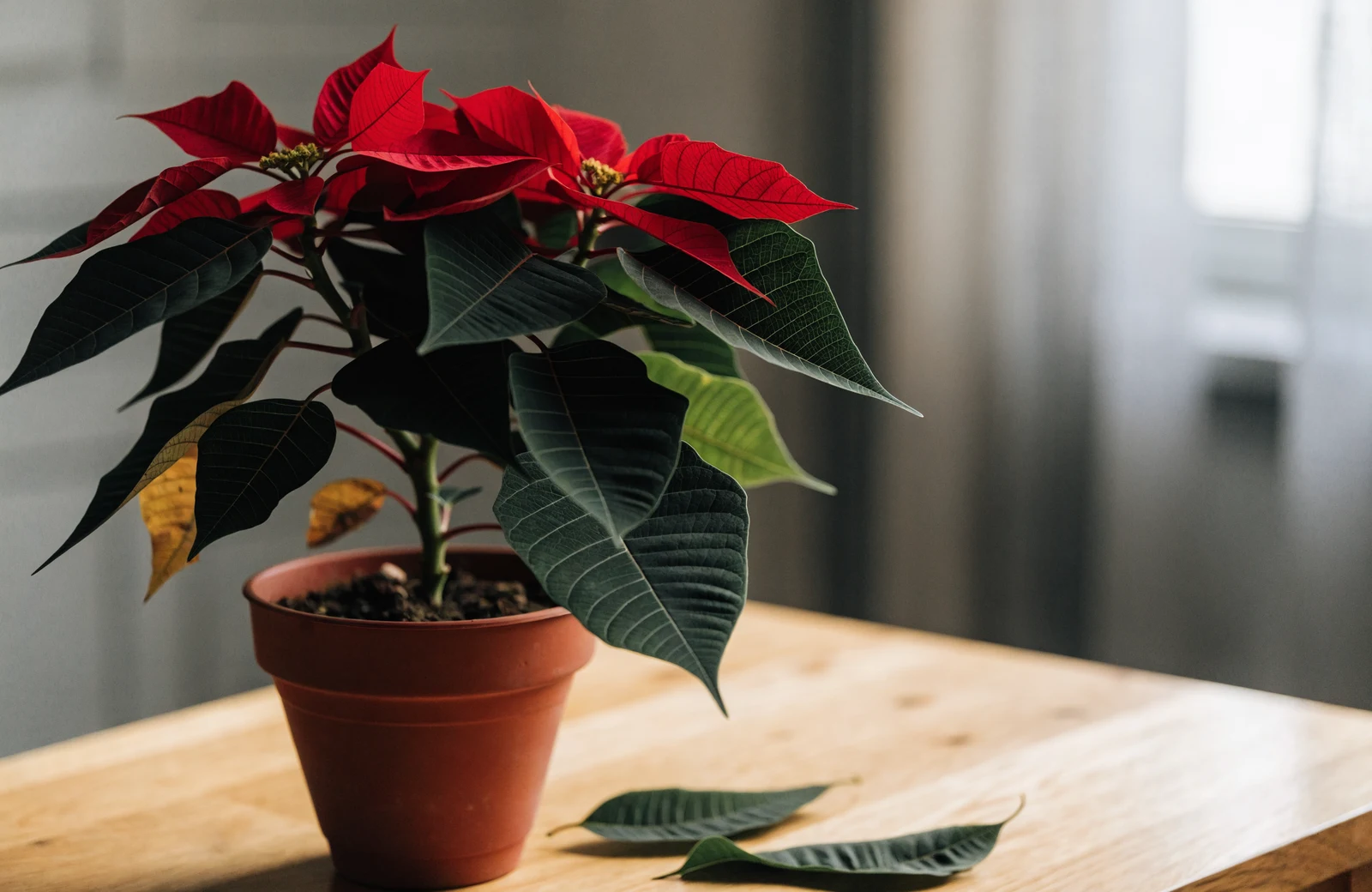
A well-grown poinsettia should hold its looks indoors for about eight weeks. The coloured bracts are not flowers but modified leaves, and shedding them after the tiny true flowers at the centre have finished is simply what the plant does. If yours has been on the shelf since mid-November and starts letting go in January, that isn't a problem to solve — it's the season ending on schedule. Everything below is for a plant that starts dropping leaves early.
Cause 1: the trip home
Poinsettias are chilled by temperatures most houseplants shrug off. Below about 10 °C (50 °F) the plant can be damaged, and a freeze kills it outright — which is why extension services warn against carrying one unwrapped across a cold car park or leaving it in the car while you finish the shopping. The cruel part is the delay: chilling injury often shows up days later as sudden leaf drop, long after the cause is forgotten, so the watering can gets the blame. There's no fix after the fact — if the stems are still firm and green, keep caring for it normally and let it stabilise. Next time, ask for the plant to be sleeved, and don't buy one that's been sitting by a shop doorway.
Cause 2: water, at either extreme
Both ends of the watering spectrum end in the same pile of leaves. A root ball that goes bone dry makes the plant wilt, and a severe wilt costs leaves and bracts quickly — a slight afternoon droop is survivable, a crisp collapse is not. At the other extreme, a pot kept constantly wet suffocates the roots, and the leaves respond by wilting, yellowing and dropping in a way that looks confusingly like drought. The usual culprit is the decorative foil: it holds every drop you pour. Lift the pot out of the foil (or punch a hole in it), water thoroughly in the sink when the surface of the mix feels dry, let it drain completely, and never leave it standing in water. The pot's weight is the honest signal — light means water, heavy means wait. If you're not sure which extreme you've been at, the yellowing pattern will tell you, and a musty-smelling pot is worth checking for root rot.
Cause 3: the spot you gave it
The classic poinsettia position — mantelpiece, hallway table by the front door, windowsill above a radiator — is a shortlist of everything it dislikes. Heat ducts, fireplaces, fans and space heaters deliver warm dry blasts; the front door delivers cold ones; and the swings between them are exactly what triggers leaf drop. Aim for a steady 18–21 °C (65–70 °F) in a spot with still air, and slightly cooler rather than warmer — cooler rooms also keep the bract colour longer. Grouping it with other houseplants raises the humidity around the foliage; if your heated rooms are very dry, the usual humidity tricks apply here too.
Cause 4: not enough light
A poinsettia comes out of a bright commercial greenhouse, and a dim corner is a demotion it takes badly — short on light, it sheds its green leaves first while the bracts hang on, which produces that distinctive bare-stemmed lollipop look. Give it six to eight hours of bright light a day in a south-, east- or west-facing window. One caution: bright window, yes, but don't let the foliage touch cold glass — that's cause 1 again in miniature.
The five-minute checklist
- Lift the pot out of its foil sleeve, or punch a drainage hole in it, and water in the sink from now on.
- Feel the mix: dry at the surface and a light pot — water thoroughly; wet for days — let it dry out and check the roots.
- Move the plant away from radiators, heat vents, fireplaces and the front door.
- Find the brightest window you have, leaves clear of the glass.
- Hold the fertiliser — a poinsettia in its display season doesn't need feeding; wait until new growth appears, then feed at half strength.
What recovery looks like
Here is the honest part: a poinsettia will not regrow its dropped leaves in midwinter, so don't judge the rescue by whether it looks full again by Christmas. Judge it by the stems — firm and green means alive. A plant that has stabilised will simply stop dropping, hold what it has, and push new growth in spring. At that point you can treat it as a green foliage plant, or commit to the full reblooming routine and try to bring the colour back yourself next winter. And if it dropped everything and you'd rather start fresh next December — compost it without guilt. Most poinsettias are grown as a season's display, and yours gave its season.
Sources & further reading
Frequently asked questions
Are the red parts flowers, and is it normal for them to fall too?
The red parts are bracts — modified leaves. The true flowers are the small yellow structures at the centre. Bracts dropping after the flowers have finished, usually some weeks into the display, is the natural end of the season rather than a care failure.
Is a poinsettia poisonous to pets or children?
Poinsettias are not considered poisonous, but the milky sap can irritate skin in some people, and it's still sensible to keep the plant out of reach of pets and small children.
My poinsettia dropped every single leaf. Is it dead?
Check the stems: firm and green means the plant is alive and can regrow in spring, either as a foliage plant or as a reblooming project. Soft, shrivelled or blackened stems mean it's gone — compost it and note what the likely stress was for next year's plant.
About the author

Plant Rescue & Troubleshooting
Camille spent years behind the counter of a plant shop where every customer arrived with the same question: what's wrong with it? She writes the Journal's rescue guides — calm, diagnosis-first, no guilt — because most 'dying' plants are one correct decision away from recovery.
Try it yourself
Diagnose it instantly with PlantMe
Snap a photo of any plant or leaf. Get the species, the diagnosis, and a care plan in seconds.
Download on theApp Store