Journal/Troubleshooting · 7 min read
Powdery Mildew: How to Get Rid of It (and Stop It Coming Back)
White dust on courgette or rose leaves? How to identify powdery mildew, treat it with simple sprays, and stop it coming back every summer.
Quick answer
Powdery mildew is a fungal disease that coats leaves in a white, dusty film. Remove the worst-affected leaves, spray the rest weekly with a milk solution (one part milk to four parts water) or potassium bicarbonate, water at the roots, and improve airflow around the plant. Sprays protect healthy leaves — they won't clean up ones that are already badly infected.
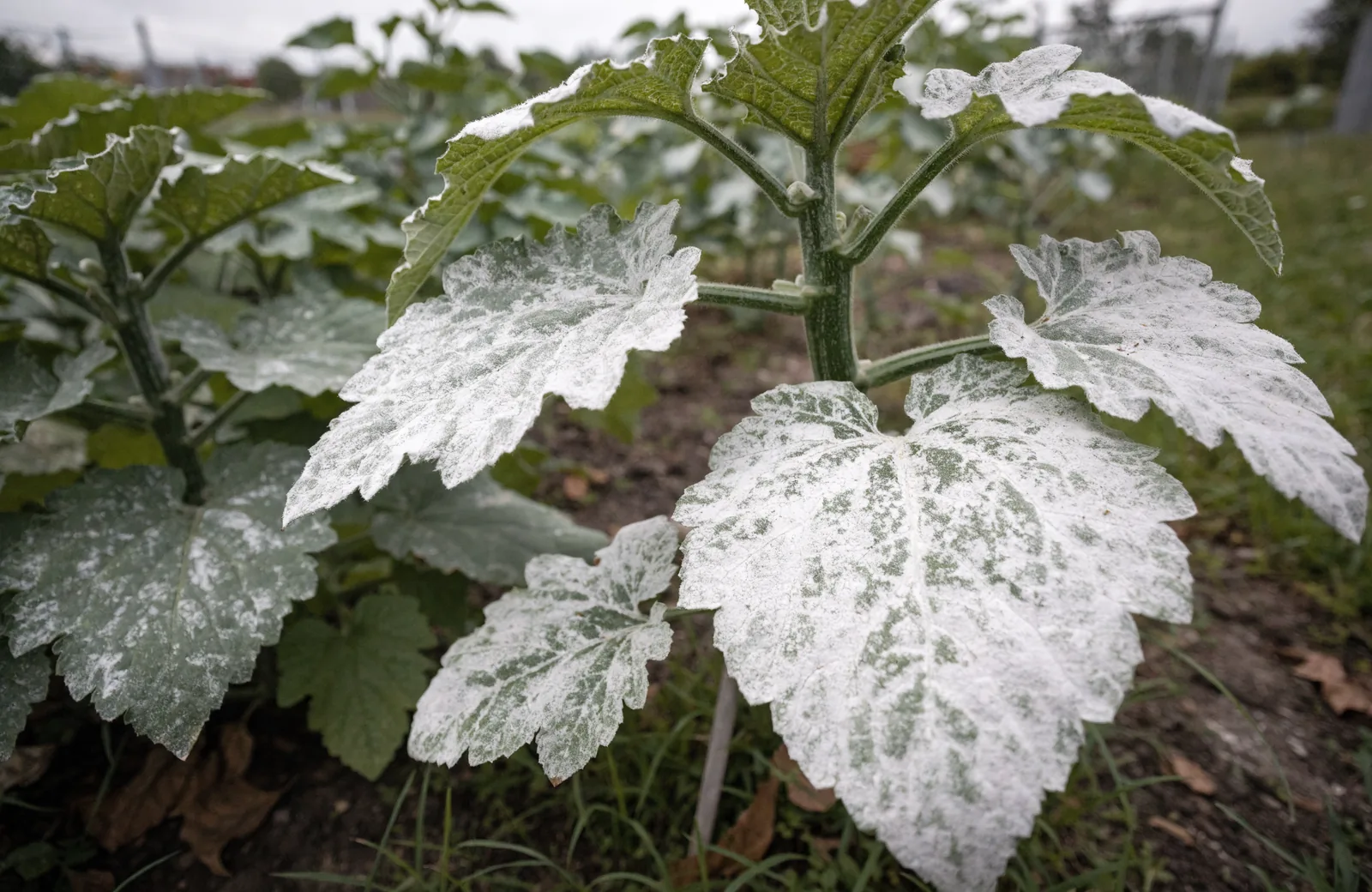
It starts with a few pale spots, and within a fortnight half the courgette patch looks like it's been dusted with flour. Powdery mildew is one of the most common plant diseases in the world — over 10,000 plant species can catch some form of it — and late summer is its favourite time of year. The good news: it's rarely a death sentence, it's easy to identify, and a simple weekly routine will keep it in check. Here's what actually works, and what doesn't.
What powdery mildew is — and why it loves late summer
Powdery mildew isn't one fungus but a family of related fungi (the Erysiphaceae) that live on the surface of leaves and send tiny feeding structures into the outer cells. Unlike most fungal diseases, it doesn't need wet leaves to infect a plant. What it loves is the classic late-summer pattern: warm, dry days around 21–27°C that spread the spores, and cool, humid nights that trigger new spore production. Add a plant that's slightly drought-stressed at the roots — very common in July and August — and you have perfect conditions. That's why it seems to appear from nowhere in high summer, even in a dry spell.
How to recognise it
The signs are distinctive once you know them:
- Small white or greyish spots on leaves, often on the upper surface first but also underneath
- Spots that spread and merge into a dusty, talcum-powder coating you can smudge with a finger
- The coating spreading to stems, buds and sometimes flowers or fruit
- Leaves that yellow, distort or crisp up and die as the infection advances
- Older, shaded leaves in the middle of the plant usually going down first
Two lookalikes to rule out. Downy mildew produces yellow blotches on top of the leaf with greyish fuzz strictly on the underside, and thrives in wet weather rather than dry. And some squash and courgette varieties naturally have silvery-white markings along the leaf veins — if the pale patches follow the veins in a regular pattern and won't smudge, that's just variegation, not disease.
Which plants get it
In the vegetable garden, courgettes, squashes, pumpkins, cucumbers and peas are the classic victims. Among ornamentals it's common on roses, phlox, bee balm, honeysuckle, asters and sunflowers, and you'll also see it on apples, gooseberries and grapevines. One reassuring detail: each powdery mildew fungus is fairly host-specific. The mildew on your courgettes won't jump to your roses — they're different species that happen to look identical. Indoors it's less common, but African violets, begonias and rosemary on a windowsill can all suffer, especially in a room with still air.
How to get rid of it: step by step
- Remove the worst leaves. Cut off any leaf that's more than half covered — it won't recover and it's a spore factory. You can safely remove up to about a third of a plant's foliage. Bin infected material or put it in council green waste; don't add it to a home compost heap, where spores can overwinter.
- Water properly, at the base. Drought stress makes plants far more susceptible. A deep soak at the roots two or three times a week beats a daily sprinkle — and keeping water off the leaves avoids encouraging other diseases.
- Spray what's left, weekly. A milk spray (one part milk to four parts water) or potassium bicarbonate spray, applied every 7 days to all leaf surfaces, suppresses the fungus and protects new growth. Spray in the morning, not in scorching midday sun.
- Improve the airflow. Thin out congested growth, space container plants further apart, and open greenhouse vents and doors. Powdery mildew thrives in still, humid pockets of air.
- Ease off the nitrogen. Lush, soft growth from heavy nitrogen feeding is exactly what the fungus prefers. Switch to a balanced or high-potassium feed until it's under control.
- Keep going for three weeks. One spray does very little. The plants that recover belong to gardeners who repeat the routine weekly until new leaves stay clean.
Home sprays compared
Common powdery mildew treatments
| Treatment | How to use it | What to expect |
|---|---|---|
| Milk spray | 1 part milk to 4 parts water, weekly | Well supported on courgettes, squash and grapes; cheap and safe on edibles |
| Potassium bicarbonate | Follow pack rates, weekly | Slightly alkaline spray that suppresses surface fungus; more effective than baking soda |
| Baking soda mix | 1 tsp bicarbonate of soda + a few drops of oil and mild soap per litre | Mild effect; test on a few leaves first as it can scorch in hot sun |
| Sulphur or horticultural oil | As directed on the label | Effective as protection but don't oil-spray in heat above 30°C; check the label for edibles |
The most important thing to understand about every spray on this list: they protect and suppress, they don't cure. A leaf that's already thickly coated will not turn green again. The goal is to slow the fungus down and shield the new growth while the plant outgrows the problem.
Can you still eat the courgettes?
Yes. Powdery mildew lives on the leaves, and the fungi involved don't produce toxins that move into fruit. Wash your courgettes, squash and cucumbers as normal and eat them without worry. A badly infected plant will simply produce less, and smaller fruit, because it's losing photosynthetic leaf area — which is the real reason to act early rather than a food-safety one.
Stopping it coming back next year
- Choose resistant varieties — many modern courgette, cucumber and phlox varieties are bred with strong mildew resistance, and it's the single most effective prevention there is
- Space plants generously and prune for airflow from the start of the season
- Mulch around the base in early summer to keep roots evenly moist
- Clear away infected foliage completely at the end of the season rather than digging it in
- Start a protective spray routine in early July on plants that get mildew every year, before symptoms appear
Not sure whether you're looking at powdery mildew, downy mildew or something else entirely? Snap a photo of the leaf in PlantMe — the app recognises over 500 plant diseases and problems alongside 35,000+ plant types, so you can confirm the diagnosis before you reach for a spray.
Sources & further reading
Frequently asked questions
Does powdery mildew spread to other plants?
Only to related ones. Each powdery mildew species infects a narrow range of hosts, so mildew on a courgette won't move to your roses. It will spread quickly to other courgettes and squashes, though, so treat the whole bed as one patient.
Should I cut off all the leaves with powdery mildew?
Only the worst ones. Remove leaves that are more than about half covered, up to roughly a third of the plant's total foliage. Stripping every marked leaf removes the plant's ability to feed itself and does more harm than the fungus.
Does rain wash powdery mildew away?
A heavy downpour can rinse some spores off, and unlike most fungi powdery mildew actually dislikes standing water on leaves. But rain doesn't cure an infection, and the humid air that follows can encourage a new flush. Stick to the weekly treatment routine regardless of weather.
About the author

Plant Rescue & Troubleshooting
Camille spent years behind the counter of a plant shop where every customer arrived with the same question: what's wrong with it? She writes the Journal's rescue guides — calm, diagnosis-first, no guilt — because most 'dying' plants are one correct decision away from recovery.
Try it yourself
Diagnose it instantly with PlantMe
Snap a photo of any plant or leaf. Get the species, the diagnosis, and a care plan in seconds.
Download on theApp Store