Journal/Seasonal · 8 min read
When to Prune Roses (and When You Really Shouldn't)
The main rose prune comes in late winter — but summer and autumn trims matter too. Exact timing by rose type, plus what to cut right now in late August.
Quick answer
Give repeat-flowering roses their main hard prune in late winter or early spring, just as the buds begin to swell. Deadhead them lightly all summer, and in late August give a light trim to encourage a strong autumn flush. Once-flowering ramblers are the exception: prune those straight after their summer bloom. Avoid hard pruning in autumn in cold climates.
Ask three gardeners when to prune roses and you'll get four answers — February, March, after flowering, and "never touch them, they were here before me." The confusion is understandable, because the honest answer is: it depends on the rose. But it depends in a completely predictable way. Once you know which of two groups your rose belongs to, the calendar sorts itself out — and late August, right now, is one of the moments when a small amount of well-aimed cutting pays off handsomely.
The one rule that decides everything
Roses split into two camps. Repeat-flowering roses — hybrid teas, floribundas, most modern shrub roses, David Austin-style English roses, and most climbers — bloom on wood they grow this year, so you prune them hard while they're dormant and let them rebuild. Once-flowering roses — most ramblers and many old garden roses — bloom on wood they grew last year, so a winter haircut removes exactly the wood that was about to flower. Those get pruned straight after their one glorious summer flush. If you don't know which you have, watch it for a season: one big show in June and done means once-flowering; waves of bloom into autumn means repeat-flowering.
Late winter: the main event
For all repeat-flowering roses, the main prune comes at the end of dormancy — late winter to early spring, when the buds are visibly swelling but before leaves unfurl. An old gardeners' cue: prune your roses when the forsythia blooms. Pruning too early in winter can wake the plant into frost-tender growth; leaving it too late wastes the plant's stored energy on shoots you're about to remove.
- Start with the three Ds: cut out all dead, damaged and diseased wood back to healthy white pith.
- Remove crossing and inward-growing stems to leave an open, vase-shaped framework that air can move through — your single best defence against black spot and mildew.
- Shorten the remaining healthy stems: hard (down to 3–5 buds) for hybrid teas, by about one third to one half for floribundas and shrub roses.
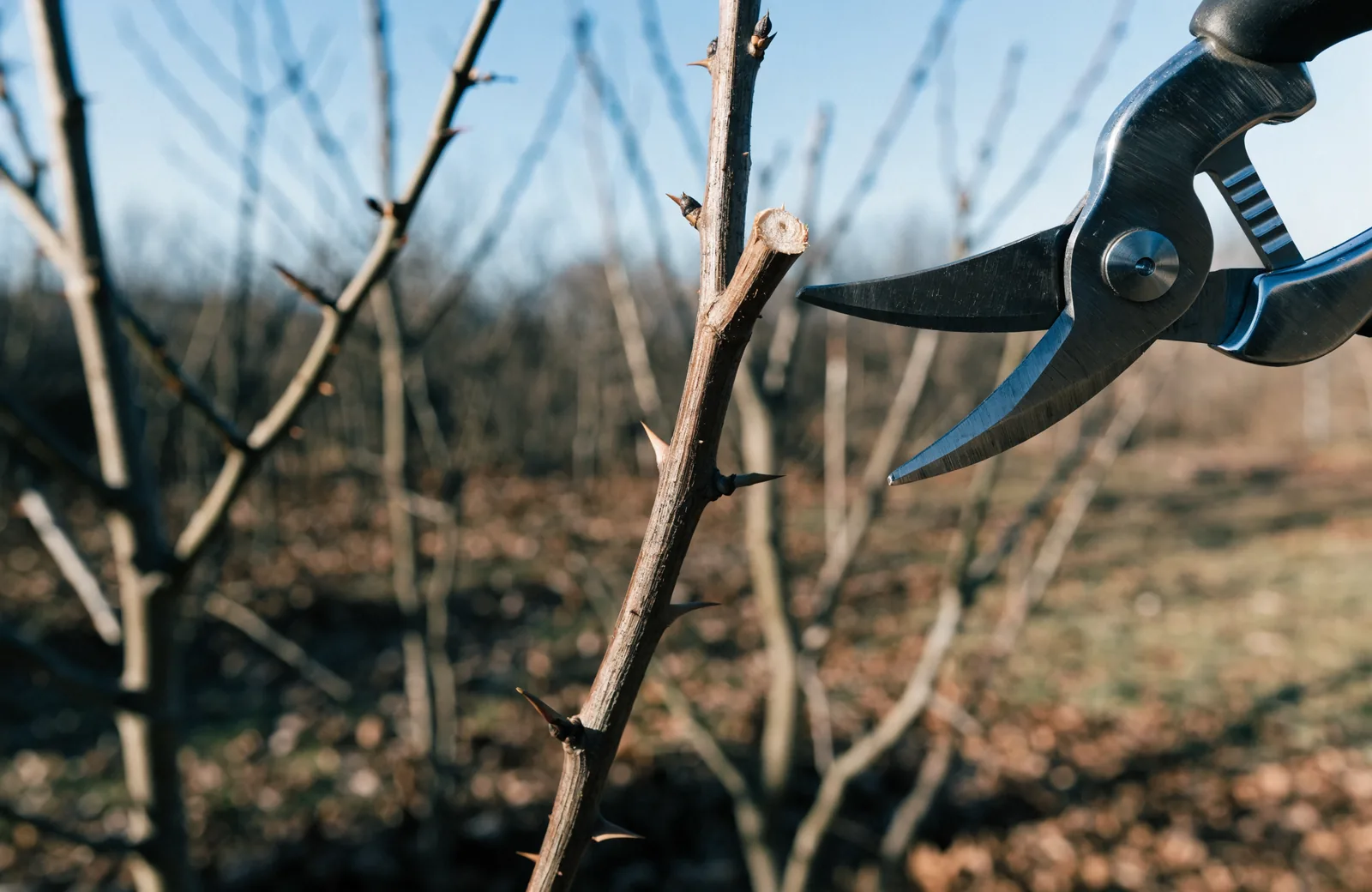
- Cut about 5 mm above an outward-facing bud, with the cut sloping gently away from the bud so water runs off.
- Feed and mulch after pruning — a hard prune is an instruction to regrow, and regrowth needs fuel.
Summer: deadhead, and give the late-August trim
Through the flowering season, deadheading is really just micro-pruning: snip spent blooms back to the first strong leaf with five leaflets, and the plant redirects energy from hip production into the next flush. Then comes the trick many gardeners miss. In late August, repeat-flowering roses respond beautifully to a light all-over trim — shorten flowered stems by 15–20 cm, remove weak twiggy growth, and strip off any badly black-spotted leaves. In four to six weeks, that trim translates into a strong, clean autumn flush that often outshines June's, because the flowers open in cooler air and last longer. Gardeners in warm climates can cut slightly harder; in cold regions keep it light — see the warning below.
Once-flowering ramblers: prune after the party
Ramblers and once-blooming old roses are pruned in mid-to-late summer, immediately after flowering finishes. Remove one in three of the oldest, greyest canes at ground level, tie the vigorous new green canes in to replace them, and shorten the side shoots that carried this year's flowers to two or three buds. Those new canes are next June's show — which is exactly why a winter prune, however tidy it feels, costs you a year of flowers.
Climbers: think horizontal, not just short
Repeat-flowering climbers follow the late-winter schedule, but with a twist: the framework matters more than the length. A rose cane trained flat along a wire or fence produces flowering side shoots along its whole length, while a cane left vertical blooms only at the tip. At pruning time, keep the best long canes, bend and tie them as close to horizontal as the space allows, and cut the side shoots coming off them back to 2–3 buds. The difference in flower count is dramatic.
Autumn: resist the urge
As the season winds down, do less than you think. In windy or exposed gardens it's worth shortening any very long, whippy shoots by about a third in late autumn to stop the plant rocking in winter gales and loosening its roots — but that's a stability measure, not a real prune. Stop deadheading in early autumn in cold regions and let hips form; it signals the plant to harden off for winter. Save the serious cutting for late winter, when you can see the structure and frost damage clearly.
Pro tip: sharp, clean bypass secateurs matter more than perfect technique. Ragged cuts from blunt anvil pruners crush the stem and heal slowly, and dirty blades carry disease from plant to plant — wipe them with disinfectant between roses, especially after cutting diseased wood. And don't bother with pruning sealants: a clean, well-placed cut heals better uncovered.
Warning: Don't hard-prune roses in autumn in cold-winter climates. Cutting back stimulates soft new shoots that frost will kill, and the dieback can travel down the stem into wood you wanted to keep. If a rose looks untidy going into winter, limit yourself to the windrock trim and save the real prune for late winter.
What if you get the timing wrong?
Take heart: you will almost never kill a rose by pruning at the wrong moment — roses are astonishingly forgiving of bad haircuts. The usual price is a season of fewer flowers, most often from winter-pruning a rambler. Even a completely neglected, overgrown rose can usually be renovated: take out a third of the oldest canes at the base each late winter for three years, and it will come back younger. If your rose is underperforming and you're not sure whether the problem is pruning, a disease like mildew or something else entirely, photograph it in PlantMe — the app identifies 35,000+ plant classes and 500+ diseases with 93% top-3 accuracy, and its care plans tell you what to cut and when.
Sources & further reading
Frequently asked questions
Can I prune roses in summer?
Light pruning, yes — deadheading all season, a tidy-up trim in late August for repeat-flowerers, and the main prune for once-flowering ramblers right after their bloom. Save hard structural pruning of repeat-flowering roses for late winter.
How far down should I cut my roses?
In the late-winter prune: hybrid teas hard, to 3–5 buds from the base; floribundas and shrub roses by one third to one half. Always cut just above an outward-facing bud.
What happens if I don't prune my roses at all?
The rose won't die, but it will gradually become a tangle of old, twiggy, disease-prone wood with fewer and smaller flowers carried higher and higher up. A three-year renovation — removing a third of the oldest canes each late winter — restores almost any neglected rose.
Should I seal rose pruning cuts?
No. Clean cuts from sharp secateurs heal fine on their own, and research has generally found sealants slow healing rather than help it. Focus on sharp, clean blades instead.
About the author

Vegetable Garden & Seasons
Arthur has worked the same allotment for thirty years and measures the calendar in sowings, not months. He writes practical, no-nonsense guides to growing food and keeping a garden honest through the seasons — and has little patience for folklore that doesn't survive contact with a real plot.
Try it yourself
Diagnose it instantly with PlantMe
Snap a photo of any plant or leaf. Get the species, the diagnosis, and a care plan in seconds.
Download on theApp Store