Journal/Care Basics · 6 min read
How to Care for a Snake Plant
Snake plant care made simple: how much light and water a Dracaena trifasciata really needs, plus fixes for mushy, drooping or wrinkled leaves.
Quick answer
Snake plants (Dracaena trifasciata, formerly Sansevieria) thrive on neglect: give them any light from low to bright indirect, water only when the soil has dried out completely — roughly every 2–3 weeks in summer and monthly in winter — and plant them in a free-draining, gritty mix. Overwatering is the only common way to kill one.
If houseplants handed out awards for tolerance, the snake plant would take most of them. It shrugs off dim corners, dry air, missed waterings and general neglect, and still sends up its sculptural, sword-shaped leaves. That reputation is deserved — but 'unkillable' is not quite true, and the way snake plants do die is almost always the same way: kindness, in the form of too much water. Here is what this plant actually wants.
Meet the plant (and its new name)
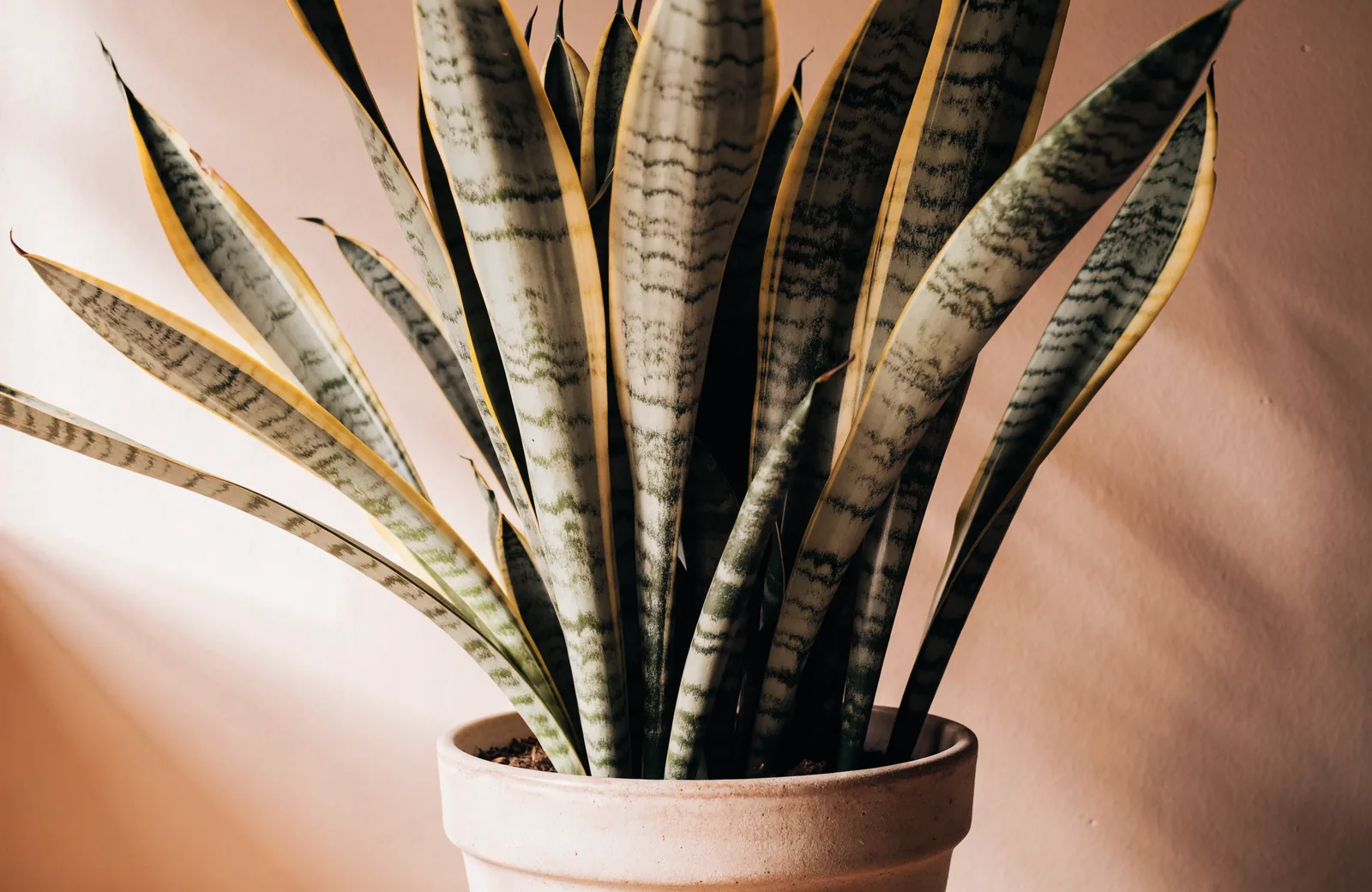
The snake plant spent decades as Sansevieria trifasciata, and you will still see that name on labels. In 2017 botanists folded the genus into Dracaena based on DNA evidence, so its current name is Dracaena trifasciata — same plant, new filing. It is a succulent from the dry, rocky regions of tropical West Africa, which explains nearly everything about its care: thick water-storing leaves, tolerance of drought and low light, and a deep dislike of soggy soil. Popular forms include the yellow-edged 'Laurentii', the compact 'Hahnii' bird's nest types, and the round-leaved cylindrical species sold as Dracaena angolensis.
Light: flexible, but brighter is better
Snake plants are famous as low-light survivors, and they will indeed hang on in a north-facing corner or a windowless office. But surviving is not thriving: in dim light growth slows to a near-standstill and variegation dulls. For a plant that actually grows, give it bright, indirect light — near an east- or west-facing window is ideal — and it will even take a few hours of gentle direct sun once acclimatised. Just avoid moving it abruptly from a dark corner into scorching midday sun.
Watering: the only rule that matters
Water thoroughly, then leave the plant alone until the soil has dried out completely — not just the surface, but deep into the pot. In a warm, bright room that means roughly every two to three weeks in the growing season; in winter, once a month or even less. When in doubt, wait another week: a thirsty snake plant forgives you, a soggy one rots. Water the soil rather than pouring into the centre of the leaf rosette, where trapped water can trigger rot, and always empty the saucer afterwards.
Warning: yellowing, mushy leaves that flop over at the base — and any sour smell from the compost — mean root rot from overwatering. Act quickly: slide the plant out, cut away brown, mushy roots and collapsed leaves with clean tools, let the healthy remainder dry for a day, and repot into fresh, gritty mix. Even a single firm leaf can be re-rooted, so a rotted plant is rarely a total loss.
Soil, pots and feeding
- Soil: a free-draining cactus and succulent mix, or ordinary houseplant compost cut with about a third grit or perlite. Rich, moisture-retentive compost is the accomplice in most snake plant deaths.
- Pot: anything with a drainage hole; unglazed terracotta is ideal because it wicks moisture out of the soil. Tall plants get top-heavy, so a weighty pot helps.
- Repotting: only every 2–3 years, or when roots crack or bulge the pot — snake plants flower and grow best slightly snug.
- Feeding: barely necessary. A half-strength balanced feed once a month through spring and summer is plenty; none in winter.
Temperature and placement
Ordinary room temperatures between about 18 and 27°C suit snake plants perfectly. What they cannot stand is cold: below about 10°C the leaves develop soft, scarred patches, so keep them away from freezing windowsills and unheated porches in winter. Dry air, on the other hand, bothers them not at all — no misting required. One placement note for households with pets: snake plant leaves contain saponins, which are mildly toxic to cats and dogs and typically cause drooling or an upset stomach if chewed, so keep it out of reach of committed nibblers.
A quietly interesting bit of biology: like many succulents, snake plants use CAM photosynthesis — they open their stomata at night rather than in the heat of the day to save water. It is why they cope so well with dry rooms, though it does not make them a meaningful air purifier; you would need a forest of them for that.
Common problems, decoded
- Wrinkled, curling or bending leaves: the plant has finally run out of stored water. One deep soak and it plumps back up within days.
- Leaves splaying outwards or falling over: usually too little light producing weak, leggy growth, sometimes an overdue repot.
- Brown, crispy tips: erratic watering or cold draughts; trim the tip and even out the routine.
- Mushy base or leaves collapsing at soil level: root rot — see the warning above.
- No growth for months: normal in low light or winter. Move it somewhere brighter and be patient.
Free plants: propagation
Snake plants multiply generously. The best method is division: slide the plant from its pot in spring, cut through the tough rhizome so each clump keeps leaves and roots, and pot the sections up separately — divisions keep their variegation and establish fast. You can also cut a leaf into sections and root them in gritty compost or water, which is slower and, on varieties like 'Laurentii', produces plain green offspring, since the yellow edge does not carry through leaf cuttings.
Not sure which snake plant you own, or whether that soft patch is cold damage or rot? Photograph it in PlantMe — the app identifies your exact plant from 35,000+ species and cultivars with 93% top-3 accuracy, checks symptoms against 500+ diseases and disorders, and gives you a care plan matched to your home.
Sources & further reading
Frequently asked questions
How often should I water a snake plant?
Only when the soil has dried out completely — typically every 2–3 weeks in spring and summer and about once a month in winter. Frequency matters less than the principle: fully dry, then a thorough soak, never little-and-often.
Do snake plants need sunlight?
They tolerate low light better than almost any houseplant, but they grow noticeably faster and hold stronger colour in bright, indirect light. A spot near an east- or west-facing window is ideal; acclimatised plants can take some gentle direct sun.
Why is my snake plant drooping?
Leaves that go soft and mushy at the base signal root rot from overwatering — the most serious snake plant problem. Leaves that lean or splay while staying firm usually just want more light, or a fresh pot if the roots are overcrowded.
About the author

Houseplants & Indoor Styling
Wren has killed enough houseplants to know exactly why yours is struggling — and kept hundreds more thriving in a small, bright flat that doubles as her test lab. She writes about reading plants instead of following rules, and believes every windowsill deserves at least one leaf.
Try it yourself
Diagnose it instantly with PlantMe
Snap a photo of any plant or leaf. Get the species, the diagnosis, and a care plan in seconds.
Download on theApp Store