Journal/Care Basics · 8 min read
Spider Plant Care: How to Grow Chlorophytum comosum
How to care for a spider plant: light, watering, brown tips, and propagating spiderettes — a plain-spoken guide to Chlorophytum comosum.
Quick answer
Spider plants thrive in bright, indirect light and like to dry out a little between drinks — water when the top 3–5 cm of soil feels dry, roughly once a week in summer and every two weeks in winter. Their thick, tuberous roots store water, so they forgive missed waterings far better than soggy soil. Brown leaf tips are usually down to tap-water fluoride or dry air, not disease.
Why spider plants are the perfect first houseplant
The spider plant (Chlorophytum comosum) has been sitting on windowsills and hanging from kitchen ceilings for well over a century, and it has earned every bit of that popularity. Native to the coastal regions of southern Africa, it grows in dappled forest light, storing water in thick, fleshy roots so it can shrug off dry spells. That combination — modest light needs plus built-in water storage — is exactly what makes it so hard to kill indoors.
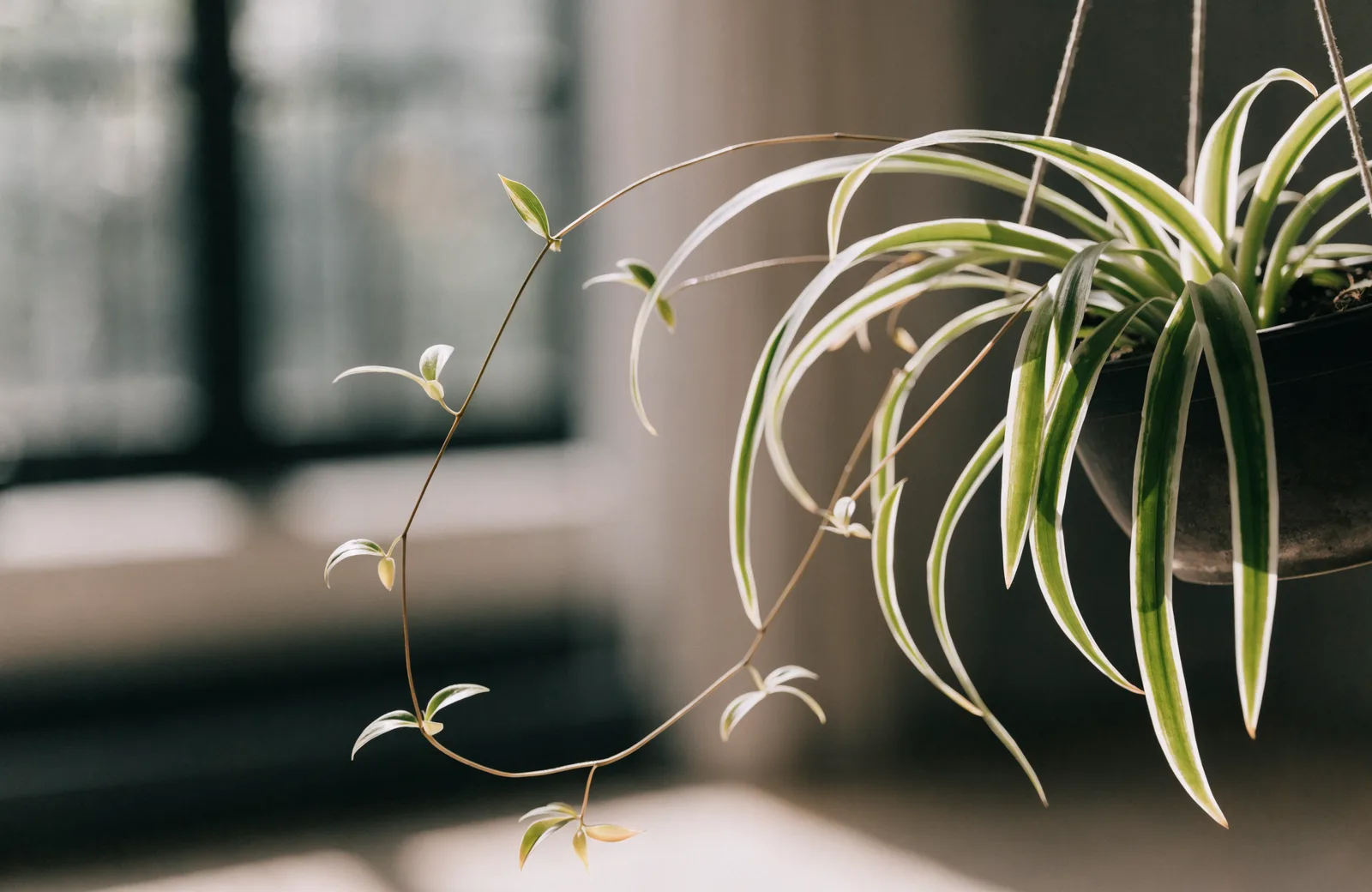
It is also one of the most generous plants you can own. A happy spider plant sends out long, arching stems tipped with tiny white flowers, which then develop into miniature plantlets — the famous 'spiderettes' or babies that dangle like spiders on a web. Each one is a free new plant. If you have ever wanted a houseplant collection without buying a houseplant collection, this is where to start.
This guide covers light, watering, feeding, the near-universal brown-tip problem, and how to turn those babies into new plants.
Light: bright and indirect is the sweet spot
Spider plants do best in bright, indirect light — think a spot within a metre or two of an east- or north-facing window, or set back from a brighter south- or west-facing one. Direct midday sun through glass will scorch the leaves, bleaching them pale or crisping the edges.
They will tolerate lower light better than most striped or variegated plants, but there is a trade-off: in dim corners the cream stripes on variegated varieties fade, growth slows, and the plant is far less likely to produce babies. If your spider plant has never made a single spiderette, weak light is the most common reason.
Watering: less often than you think
Those chunky white roots are essentially water tanks, which means spider plants handle drought well and soggy soil badly. Water thoroughly when the top 3–5 cm of compost feels dry, letting the excess drain away completely. In practice that is roughly weekly in the warmer months and every 10–14 days in winter, though your home's light and temperature matter more than the calendar.
- Check the soil with a finger before watering — if the top few centimetres are still damp, wait.
- Water deeply until it runs from the drainage holes, then empty the saucer.
- In winter, cut back noticeably; cool, dark conditions plus wet soil is the classic recipe for root rot.
- Limp, dark, mushy growth means too much water; pale, greyish, crispy leaves that perk up after a drink mean too little.
If you are unsure which way you are erring, err dry. A thirsty spider plant recovers within a day of watering; a rotted one rarely comes back. Our guide to overwatering vs underwatering walks through the tell-tale differences.
Why do spider plant leaves get brown tips?
Brown, crispy leaf tips are the number-one spider plant complaint, and the good news is they are almost never a sign of serious trouble. The usual culprits, roughly in order:
- Fluoride and chlorine in tap water — spider plants are unusually sensitive to fluoride, which accumulates in the leaf tips and burns them. Switching to rainwater, filtered water, or tap water left out overnight often stops new tips forming.
- Dry air — central heating in winter drops humidity well below what the plant enjoys.
- Fertiliser build-up — excess salts in the soil scorch tips from the roots up. Flush the pot through with plain water every couple of months.
- Erratic watering — long droughts followed by floods stress the leaf edges first.
Existing brown tips never turn green again. You can trim them off with clean scissors, cutting at an angle to mimic the leaf's natural point, and judge your progress by whether new leaves stay clean.
Feeding, temperature and repotting
Feed with a balanced liquid houseplant fertiliser at half strength once a month through spring and summer, and not at all in winter. Overfeeding causes more problems than underfeeding — brown tips among them — so restraint pays.
Normal room temperatures of 13–27°C suit spider plants fine; just keep them away from cold draughts and hot radiators. They are not fussy about humidity, though they will look glossier in a steamy kitchen or bathroom than beside a heater.
Repot in spring when roots start circling the pot or pushing the plant upwards — those fleshy roots can literally crack plastic pots when seriously cramped. Go up one pot size only, using a free-draining peat-free compost. A word of caution before you rush to repot, though: spider plants flower and produce babies most enthusiastically when slightly pot-bound, so a bit of snugness is a feature, not a fault.
Propagating spiderettes: free plants forever
Three ways to root spider plant babies
| Method | How it works | Best for |
|---|---|---|
| Water rooting | Snip off a spiderette and rest its base in a glass of water; pot up once roots reach 3–5 cm | Watching roots grow — great with kids |
| Potting up directly | Plant the cut spiderette straight into moist compost | Fewest steps; roots adapt to soil from day one |
| Layering | Pin a still-attached baby onto a pot of compost beside the parent; cut the cord once rooted | Highest success rate — the parent feeds it while it roots |
Whichever method you choose, babies that have already sprouted little root nubs establish fastest. Give new plants the same bright, indirect light and slightly-dry watering routine as the parent, and they will be producing spiderettes of their own within a year or two.
Are spider plants safe for pets?
Yes — spider plants are non-toxic to cats and dogs, which is one more reason they are such a good beginner plant for busy households. Cats do have a well-documented fondness for chewing the dangling leaves, and while a nibble will not poison them, it can upset a feline stomach and shred your plant. Hanging baskets solve both problems at once. If you share your home with pets, our guide to toxic houseplants covers which plants genuinely need to stay out of reach.
Not sure your striped plant is a spider plant?
Several look-alikes — variegated grasses, dracaenas, even some bromeliads — get mistaken for Chlorophytum comosum. If you have inherited a mystery plant, the PlantMe app can identify it from a photo in seconds, drawing on more than 35,000 recognised plant classes with 93% top-3 accuracy, and will then build you a watering and care schedule matched to the exact species and your home's conditions.
Sources & further reading
Frequently asked questions
How often should I water a spider plant?
Water when the top 3–5 cm of soil feels dry — roughly once a week in spring and summer, every 10–14 days in winter. Always let excess water drain away; spider plants store water in their roots and rot in constantly wet soil.
Why is my spider plant not producing babies?
Usually a light issue — plants in dim spots rarely flower. Move it somewhere brighter (but out of direct sun), keep it slightly pot-bound, and be patient: most spider plants start producing spiderettes once mature, at a year or two old.
Should I cut the brown tips off my spider plant?
You can, purely for looks — trim with clean scissors at an angle to keep the leaf's pointed shape. More importantly, fix the cause: switch to filtered or rainwater, water more consistently, and flush fertiliser salts from the soil occasionally.
Do spider plants like to be root bound?
Slightly, yes. A snug pot encourages flowering and baby production. Repot only when roots circle densely, poke out of drainage holes, or start pushing the plant up out of its pot — typically every two to three years.
About the author

Houseplants & Indoor Styling
Wren has killed enough houseplants to know exactly why yours is struggling — and kept hundreds more thriving in a small, bright flat that doubles as her test lab. She writes about reading plants instead of following rules, and believes every windowsill deserves at least one leaf.
Try it yourself
Diagnose it instantly with PlantMe
Snap a photo of any plant or leaf. Get the species, the diagnosis, and a care plan in seconds.
Download on theApp Store