Journal/Troubleshooting · 7 min read
Thrips: How to Get Rid of Them on Houseplants
Thrips leave silvery, speckled leaves and tiny black dots. Learn to spot them and clear an infestation for good with a simple, repeated treatment routine.
Quick answer
To get rid of thrips, isolate the plant, wipe or rinse the leaves to knock off adults and larvae, then spray thoroughly with insecticidal soap or neem oil (covering leaf undersides) every 5–7 days for at least three to four weeks. Blue sticky traps catch the winged adults. You have to repeat the treatment because eggs and soil-dwelling pupae survive each round — persistence is what finally breaks the cycle.
Thrips are one of the more frustrating houseplant pests because they are small, fast, and easy to miss until the damage is done. They thrive in warm weather, so summer is peak thrips season indoors. The good news: they are entirely beatable with a consistent routine. This guide covers how to identify them, why they keep coming back, and exactly how to clear them.
What thrips look like
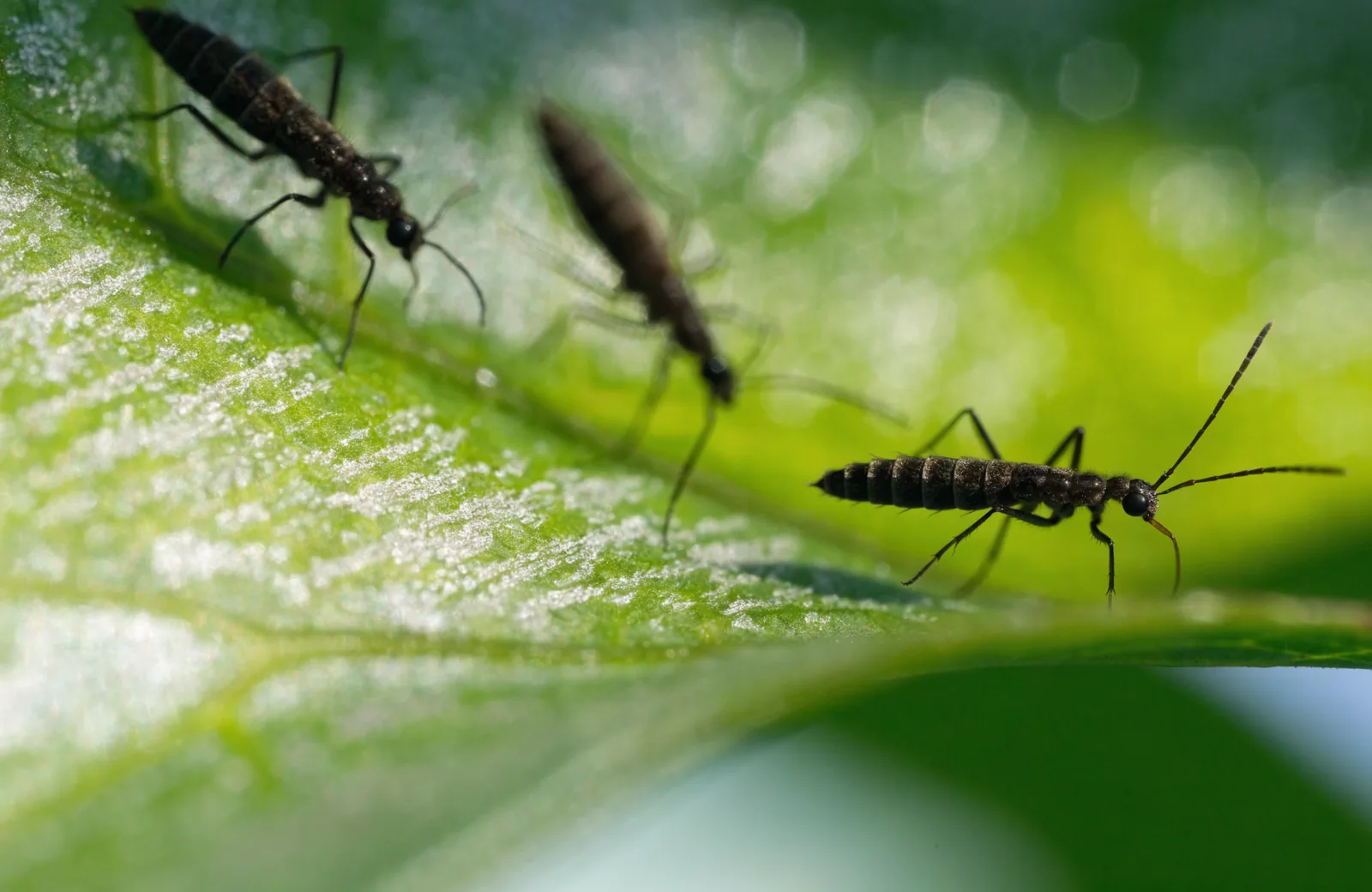
Adult thrips are slender, elongated insects about 1–2 mm long — narrow slivers rather than round bugs — in black, brown or pale yellow. The immature larvae are smaller still and translucent yellowish-white, and they are the stage doing most of the feeding. You will often see the damage before the insect: run a finger along a mottled leaf and tiny specks scatter. A quick test is to tap a suspect leaf over a sheet of white paper and watch for the little slivers that drop and wriggle.
The damage they cause
Thrips pierce leaf cells and drain the contents, which leaves a distinctive silvery or bronze stippling — pale, faded, almost metallic patches, quite different from the yellow blotches of most other pests. As feeding continues the damaged tissue dries to brown or grey and new growth comes in puckered and deformed. The other tell-tale sign is thrips frass: tiny black dots of excrement dotted across the leaves, especially near the silvered areas.
Why they are so hard to shift
The key to beating thrips is understanding their life cycle. They pass through four stages — egg, larva, pupa and adult — and can complete the whole cycle in as little as two weeks in warm rooms. Females lay eggs inside the leaf tissue, where sprays cannot reach them, and the pupal stage usually happens down in the soil or leaf litter rather than on the plant. So any single treatment misses two hidden stages entirely. Add the fact that many thrips reproduce without needing a mate, and a small infestation rebounds fast if you stop too soon. This is why repeat treatment over several weeks, not a one-off spray, is what actually works.
How to get rid of thrips, step by step
- Isolate the plant. Move it away from your others straight away — thrips spread readily, and the winged adults fly.
- Clean the plant. Rinse it in the shower or under a tap, or wipe every leaf (tops and undersides) with a damp cloth to physically remove adults and larvae. Prune off the worst-hit, heavily silvered leaves and bin them.
- Spray with insecticidal soap or neem oil. Coat the whole plant, paying special attention to leaf undersides, new growth and stem joints where thrips hide. Neem also disrupts feeding and development over the following days.
- Set blue sticky traps. Thrips are drawn to blue more than yellow; the traps catch flying adults and let you monitor whether numbers are falling.
- Repeat every 5–7 days for at least 3–4 weeks. Each spray kills the currently active insects; repeating catches the next batch as eggs hatch and pupae emerge, before they can breed again.
- For stubborn cases, a spinosad-based houseplant spray is a stronger option — rotate it in and follow the label intervals.
Tip: treat in the evening or move the plant out of direct sun before spraying neem or insecticidal soap. Oil and soap on wet leaves in bright sunlight can scorch the foliage. Always test a single leaf first if you have never sprayed that plant before.
Stopping them coming back
Once you have cleared an infestation, a few habits keep thrips from returning. Quarantine every new plant for two to three weeks before it joins your collection, since shop-bought plants are the most common source. Inspect leaf undersides regularly — catching a handful of thrips early is far easier than clearing a colony. Keep a blue sticky trap tucked among your plants as an early-warning system, and check any bunches of cut flowers you bring indoors, as they frequently carry thrips too.
If you are not certain whether the silvery specks on your leaves are thrips, spider mites or something else, photograph the affected foliage in PlantMe. The app checks the symptoms against a database of over 500 plant pests, diseases and disorders and returns a likely culprit and treatment plan in seconds — helpful for choosing the right spray before the problem spreads.
Sources & further reading
Frequently asked questions
How long does it take to get rid of thrips?
Plan for at least three to four weeks of treatment every 5–7 days. Because eggs and soil-dwelling pupae survive each spray, stopping early almost always lets the infestation rebound.
What is the difference between thrips and spider mite damage?
Thrips leave silvery, streaky stippling with tiny black dots of frass. Spider mites cause finer, pale speckling and leave fine webbing, especially on leaf undersides and tips.
Do I need to treat the soil for thrips?
It helps, because thrips usually pupate in the soil. Letting the top layer dry out, top-dressing, or using a sticky trap at soil level all reduce the number of adults emerging.
About the author

Plant Rescue & Troubleshooting
Camille spent years behind the counter of a plant shop where every customer arrived with the same question: what's wrong with it? She writes the Journal's rescue guides — calm, diagnosis-first, no guilt — because most 'dying' plants are one correct decision away from recovery.
Try it yourself
Diagnose it instantly with PlantMe
Snap a photo of any plant or leaf. Get the species, the diagnosis, and a care plan in seconds.
Download on theApp Store