Journal/Seasonal · 6 min
When to Mulch Garden Beds: Autumn and Winter Are Two Different Jobs
Arthur Meade on mulch timing: the autumn mulch that feeds the soil, the winter mulch that waits for frozen ground, what to spread, how deep, and the calendar.
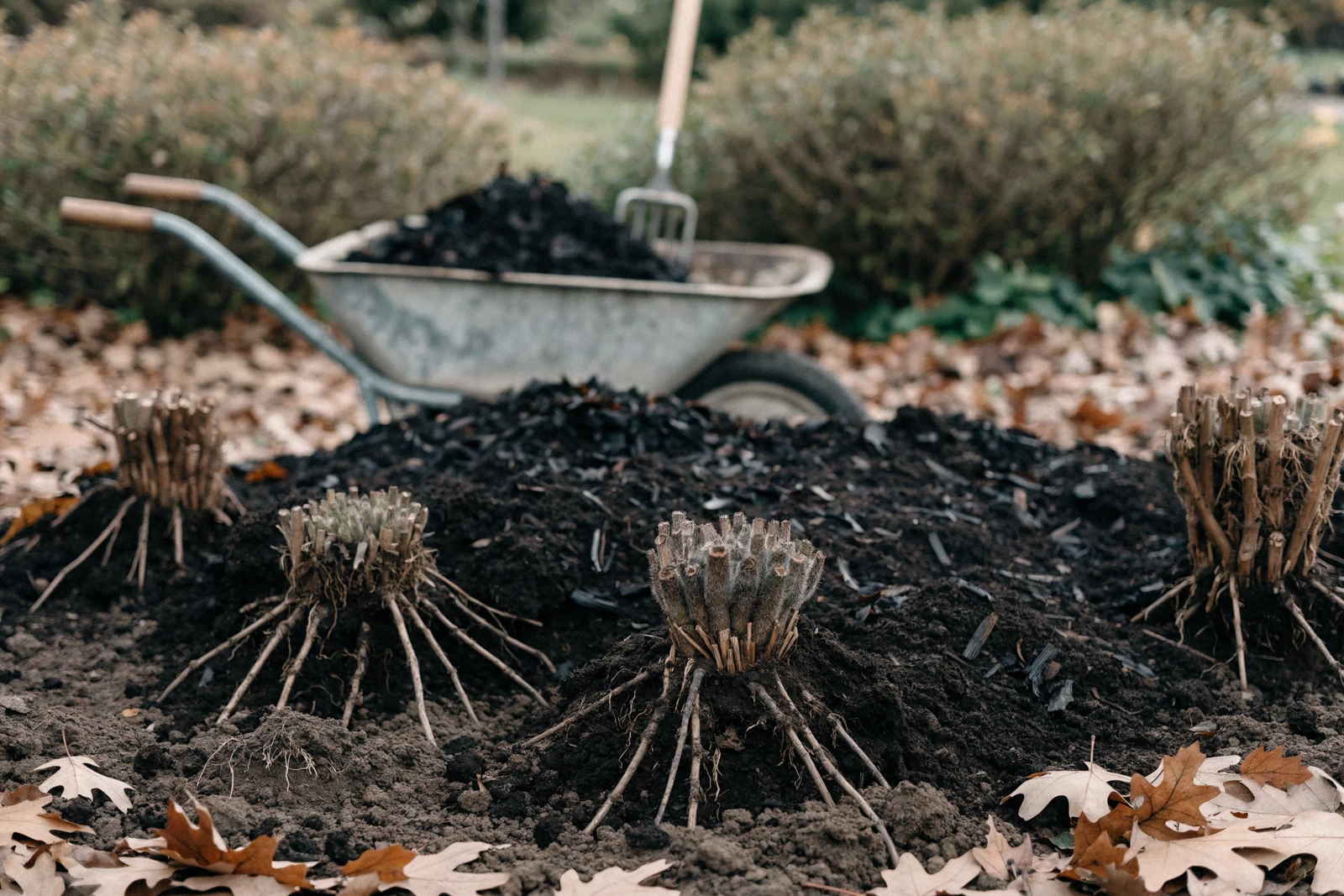
Gardeners use one word — mulch — for two jobs that want opposite conditions. The first is the soil-feeding mulch: a layer of organic matter spread over beds in autumn or spring, which the worms take down over the months that follow. The second is the winter-protection mulch: an insulating blanket over perennials and bulbs, which does its job precisely because it goes on late. Spread the first one now, by all means. But if you tuck your borders in with the second one this week, you may do your plants a quiet disservice. The calendar matters more with mulch than with almost any other job in the garden, so let us take the two in order.
The autumn mulch: feed the soil while it is still soft
The Royal Horticultural Society names two main windows for mulching established beds: mid to late spring, and autumn as plants die back. Autumn suits the soil-improving mulch well — the ground is still moist and workable, the borders are emptying, and whatever you spread has all winter to be drawn down and incorporated. The method is short. Weed first, because a mulch laid over weeds protects them as faithfully as it would your plants. Then lay your material over moist soil — never frozen, never parched — covering the bed but keeping clear of low rosettes and, above all, off woody stems: the RHS warns that mulch pressed against the base of a tree or shrub can soften the bark and leave it open to disease. For a single tree or specimen shrub, mulch a circle out to the radius of the canopy.
What to spread
For a bed you want to improve, biodegradable materials are the whole point — they rot, and the rotting is the fertility. The RHS list runs:
- Garden compost — the all-rounder, if your heap can spare it.
- Leaf mould — low in nutrients, excellent for soil structure.
- Well-rotted manure — rotted being the operative word.
- Bark and wood chippings — long-lasting, best around shrubs and trees.
- Straw — the traditional mulch for strawberries.
- Seaweed, and spent hops — with the caveat that spent hops are poisonous if eaten by dogs.
Two cautions from the same source. Freshly chipped wood and fresh clippings should stand for a few weeks before use, because raw material can temporarily rob the soil of nitrogen as it starts to break down. And not everything wants mulching at all: Mediterranean, dry-ground plants such as thyme prefer their collars dry, and a moisture-holding mulch around them does more harm than good.
The winter mulch: wait for the freeze
Here is where the timing turns upside down. The University of Minnesota Extension — which knows something about winter — is explicit that the protective mulch over perennials and bulbs should go on as the soil begins to freeze, or any time after, not during autumn clean-up. Mulching warm soil too early can keep it warm, encouraging soft growth beneath the blanket that ultimately weakens the plant. The winter mulch is not there to keep plants warm at all. It is there to keep them steadily, dormantly cold.
The enemy is not the freeze but the freeze-thaw cycle. Snow is the best insulation a border can have, but it is unreliable; in an open winter, repeated freezing and thawing can lift — heave — perennials partly out of the soil, tearing roots as it goes. A thick, late-applied mulch evens out those swings, protects against extreme cold, and stops bulbs and crowns responding to a false spring warm-up while hard frost can still return. For the same reason, spring bulbs sit tight under a winter mulch instead of emerging too early. Minnesota's recipe: five to six inches of whole or shredded leaves, straw, partially decomposed compost or ground corn stalks — loose stuff, easy to remove. Wood chips and bark, which you will not want to lift again, are better kept for the bare ground between plants, where they can stay year-round. You can even mulch on top of snow, and the snow counts toward the insulation. Come early spring, take the winter mulch off as it thaws, because a sodden blanket left on a waking crown invites rot — and keep some to hand in case a late freeze argues for covering things up again.
Numbers worth keeping
- Depth for a soil-improving mulch: at least 5 cm (2 in), ideally 7.5 cm (3 in) — RHS.
- Depth for a winter-protection mulch over perennials and bulbs: 12–15 cm (5–6 in) of loose leaves or straw — University of Minnesota Extension.
- Clearance from trunks and woody stems: 5–8 cm (2–3 in), says Mississippi State University Extension — mulch piled against a trunk holds moisture against the bark and gives rodents cover to work under.
- Coverage for a tree: out to the canopy's radius — RHS.
The mulching calendar
- 1. Late October–November: weed, then lay the soil-feeding mulch on moist, unfrozen beds as the borders die back. Compost, leaf mould or rotted manure, 5–7.5 cm deep.
- 2. After the first hard freezes, when the soil surface has begun to freeze: lay the winter-protection mulch over perennials and bulbs, 12–15 cm of leaves or straw. Not before.
- 3. Late winter: if you feed, apply fertiliser over the mulch and let the rain take it down — the RHS confirms there is no need to lift the mulch first.
- 4. Early spring, as the ground thaws: remove the winter mulch from crowns in stages. Leave the rotted remains of the autumn mulch where they lie — that job is finishing itself.
One word, two jobs, two dates. Spread the feeding mulch while the soil is soft, and sit on your hands over the protective one until the ground has honestly frozen. The patience is the technique.
Sources & further reading
About the author

Vegetable Garden & Seasons
Arthur has worked the same allotment for thirty years and measures the calendar in sowings, not months. He writes practical, no-nonsense guides to growing food and keeping a garden honest through the seasons — and has little patience for folklore that doesn't survive contact with a real plot.
Try it yourself
Diagnose it instantly with PlantMe
Snap a photo of any plant or leaf. Get the species, the diagnosis, and a care plan in seconds.
Download on theApp Store