Journal/Seasonal · 5 min read
When to Plant Ranunculus: Autumn or Spring, and Which Window Is Yours
Ranunculus corms go in from September to December under cover, or in late winter without it. Which window suits your setup, how to soak and pre-sprout the corms, and what flowering to expect.
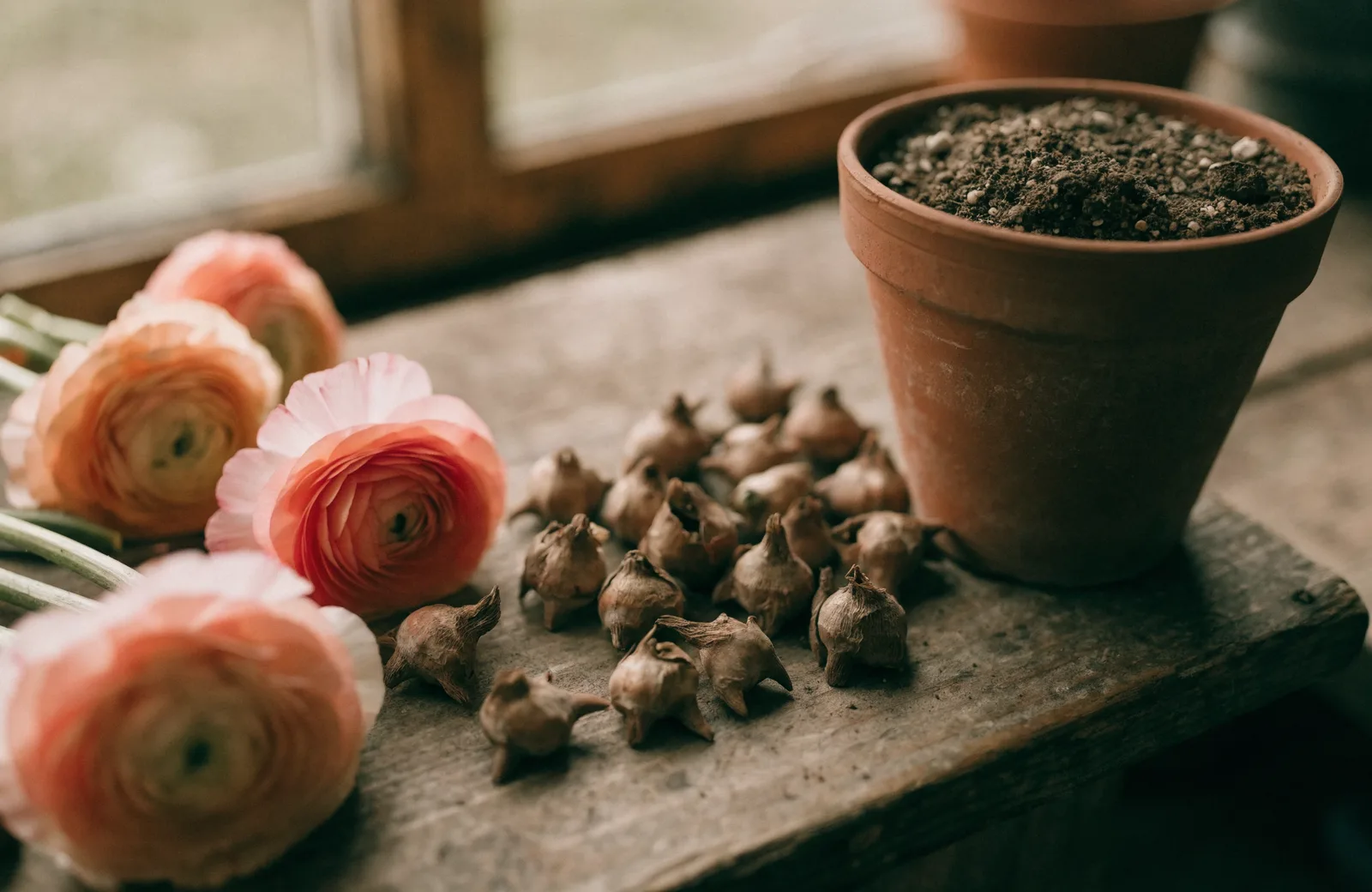
The ranunculus has spent the last few years migrating out of the florist's bucket and into ordinary gardens, and no wonder — a flower that looks hand-made from crepe paper, on a straight stem, lasting well over a week in a vase, is a persuasive thing. The catch arrives at the garden centre, where the corms appear in September and the packet is vague about when they should actually go in. The honest answer is that there are two correct planting windows, and which one is yours depends entirely on what shelter you can offer.
This is a different calendar from the one running elsewhere in the garden right now. Unlike daffodils, which want to be in the ground about now and will then look after themselves, a ranunculus planted in autumn is taking on winter as a growing, leafy plant — and that is the whole decision in one sentence.
Two windows, one question
The question is: do you have somewhere bright, cold but frost-free — a cool greenhouse, a cold frame, a polytunnel? If yes, plant in autumn. If no, plant in late winter. It is the same calculation as autumn-sown sweet peas, and the same reward for the early start: bigger plants, earlier flowers, more of them.
Ranunculus planting windows
| Window | Who it suits | What you get |
|---|---|---|
| September to December, in pots under cover | Anyone with a cool greenhouse, cold frame or tunnel | Flowers from around April, over a long season, with the most stems per plant |
| Late winter to early spring (February–March) | Everyone else — start in pots, plant out after the worst frosts | A later, shorter flush, but far better than no ranunculus at all |
Commercial growers make the same trade. In Utah State University's cut-flower trials, tunnel-grown plants gave 3 to 7 marketable stems each, while spring field plantings managed 1 or 2 — and every slip later in the calendar cost yield. You are not running a flower farm, but the arithmetic works the same way on a windowsill-adjacent scale.
Why the autumn window needs a roof
Ranunculus are not tender exactly, and not hardy either. An established plant in growth shrugs off a light frost — around 0°C is fine by the RHS's reckoning, and the Utah trials put the survival floor near −3°C (26°F). What kills them is the combination British winters specialise in: hard freezes on saturated compost. Wet, cold corms rot. So the autumn planting goes into pots under glass or a frame, where the roots stay merely cold instead of frozen and sodden, and the plant builds a crown all winter. If a vicious snap is forecast, fleece is cheap insurance — the same logic as everything else in the frost-protection toolkit.
Soak first — the corms are dried out on purpose
A ranunculus corm out of the packet looks like a small, disappointing brown claw, and it is meant to: it is stored dry so it keeps. Before planting, soak the corms in room-temperature water for a few hours — up to a day, says the RHS — until they have plumped up to roughly double their size. Do not leave them longer; they are absorbing, not marinating.
The step worth stealing from professionals is pre-sprouting. Instead of potting soaked corms straight away, nestle them in a tray of barely damp compost somewhere cool — 2 to 10°C — for two to three weeks, until stubby rootlets a few millimetres long appear, then pot up the ones that sprouted. In the Utah State trials this advanced flowering by a week and improved marketable yield by as much as 58 per cent, mostly because you never waste a pot on a corm that was quietly dead on arrival.
Planting, step by step
- 1. Soak the corms for 3–24 hours until roughly doubled in size.
- 2. Pre-sprout in a tray of damp compost, cool and shaded, for 2–3 weeks if you have the patience. Skip this and pot directly if not.
- 3. Use a free-draining mix: the RHS suggests a peat-free, loam-based compost with about 20 per cent horticultural grit worked in.
- 4. Plant claws downwards, 5cm (2in) deep and 10cm (4in) apart — closer to 15cm if they are going into open ground in spring.
- 5. Keep them bright, cool and ventilated. Below about 15°C is not a problem; it is the point. Cool growing makes compact, sturdy plants.
- 6. Water sparingly until growth is obvious, then evenly. Stale, still air invites grey mould, so open the frame on mild days.
What you get, and when it ends
Count forward three to five months from planting, depending on the window: autumn-planted corms under cover flower from around April, February plantings from late spring. Cut when the buds show colour but before they open fully and the vase life runs to 10–12 days, which is most of the reason florists charge what they charge. The season ends the way Mediterranean plants' seasons end — heat. Once temperatures push toward 27°C (80°F), usually by early July, the plant yellows and shuts down for the year. That is dormancy, not failure. The RHS's advice is to treat them as annuals and start with fresh corms each year; you can lift and store the corms dry instead, accepting that the encore is rarely as good as the debut.
This week's jobs
- Order or buy corms now, while the autumn stock is still full-strength — the good colours go first.
- Got a frame or cool greenhouse? Start soaking and set up a pre-sprouting tray this weekend.
- No cover at all? Put the corms somewhere cool and dry, write February in the diary, and plant then instead.
Sources & further reading
About the author

Vegetable Garden & Seasons
Arthur has worked the same allotment for thirty years and measures the calendar in sowings, not months. He writes practical, no-nonsense guides to growing food and keeping a garden honest through the seasons — and has little patience for folklore that doesn't survive contact with a real plot.
Try it yourself
Diagnose it instantly with PlantMe
Snap a photo of any plant or leaf. Get the species, the diagnosis, and a care plan in seconds.
Download on theApp Store