Journal/Troubleshooting · 6 min read
White Crust on Plant Soil: What It Is and How to Fix It
A hard white crust on houseplant soil is usually mineral salt build-up from fertiliser and tap water — not mould. How to tell the difference and flush it out.
Quick answer
A hard, white, crusty deposit on the soil surface or pot rim is almost always mineral salt build-up from fertiliser and tap water — not mould. Mould is soft and fuzzy; salt crust is gritty and brittle. Scrape off the crust and the top centimetre or two of mix, then flush the pot slowly with plain water — roughly twice the pot's volume — and let it drain freely.
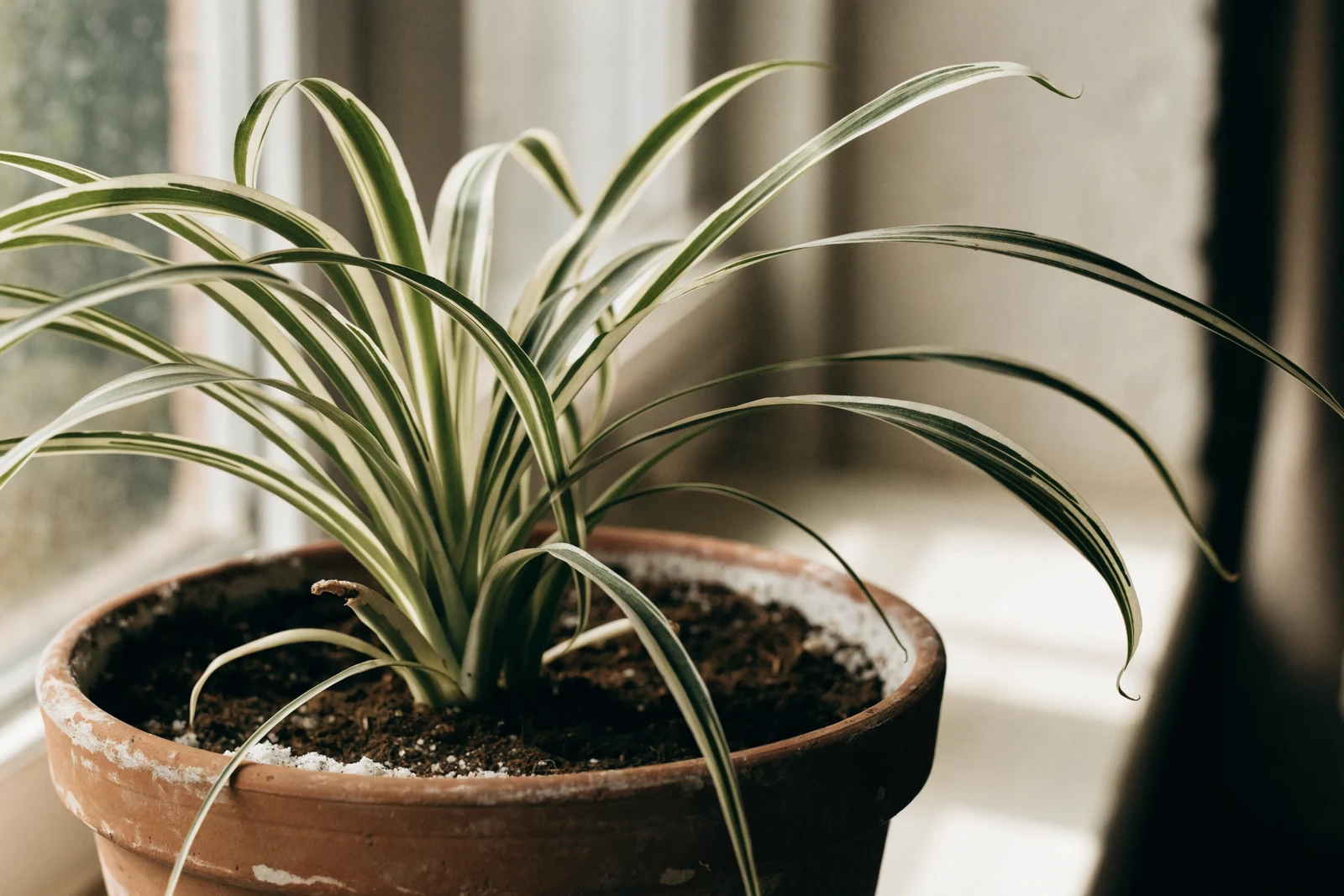
A white, crusty film creeping across the soil of a houseplant looks like disease, and the first instinct is often to repot the whole thing. Hold on. In most cases that crust isn't alive at all — it's a residue of mineral salts left behind by fertiliser and tap water, and it tells a useful story about how the pot has been watered and fed. Read the crust correctly and the fix is one unhurried trip to the sink.
First, make sure it's actually salt
Three different white things turn up on potting soil, and only one of them is this article's subject. Run a dry fingertip over the deposit and look closely:
- **Gritty, hard and brittle** — a crust that cracks or crumbles like dried paste, often ringing the pot rim or drainage holes too: mineral salt build-up. That's the one we're dealing with here.
- **Soft, fuzzy and cotton-like**, sitting on the surface in patches: a harmless saprophytic mould feeding on damp organic matter. Different cause, different fix — see our guide to mould on houseplant soil.
- **Small white balls or flecks** mixed through the soil rather than sitting on it: perlite or pumice from the potting mix, doing exactly what it should.
Where the crust comes from
Every watering delivers more than water. Tap water carries dissolved minerals, and fertiliser is, chemically speaking, a blend of soluble salts. The water in the pot either drains away or evaporates — and evaporation takes only the water, leaving every dissolved mineral behind. Watering little and often, so that nothing ever runs out of the bottom, concentrates those leftovers in the top layer of the mix, where they dry into the familiar white ring. The University of Maryland Extension flags softened water as the worst offender: softeners trade the minerals that make water 'hard' for sodium, which plants tolerate poorly.
Feeding habits matter just as much. Fertiliser applied more generously or more often than the label suggests has nowhere to go — the plant can only use so much — so the excess accumulates. The same applies to feeding through autumn and winter, when most houseplants have slowed down and barely touch the nutrients you offer them.
Why it's worth fixing
A salt crust is cosmetic right up until it isn't. As salts concentrate in the root zone they begin to draw water out of the root tips — the flow runs backwards — and damaged roots can't supply the plant no matter how moist the mix is. Above the soil, that shows up as brown, crispy leaf tips and scorched edges, stalled growth, and the strangest symptom of the lot: a plant that wilts in damp soil. Salt-sensitive species — dracaenas, spider plants, calatheas and most palms — show it first.
The fix: flush the pot
Flushing — gardeners call it leaching — simply means running enough plain water through the mix to dissolve the accumulated salts and carry them out of the drainage holes. Colorado State University's PlantTalk service and the University of Maryland Extension both describe essentially the same routine:
- 1. Scrape off the white crust, plus the top centimetre or two of potting mix where the deposit is thick. Stay shallow — feeder roots live near the surface.
- 2. Move the pot to a sink, bath or outdoor spot where water can run away freely, and check the drainage holes aren't blocked.
- 3. Pour tepid water slowly over the whole soil surface until it streams from the bottom. Be generous: roughly twice the pot's volume in total — fill to the rim, let it drain, and repeat a couple of times.
- 4. Let the pot drain completely. No standing water in the saucer afterwards.
- 5. Scrub any salt off the pot rim, drainage holes and saucer, and top up with a little fresh mix where you scraped.
That's the whole job. If the crust returns within weeks, or the plant keeps declining despite flushing, the mix itself is likely saturated — repot into fresh compost and start clean.
Keeping it from coming back
Water thoroughly rather than little and often, so each watering carries some excess out of the drainage holes, and always empty the saucer rather than letting the pot stand in its own runoff. If you're fond of bottom watering, keep it — just top-water generously every fourth to sixth time, because soaking from below never flushes anything out. Feed at the label rate or weaker, and pause feeding over winter. Give sensitive species rainwater or filtered water if your tap water is hard, and a routine flush every few months does the rest.
Sources & further reading
Frequently asked questions
Is the white crust on my plant's soil mould?
Probably not — mould is soft, fuzzy and sits in patches, while salt crust is hard, gritty and often rings the pot rim and drainage holes as well. If it crumbles like dried paste rather than wiping away like cotton wool, it's mineral salts.
Can I just scrape the crust off instead of flushing?
Scraping removes the visible deposit but not the salts dissolved deeper in the mix, which are the part actually harming roots. Scrape first, then flush with plenty of plain water so the rest drains out of the holes.
How often should I flush houseplant soil?
Every few months is plenty for most plants — the University of Maryland Extension suggests leaching every four to six months, ideally just before you fertilise so feed isn't washed straight out. Flush more often for salt-sensitive species or if you mostly bottom water.
About the author

Plant Rescue & Troubleshooting
Camille spent years behind the counter of a plant shop where every customer arrived with the same question: what's wrong with it? She writes the Journal's rescue guides — calm, diagnosis-first, no guilt — because most 'dying' plants are one correct decision away from recovery.
Try it yourself
Diagnose it instantly with PlantMe
Snap a photo of any plant or leaf. Get the species, the diagnosis, and a care plan in seconds.
Download on theApp Store