Journal/Care Basics · 6 min
Cast Iron Plant Care: The Houseplant That Shrugs Off a Dark November
Wren Hollis on Aspidistra elatior — the famously unkillable cast iron plant. The light it tolerates, the watering it forgives, and why a dim winter room suits it.
Quick answer
The cast iron plant (Aspidistra elatior) thrives where most houseplants sulk: low light, cool rooms, irregular watering. Keep it out of direct sun, which scorches the leaves, water only when the top 2–3 inches of mix are dry, and feed modestly in spring and summer. It grows slowly and resents fuss — repot rarely, and divide in spring if you want more plants. It's non-toxic to cats and dogs.
Every November, the same quiet crisis plays out on windowsills: the light goes, the radiators come on, and one by one the fussier houseplants start filing complaints. This is the month the cast iron plant was made for. Aspidistra elatior earned its common name honestly — the Victorians grew it in gas-lit parlours, and one of its older nicknames, the barroom plant, nods to its history of surviving rooms that would finish off nearly anything else. If you have a dim corner, a cool hallway, or a track record of forgetting plants for weeks at a time, this is the one.
What you're looking at
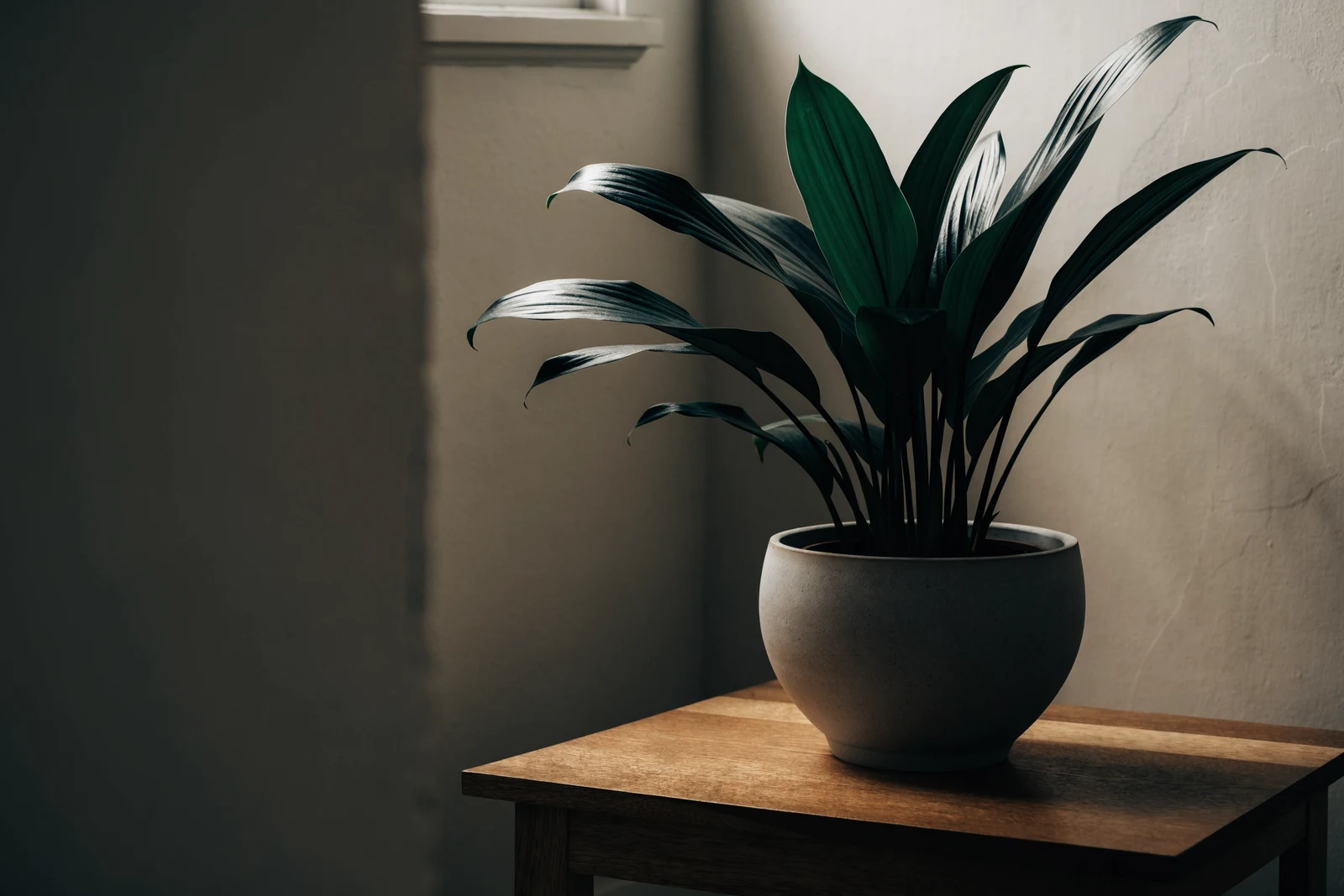
A cast iron plant doesn't really have stems. Each leathery, lance-shaped leaf rises on its own stalk straight from the soil, from a rhizome creeping below — the blades a deep, glossy green, often 50–60 cm long, with neat parallel veins. Native to Japan, it grows as an evergreen clump, slowly, to somewhere between knee and hip height. Slowly is the operative word: the RHS, which has given it an Award of Garden Merit, puts its time to full size at ten to twenty years. You're not buying a project. You're buying furniture that photosynthesises.
Light: the darkest corner wins
Most houseplants tolerate low light. The aspidistra prefers to be left out of the spotlight altogether. Clemson's Home & Garden Information Center recommends a north-facing window, or a spot well away from a south-facing one, and warns that too much sun scorches the foliage — NC State's horticulturists flatly call it intolerant of direct sun. That makes it one of the very few plants that genuinely suits the end of a hallway, the corner behind an armchair, the landing with one small window. If you've been auditioning plants for a dark spot and losing them one by one, compare the other low-light contenders — but this is the toughest of the lot.
Watering: when in doubt, wait
The cast iron plant tolerates drought. What it won't tolerate is a wet pot. Water when the top 2–3 inches of the mix are dry, let the pot drain completely, and never leave water standing in the saucer — Clemson's rule, and worth taping to the watering can. In winter, with the plant barely growing, err even drier. If you've lost plants to kindness before, the symptoms to watch for are the same here as anywhere: overwatering announces itself in yellowing leaves and soil that stays damp for days. Underwatering, by contrast, is a problem this plant will quietly wait out.
Food, pots and patience
Feed with an ordinary houseplant fertiliser in spring and summer, and stop for autumn and winter. Don't expect the feeding to produce drama — a slow grower is slow with or without encouragement. The same patience applies to the pot: an aspidistra is happiest slightly crowded, and needs repotting rarely. When a clump finally outgrows its home, spring or early summer is the moment to divide it — cut the rhizome into sections with at least two leaves each, pot them up, and you've turned one indestructible plant into several.
Why it suits the radiator season
Winter indoors is hard on houseplants for three reasons: shrinking light, dry air, and temperature swings near radiators and cold glass. The cast iron plant is indifferent to the first and largely unbothered by the rest — it's hardy outdoors in mild regions, so a cool hallway or an unheated spare room doesn't faze it. The one job it will thank you for is dusting: those big glossy blades are magnets for it, and a layer of dust in a dim room costs light the plant can't spare. Wipe the leaves every few weeks and it will look freshly bought.
Small troubles, honestly small
The RHS lists the plant as generally disease-free, and NC State notes no serious pest problems — but indoors it can still pick up the usual suspects. Clemson suggests a weekly glance under the leaves for spider mites and scale; the RHS adds mealybugs and thrips to the watchlist. Catch any of them early and they're an errand, not a crisis. Two more reassurances: the plant is non-toxic to cats and dogs, a genuine rarity among tough foliage plants — most of its low-light rivals are on the plants to keep away from pets list — and if you ever spot something odd at soil level in early summer, it may simply be the flowers: small, fleshy, purplish cups that open at the base of the plant, easy to miss and doing no harm.
If plain green feels too plain
- 'Variegata' — cream-white striping along the length of each leaf.
- 'Milky Way' — dark leaves scattered with small white spots, like its namesake.
- 'Asahi' — pale green blades frosted white toward the tips.
One caveat from the growers: variegated forms hold their markings best with a little more light than the plain species needs — still no direct sun.
Sources & further reading
Frequently asked questions
Is the cast iron plant safe for cats and dogs?
Yes. Aspidistra elatior is listed as non-toxic to cats, dogs and horses, which makes it one of the few genuinely pet-safe plants that also tolerates low light.
Why is my cast iron plant growing so slowly?
Because that's its nature. It is a slow-growing plant that can take ten to twenty years to reach full size, and no amount of feeding will hurry it. Slow, steady and alive is this plant succeeding.
Can a cast iron plant live outside?
In mild climates, yes — it's grown outdoors in USDA zones 7–11 as a shade groundcover, and the RHS rates it hardy in milder parts of the UK. Give it full or dappled shade and shelter; direct sun scorches the leaves wherever it grows.
About the author

Houseplants & Indoor Styling
Wren has killed enough houseplants to know exactly why yours is struggling — and kept hundreds more thriving in a small, bright flat that doubles as her test lab. She writes about reading plants instead of following rules, and believes every windowsill deserves at least one leaf.
Try it yourself
Diagnose it instantly with PlantMe
Snap a photo of any plant or leaf. Get the species, the diagnosis, and a care plan in seconds.
Download on theApp Store