Journal/Care Basics · 7 min read
ZZ Plant Care: The Complete Guide
How to care for a ZZ plant (Zamioculcas zamiifolia): watering, light, why leaves turn yellow, and why it's one of the toughest houseplants you can grow.
Quick answer
Water a ZZ plant only when the soil has dried out completely — roughly every two to three weeks — and give it bright, indirect light, though it will tolerate low light happily. Its thick underground rhizomes store water, so it is far more likely to suffer from overwatering than from neglect; yellowing leaves almost always mean the soil has been kept too wet.
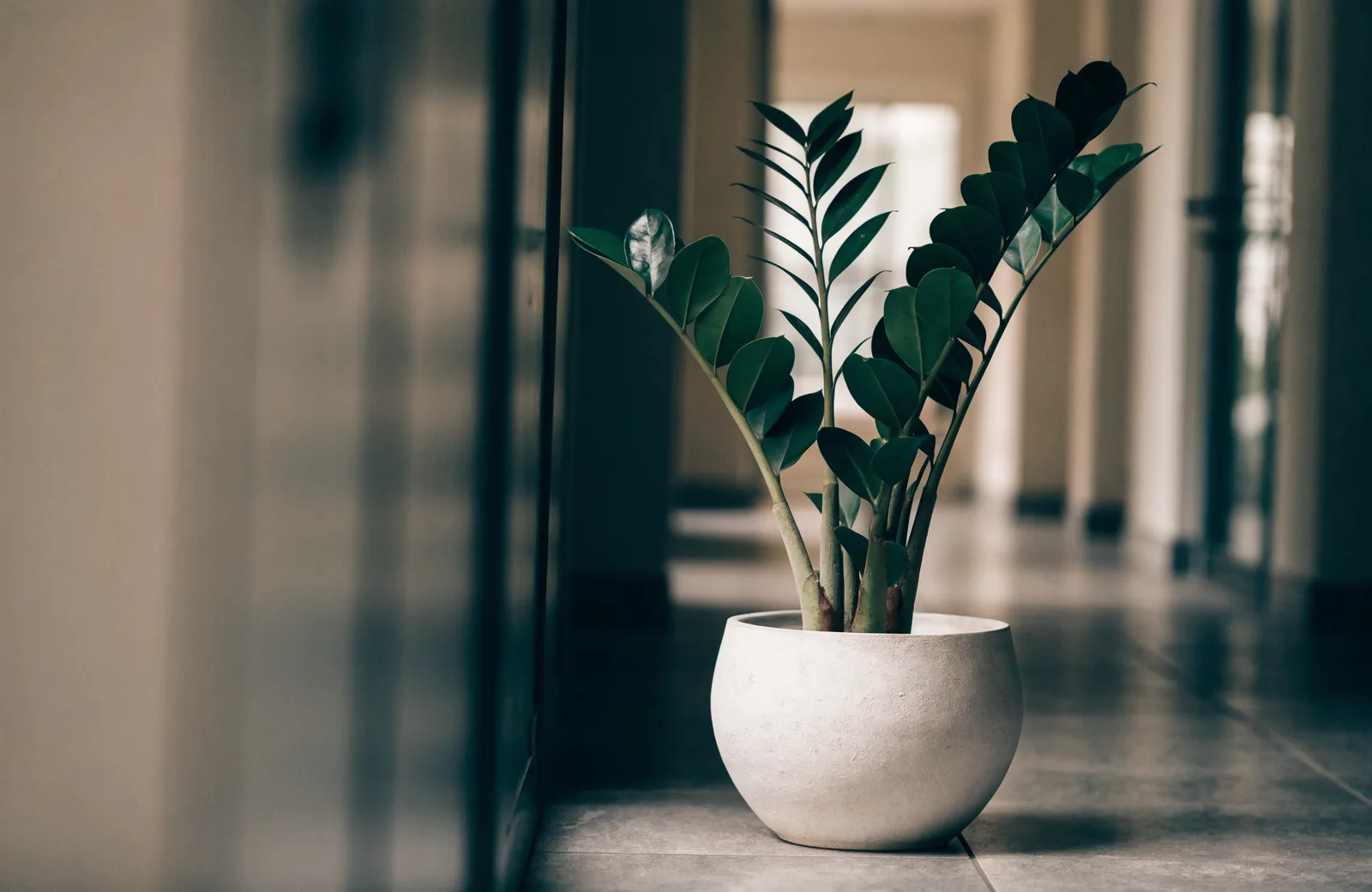
If you have ever wanted a houseplant that looks lush and architectural yet asks almost nothing of you, the ZZ plant (Zamioculcas zamiifolia) is hard to beat. Its glossy, deep-green leaflets march up arching stems in neat pairs, catching the light as though someone has just polished them. It shrugs off low light, forgives missed waterings, and grows slowly enough that it rarely outgrows its spot. The catch — and there is only really one — is that its toughness makes it easy to kill with kindness. This guide covers everything you need to keep a ZZ plant thriving for years.
Where the ZZ plant comes from
The ZZ plant is native to the dry grasslands and forests of eastern Africa, from Kenya down to South Africa, where it endures long spells without rain. That heritage explains almost every quirk of its care. Underground it grows thick, potato-like rhizomes that store water and energy, letting the plant coast through drought that would finish off a thirstier houseplant. Understanding that it is built to survive dry spells, not soggy ones, is the single most useful thing you can know about it.
How much light does a ZZ plant need?
ZZ plants are famous for tolerating low light, which is why you see them thriving in offices and windowless corners under artificial light. That said, tolerating low light and preferring it are two different things. Your plant will grow fastest and stay most compact in bright, indirect light — think a spot near an east-, west-, or north-facing window. In deep shade it will survive but grow slowly and may become leggy, with stretched stems reaching for light. Keep it out of harsh, direct midday sun through glass, which can scorch and bleach the leaflets.
How often to water a ZZ plant
This is where most ZZ plants live or die. Because those rhizomes hold a reserve of water, the plant needs far less than you might think. Let the soil dry out almost completely, then water thoroughly until it runs from the drainage holes, and tip away anything left in the saucer. In a bright, warm spot in summer that might mean watering every two weeks; in lower light or through winter it can stretch to every three or four weeks — sometimes longer.
The best approach is to water by checking, not by the calendar. Push a finger a few centimetres into the soil, or lift the pot: if it still feels heavy and damp, wait. When in genuine doubt, wait longer. A ZZ plant can go a remarkably long time between drinks, and a slightly thirsty ZZ recovers within days of watering, whereas a waterlogged one may quietly rot from the rhizomes up before you notice anything is wrong.
Warning: overwatering is by far the most common cause of a failing ZZ plant. If the base of the stems turns soft, mushy or brown and multiple leaves yellow at once, you are almost certainly watering too often or the pot lacks drainage. Always use a pot with drainage holes and a free-draining, gritty compost.
Why are my ZZ plant leaves turning yellow?
Yellowing leaves on a ZZ plant nearly always point to overwatering and the beginnings of rhizome or root rot. If several leaflets are yellowing and the soil has been staying wet, hold off watering, check that the pot drains freely, and consider tipping the plant out to inspect the rhizomes — healthy ones are firm and light-coloured, while rotten ones are soft, brown and smell unpleasant. Trim away any mushy sections with clean scissors and repot into fresh, dry, gritty compost.
Not every yellow leaf is a crisis, though. An occasional older, lower leaf yellowing and dropping is normal ageing. It is the pattern that matters: one old leaf now and then is fine; a wave of yellowing across the plant is a warning. Brown, crispy leaf tips, by contrast, usually point to the opposite problem — very dry air or a plant that has been left bone dry for far too long.
Temperature, humidity and feeding
ZZ plants are comfortable in normal room conditions, ideally between about 13 and 26°C. They dislike cold draughts and will suffer below roughly 8°C, so keep them away from unheated porches and frosty windowsills in winter. They are not fussy about humidity and cope well with the dry air of centrally heated homes, which is part of their easy-going charm.
Because they grow slowly, ZZ plants need very little feeding. A balanced liquid houseplant feed diluted to half strength once a month through spring and summer is plenty; stop feeding entirely in autumn and winter when growth naturally pauses. Overfeeding does more harm than good and can scorch the roots.
Growth, repotting and propagation
Do not be alarmed if your ZZ plant seems to do nothing for months — slow, sporadic growth is completely normal, and the plant often rests while quietly building up its rhizomes before pushing out a flush of bright, light-green new stems that darken as they mature. It only needs repotting every two to three years, or when the rhizomes visibly crowd the pot or start to distort it. Move it up just one pot size, as it prefers to be a little snug.
You can propagate a ZZ plant by dividing the rhizomes when you repot, or by leaf cuttings — though the latter tests your patience, as a single leaflet pressed into moist compost can take many months to form a tiny new rhizome. Division is much faster and gives you an established plant straight away.
Is the ZZ plant toxic?
Yes, mildly. Like many aroids, ZZ plants contain calcium oxalate crystals, which can irritate the mouth, skin and stomach if the plant is chewed or the sap gets onto sensitive skin. It is not the deadly plant that internet rumours sometimes suggest, but it is sensible to keep it out of reach of pets and small children, and to wash your hands (or wear gloves) after pruning. If a pet or child chews a leaf and shows distress, contact your vet or doctor.
The bottom line
The ZZ plant rewards a hands-off owner. Give it a well-draining pot, a reasonably bright spot, and water only when the soil has dried out, and it will look glossy and handsome for years with barely any intervention. If you remember just one thing, make it this: when you are unsure whether to water, don't. Not sure whether the plant in your office really is a ZZ, or want to double-check a mystery houseplant before you water it? PlantMe identifies plants from a single photo across 35,000+ species and cultivars, with care tips built in — so you always know exactly what you are looking after.
Sources & further reading
Frequently asked questions
How often should I water a ZZ plant?
Only when the soil has dried out almost completely — typically every two to three weeks in summer and less often in winter. The plant stores water in its underground rhizomes, so it is far better to underwater than to overwater. When in doubt, wait.
Can a ZZ plant survive in low light?
Yes. ZZ plants tolerate low light better than almost any houseplant, which is why they thrive in offices and dim corners. They grow faster and stay more compact in bright, indirect light, but they will not object to a shadier spot — just avoid harsh direct sun.
Why is my ZZ plant turning yellow?
Yellowing leaves almost always mean overwatering and the start of rhizome or root rot. Let the soil dry out, check the pot drains freely, and inspect the rhizomes for soft, brown patches. An occasional yellowing lower leaf, however, is just normal ageing.
Is the ZZ plant poisonous to pets?
It is mildly toxic. ZZ plants contain calcium oxalate crystals that can irritate the mouth and stomach if chewed, so keep them away from pets and children and wash your hands after handling. Contact a vet if a pet chews it and seems unwell.
About the author

Houseplants & Indoor Styling
Wren has killed enough houseplants to know exactly why yours is struggling — and kept hundreds more thriving in a small, bright flat that doubles as her test lab. She writes about reading plants instead of following rules, and believes every windowsill deserves at least one leaf.
Try it yourself
Diagnose it instantly with PlantMe
Snap a photo of any plant or leaf. Get the species, the diagnosis, and a care plan in seconds.
Download on theApp Store