Journal/Troubleshooting · 5 min read
Why Is My Peace Lily Not Flowering?
Peace lily not flowering? The six real reasons — light, age, feeding, watering, temperature and nursery forcing — and how to get white spathes back.
Quick answer
A peace lily that won't flower is almost always short on light — it survives in shade but only blooms in bright, indirect light. Other causes: the plant is too young, it was hormone-forced into bloom at the nursery, it's over- or under-fed, stressed by watering extremes, or kept below 18°C. Fix the light first.
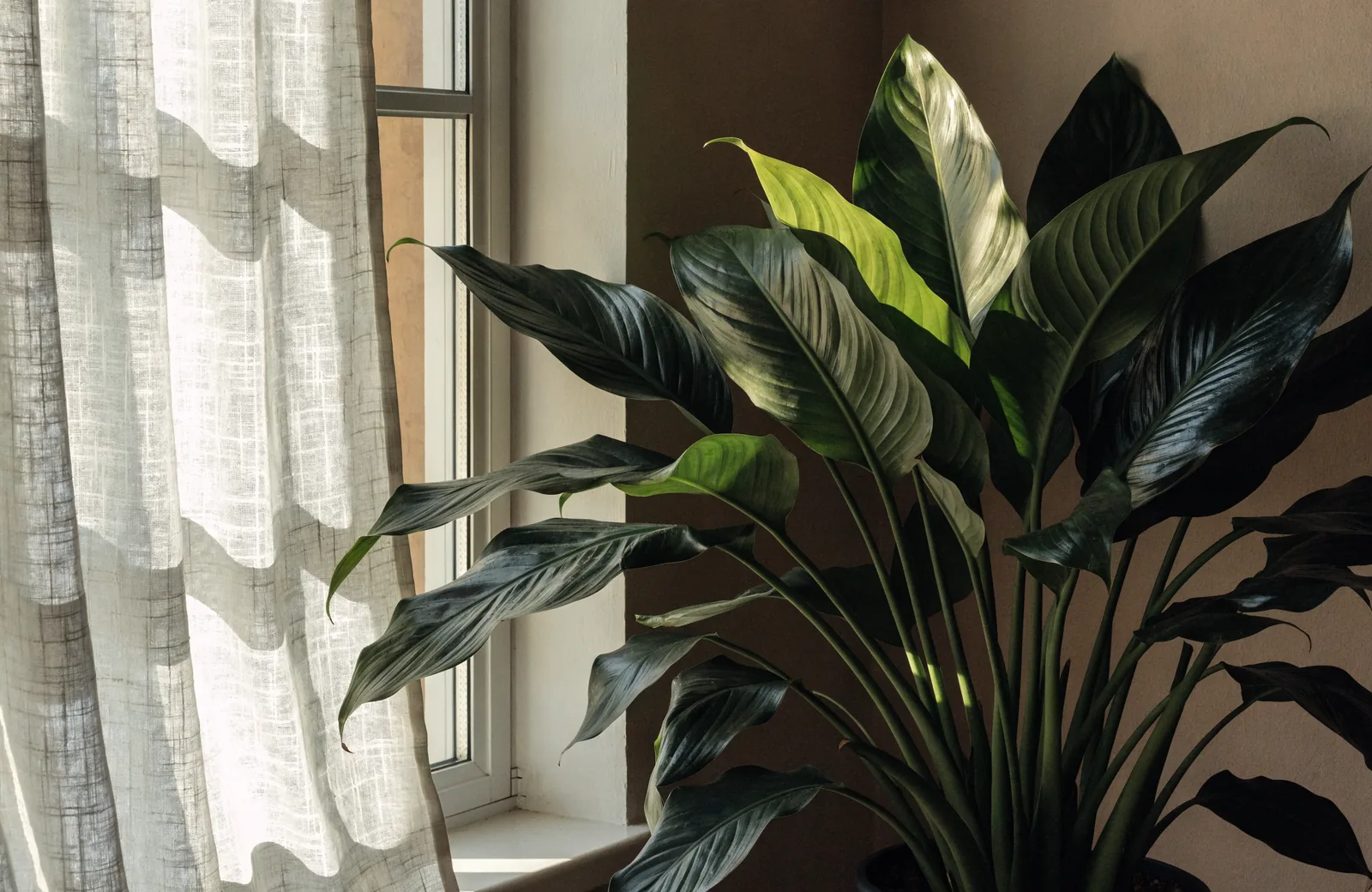
Peace lilies are sold in full, glorious bloom — a crown of white spathes over glossy leaves. Then, at home, the flowers fade and never come back, while the plant itself looks perfectly healthy. Frustrating, but rarely mysterious: a peace lily that refuses to flower is telling you something specific. Here are the six causes, in order of likelihood.
1. Not enough light (the big one)
The peace lily's reputation as a 'shade plant' is half true: it survives in low light, but it blooms in bright, indirect light. In a dim corner it will happily make leaves for years and never spend energy on a single flower. Move it close to an east-facing window, or within a metre or so of a bright window with no direct midday sun, and give it a season — light is the fix in the majority of cases.
2. The plant is simply too young
Peace lilies flower reliably only once mature — usually from around three years old. And here's the trick the label doesn't mention: commercial growers routinely treat young plants with gibberellic acid, a hormone that forces even immature plants into spectacular bloom for the shop shelf. At home, without the hormone, that young plant reverts to its natural schedule and may not bloom again for a year or two, no matter what you do. Nothing is wrong. Keep it growing; maturity fixes this on its own.
3. Feeding — too little or far too much
A plant that hasn't been fed for years may lack the phosphorus and potassium flowering demands; a balanced liquid feed at half strength, monthly from spring to early autumn, is plenty. The opposite error is worse: heavy feeding pushes lush leaf growth at the expense of flowers and can burn roots. If your peace lily is deep green, enormous and flowerless, stop fertilizing for a couple of months rather than adding more.
4. Watering stress
Peace lilies like evenly moist (never waterlogged) soil. A plant that regularly collapses dramatically between waterings, or one sitting in a soggy pot, diverts everything into survival rather than flowering. Water when the top of the soil is just drying, before the leaves droop, and always let excess drain away.
5. Temperature
Flowering wants steady warmth: roughly 18–24°C, and never long spells below 15°C. Cold windowsills in winter and draughty hallways both put a peace lily into a holding pattern where it maintains leaves but initiates no buds.
6. Severely pot-bound roots
Mildly pot-bound peace lilies actually bloom well — a little root restriction encourages flowering. But when roots circle solidly, poke out of the drainage holes, and the pot dries within a day or two of watering, the plant no longer has the resources to flower. Repot one size up in spring, or divide a big old clump; division re-energises tired, long-flowerless plants remarkably well.
What the flowers are telling you
One reassurance: each peace lily 'flower' — really a white leaf bract called a spathe around the true flower spike — naturally lasts several weeks, then fades to green and finally brown. A bloom turning green is ageing normally, not sick. Snip spent stems at the base to redirect energy into the next flush. With good light and steady care, a mature plant typically blooms in spring, often with a second, smaller flush later in the year.
Tip: if your peace lily also has drooping or yellowing leaves alongside the missing flowers, diagnose those first — a stressed plant won't bloom until the underlying problem is fixed. Photograph it in PlantMe and the app's plant doctor, trained on 500+ diseases and disorders, will tell you what's actually wrong before you start changing five things at once.
Sources & further reading
Frequently asked questions
How do I force my peace lily to flower?
You can't safely force it at home — nurseries use gibberellic acid, which isn't practical for home use and can distort growth. Bright indirect light, steady warmth, modest feeding and patience are what genuinely work.
Why are my peace lily's flowers green instead of white?
Spathes naturally turn green as they age — it's the normal end of each bloom's life, not a problem. Cut the spent stem at its base. If new spathes open green, the plant is usually getting too much fertilizer or too much light.
How often does a peace lily bloom?
A mature, well-lit plant typically blooms once a year in spring, with blooms lasting a month or more; happy plants often manage a second flush in late summer or autumn.
Should I cut off dead peace lily flowers?
Yes — once a spathe browns, cut its stalk right at the base. Deadheading keeps the plant tidy and redirects energy into leaves and future blooms.
About the author
Plant Rescue & Troubleshooting
Camille spent years behind the counter of a plant shop where every customer arrived with the same question: what's wrong with it? She writes the Journal's rescue guides — calm, diagnosis-first, no guilt — because most 'dying' plants are one correct decision away from recovery.
Try it yourself
Diagnose it instantly with PlantMe
Snap a photo of any plant or leaf. Get the species, the diagnosis, and a care plan in seconds.
Download on theApp Store