Journal/Troubleshooting · 6 min read
Rose Black Spot: Diagnose It, Treat It, Break the Cycle
Black spot is the most serious disease of roses — dark fringed spots, yellowing leaves, bare stems by September. How to confirm the diagnosis, what actually works, and why this autumn fortnight is your best chance to break the cycle.
Quick answer
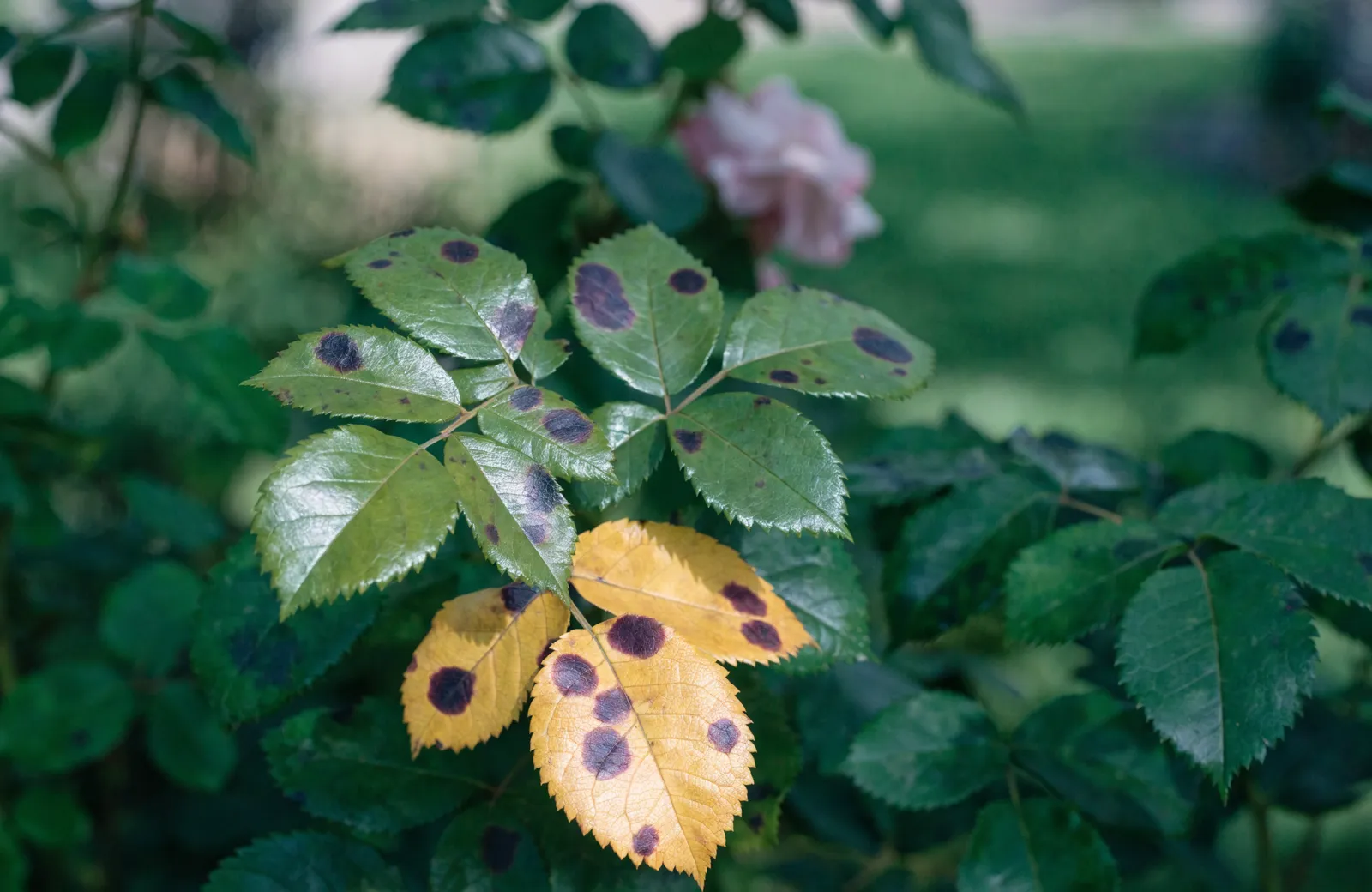
Dark, fringe-edged spots on rose leaves followed by yellowing and early leaf drop is black spot, a fungal disease. Strip and bin the worst-affected leaves, keep foliage dry when you water, and — most important right now — clear every fallen rose leaf this autumn. The fungus overwinters in leaf litter and on the stems, so hygiene in the next few weeks largely decides how bad next spring will be.
By late September, a rose with black spot is hard to miss: spotted leaves, yellowing foliage, and in bad cases a plant standing half-bare with a ring of fallen leaves at its feet. If that's the scene in your garden, take a breath. Black spot is the most widespread disease roses get, it very rarely kills an established plant, and the timing is on your side — autumn is the one moment in the year when a few unglamorous jobs genuinely change next season's outcome.
First, confirm what you're looking at
Black spot has a distinctive signature, and it's worth checking it off properly before treating anything:
- Round purple-black spots on the upper surface of the leaf, up to about 1 cm across, with soft, fringed edges — not crisp circles.
- Yellowing that starts around the spots and spreads across the leaf.
- Leaves dropping early, usually from the bottom of the plant upwards.
- In heavier infections, small black scabby marks on the young stems.
The fringed edge is the tell. A powdery white coating instead of dark spots is powdery mildew, which is treated differently; pale stippled leaves with webbing point to mites, not fungus. If you're not sure, our guide to identifying plant diseases walks through the look-alikes — and the PlantMe app can check a photo of the leaf against 500+ plant diseases in a few seconds.
What's actually happening on the leaf
The culprit is a fungus, Diplocarpon rosae. Its spores travel in water — rain splash, overhead watering — and they need a surprisingly specific window to take hold: at least seven hours of continuous leaf wetness before they can germinate, with infection fastest in mild weather around 18–24°C. Hot, dry spells above about 29°C stall it, which is why black spot surges in damp springs and soft, wet autumns and often pauses in high summer. Once a leaf is infected, the spots produce fresh spores within about two weeks, and each rain shower redistributes them — that's the cycle you're trying to interrupt.
The fix, in order of impact
- Strip the worst leaves. Pick off heavily spotted foliage and gather what has already fallen. Bin or bury it — don't add it to the compost or leaf pile.
- Keep the leaves dry. Water at the base, in the morning, and never over the foliage. You're denying the spores their seven wet hours.
- Open the plant up. Good spacing and an uncrowded centre help leaves dry quickly after rain; a congested rose in still air is an incubator.
- Think twice before spraying. Fungicides exist, but the RHS now advises gardeners against routine fungicide use because of the harm to garden biodiversity and soil life — and no spray cures the leaves already marked. Hygiene and airflow do more, for longer.
Why this fortnight matters more than any spray
Here is the part most gardeners miss: black spot doesn't die back in winter, it hibernates. The fungus overwinters in fallen leaves on the soil and in dormant infections on young stems and buds, then releases spores in spring onto the fresh new growth. Every leaf you clear now is spring inoculum removed. So rake and collect every fallen rose leaf as they drop through autumn — bin them, bury them under a fresh layer of mulch, but keep them out of the leaf mould pile, which never heats up enough to kill the fungus. Over winter, pick off any stubborn leaves still hanging on the plant. Then in spring, when you prune, cut out stems showing the black scabby lesions before the new leaves emerge.
One reassurance while you're down there raking: the fungus survives in infected leaves and stems, not free in the ground — spores on their own don't last longer than about a month and don't persist in soil. You do not need to replace or sterilise anything. Clear the litter and you've done the job.
If it happens every single year
Some roses are simply prone. Breeders sell cultivars with black spot resistance, and they're worth seeking out for a low-maintenance garden — with one honest caveat: resistance tends to erode over the years as new strains of the fungus overcome it, so 'resistant' means a real head start, not immunity. As a group, the older species roses tolerate black spot better than many modern hybrid teas, floribundas and climbers. If a particular bush defoliates miserably every summer despite good hygiene, replacing it with a tougher variety is not defeat; it's triage.
The calm version
A spotted rose in September is not an emergency — it's a plant that has already decided to shed those leaves and start again. Confirm the diagnosis, dry out its routine, and spend twenty minutes with a rake now and again over the next month. Most black spot problems aren't solved in summer with a sprayer; they're solved in autumn with a bucket.
Sources & further reading
Frequently asked questions
Can I compost leaves with black spot?
Best not to in an ordinary garden heap — it rarely gets hot enough to reliably kill the fungus, and the finished compost goes straight back to your beds. Bin infected leaves or bury them under mulch instead.
Do I need to change the soil under an infected rose?
No. The fungus overwinters in fallen leaves and on stems, not loose in the soil — spores by themselves don't survive there longer than about a month. Clearing the leaf litter is what matters.
Will black spot kill my rose?
Very unlikely. Repeated defoliation year after year weakens a plant and costs you flowers, but an established rose that gets decent hygiene and a spring prune almost always recovers.
About the author

Plant Rescue & Troubleshooting
Camille spent years behind the counter of a plant shop where every customer arrived with the same question: what's wrong with it? She writes the Journal's rescue guides — calm, diagnosis-first, no guilt — because most 'dying' plants are one correct decision away from recovery.
Try it yourself
Diagnose it instantly with PlantMe
Snap a photo of any plant or leaf. Get the species, the diagnosis, and a care plan in seconds.
Download on theApp Store