Journal/Care Basics · 6 min read
Hoya Care: How to Grow the Wax Plant
How to care for hoyas: bright light, drench-and-dry watering, chunky mix — and why you must never cut the flower spurs if you want reblooms.
Quick answer
Hoyas want very bright indirect light with a little gentle direct sun, a thorough watering only when the mix has dried out, and a chunky, fast-draining mix in a snug pot. To get the famous porcelain flowers, give bright light, let the plant get slightly root-bound — and never cut off the leafless flower spurs (peduncles), because hoyas rebloom from the same ones every year.
Hoyas — wax plants — have gone from grandma's windowsill to one of the most collected houseplants in the world, and it's easy to see why: thick sculptural leaves, trailing or climbing vines that live for decades, and clusters of star-shaped flowers that look moulded from porcelain and smell of chocolate and vanilla at night. They're also tougher than their exotic looks suggest. Here's how to keep one thriving, and — the question every hoya owner eventually asks — how to make it bloom.
Think "tropical succulent-ish epiphyte"
Most hoyas grow in the wild as epiphytes, clambering over trees in South and Southeast Asia with their roots in pockets of loose debris rather than deep soil. Their thick, waxy leaves store water like a succulent's. That combination — air-loving roots plus built-in water storage — explains all of hoya care: lots of light, an airy mix, and a real dry-out between waterings.
Light: the make-or-break factor
Bright indirect light is the minimum, and a couple of hours of gentle direct sun — morning sun on an east windowsill is ideal — is even better. Light is also the single biggest lever for flowering: a hoya in a dim corner will grow, slowly, but it will essentially never bloom. Very harsh midday summer sun behind glass can scorch or bleach leaves, so filter it with a sheer curtain. Many of the fashionable dark-leaved or sun-stressed varieties only develop their red tints in strong light.
Watering and feeding
Water like a succulent, not a fern: drench the pot until water runs through, then wait until the mix is fully dry before doing it again. In a bright warm room that might be every 7–10 days in summer and every two to three weeks in winter. The leaves tell you everything — plump and firm means hydrated; soft, wrinkling leaves mean the plant has used its reserves and wants a proper soak. Feed lightly, at half strength, monthly through spring and summer; a fertiliser slightly higher in phosphorus can nudge a mature plant toward blooming.
Warning: constantly damp mix is the one thing hoyas truly can't take. Yellowing leaves that drop easily plus a mix that never dries means the roots are rotting — unpot, trim to healthy tissue, and restart the plant in fresh, chunkier mix, watering far less often.
Mix, pots and repotting
Use a chunky, fast-draining blend: roughly equal parts houseplant compost, orchid bark and perlite is a reliable recipe. Plastic or terracotta both work — terracotta dries faster, which is a feature here. Hoyas genuinely like being snug: a slightly root-bound plant is more inclined to flower, so repot only every two to three years, one size up at most, in spring.
Flowers: the peduncle rule
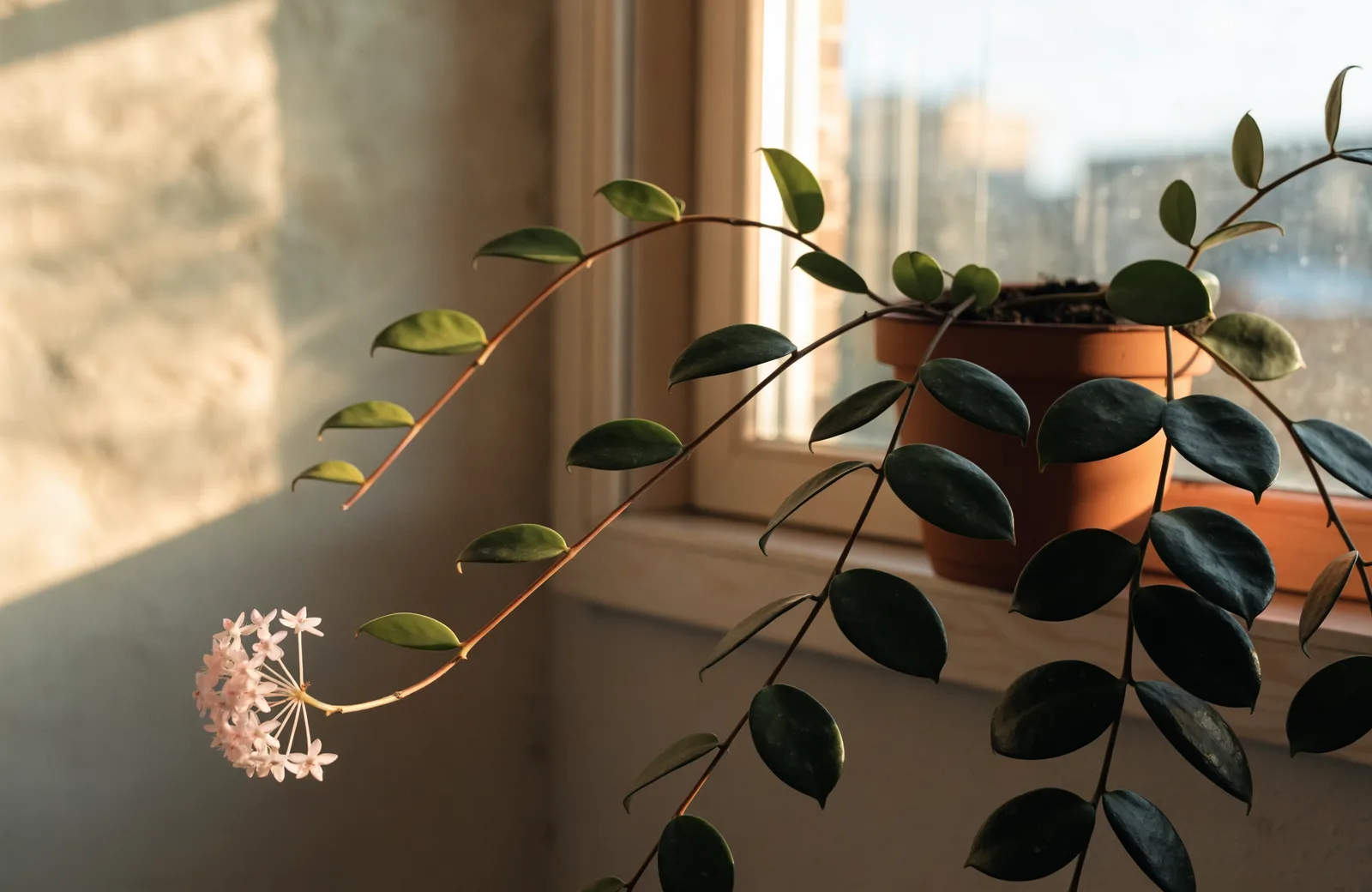
Hoya flowers appear in umbels — rounded clusters of up to 30–40 star-shaped blooms — on short, leafless stalks called peduncles or spurs. Here's the rule that separates hoya owners who get flowers every year from those who never do: do not cut the peduncles, even after the flowers fade. Unlike most plants, a hoya reblooms from the same spurs year after year, and each season the spur lengthens slightly and carries more flowers. Deadhead a hoya like a normal plant and you're cutting off next year's show.
- Give it as much bright light as you can without scorch.
- Keep it slightly root-bound and don't move it once buds form — hoyas drop buds when swivelled or relocated.
- Let it mature: many hoyas first flower at two to three years old; be patient with young plants.
- A slightly cooler, drier winter rest followed by spring feeding often triggers the first flush.
- Let faded flowers drop on their own; never snip the spur they grew from.
Tip: the flowers produce sweet, sticky nectar that can drip. It's harmless — put a tray under a heavily blooming plant rather than moving it, and enjoy the evening scent.
Propagation and problems
Hoyas root readily from cuttings: take a piece of vine with two or three nodes, remove the lower leaves, and root it in water, moist perlite, or straight into the chunky mix. Pests are few but predictable — mealybugs adore hoyas, hiding in leaf axils and under the waxy leaves as little white cottony tufts; aphids sometimes cluster on new growth and flower spurs. Wipe with 70% isopropyl alcohol on a cotton bud and follow up weekly until clear. As a bonus, hoyas are generally considered non-toxic to cats and dogs, which makes them one of the best flowering choices for pet households.
Can't tell which hoya you've inherited — carnosa, pubicalyx, australis, or one of hundreds of others? Snap it in PlantMe: the app recognises 35,000+ plant classes with 93% top-3 accuracy and gives you care tailored to your exact plant.
Sources & further reading
Frequently asked questions
Why won't my hoya bloom?
Almost always: not enough light, or not enough patience. Give it very bright light with some gentle sun, keep it a bit root-bound, and remember many hoyas don't flower until they're two to three years old. And never cut off the old flower spurs — that's where new blooms come from.
Why are my hoya's leaves wrinkling?
Wrinkled or puckered leaves usually mean the water reserves are used up — either the mix has been bone-dry too long, or root rot has destroyed the roots so the plant can't drink. Check the mix and the roots: dry mix, water deeply; wet mix and mushy roots, take cuttings and restart.
Are hoyas toxic to cats or dogs?
Hoyas are generally considered non-toxic to cats and dogs. The milky sap can cause mild stomach upset if a pet chews a lot of it, but they're regarded as one of the safer flowering houseplants for pet homes.
Do hoyas climb or trail?
Both. Left alone they trail beautifully from a shelf or hanging pot; given a small trellis or hoop they'll twine and climb, which is how most grow in the wild. Many growers train the vines in a circle to keep flowering spurs at eye level.
About the author

Houseplants & Indoor Styling
Wren has killed enough houseplants to know exactly why yours is struggling — and kept hundreds more thriving in a small, bright flat that doubles as her test lab. She writes about reading plants instead of following rules, and believes every windowsill deserves at least one leaf.
Try it yourself
Diagnose it instantly with PlantMe
Snap a photo of any plant or leaf. Get the species, the diagnosis, and a care plan in seconds.
Download on theApp Store